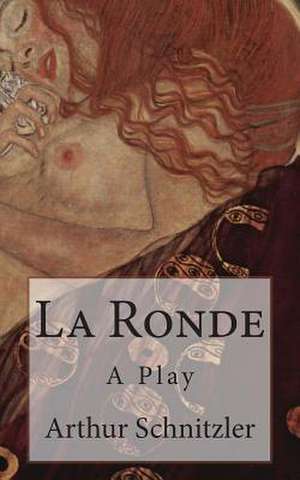
La Ronde
Autor Arthur Schnitzler Editat de B. K. De Fabrisen Limba Engleză Paperback
Preț: 40.79 lei
Puncte Express: 61
Carte disponibilă
Livrare economică 16-30 noiembrie
Livrare prin curier în România Termenul estimat este afișat lângă disponibilitate.
Transport gratuit de la 400.00 lei Plată online sau ramburs, în funcție de opțiunile comenzii.
Retur gratuit în 14 zile Comandă securizată și suport în română.
Specificații
ISBN-13: 9781503014176
ISBN-10: 1503014177
Pagini: 78
Dimensiuni: 127 x 203 x 4 mm
Greutate: 0.09 kg
Editura: CreateSpace Independent Publishing Platform
ISBN-10: 1503014177
Pagini: 78
Dimensiuni: 127 x 203 x 4 mm
Greutate: 0.09 kg
Editura: CreateSpace Independent Publishing Platform
V-ar putea interesa
-
 Kill The Old, Torture Their YoungDavid Harrower-17%Preț: 85.08 lei102.73 lei
 -
 Hard FruitJim Cartwright-19%Preț: 80.64 lei98.95 lei
 -
 BonesPeter Straughan-17%Preț: 84.93 lei102.48 lei
 -
 Mappa MundiShelagh Stephenson-17%Preț: 85.23 lei102.63 lei
 -
 Through The LeavesVivis Anthony-18%Preț: 83.88 lei102.09 lei
 -
 Ghost CityGary Owen-17%Preț: 85.23 lei102.63 lei
 -
 Stone City BlueEd Thomas-17%Preț: 85.41 lei102.55 lei
 -
 Monsieur Ibrahim And The Flowers of the Qu'ranEric-Emmanuel Schmitt-17%Preț: 86.44 lei103.72 lei
 -
 Comedies of Words, and Other PlaysArthur SchnitzlerPreț: 165.81 lei
 -
 The Ugly OneMarius von Mayenburg-17%Preț: 86.22 lei103.79 lei
 -
 FaustAdolphe d'EnneryPreț: 108.19 lei
 -
 Fathers and SonsFrank J. MorlockPreț: 112.40 lei
 -
 Bohemia; Or, La BohemeHenri MurgerPreț: 109.07 lei
 -
 Night Games: And Other Stories and NovellasArthur Schnitzler-15%Preț: 97.19 lei114.49 lei
 -
 -18%Preț: 1254.53 lei1529.92 lei
Notă biografică
Arthur Schnitzler (1862-1930), the Austrian author and doctor, is probably best known for his plays 'La Ronde' and 'Liebelei'. His early years were marked by a particular interest in the emergent science of psychology and his writings anticipate Freud's psychopathological theories. Stephen Unwin founded the English Touring Theatre in 1993.
Descriere
Descriere de la o altă ediție sau format:
Schnitzler's masterpiece, La Ronde, shows a spectrum of social class from prostitutes to noblemen in a series of drily observed, loveless sexual encounters. Remembered by many as the basis of a famous film in 1950, the real notoriety of La Ronde goes back to 1900 when it was privately printed and subsequently banned. It was not performed until 1920 in Berlin, where anti-Semitic riots broke out, resulting in the arrest and trial of the cast and director, allegedly for obscenity. The controversy continued with David Hare's adaptation, The Blue Room, which starred Nicole Kidman, at the Donmar Warehouse.
This translation is by the playwright and critic Frank Marcus, who has also provided a full introduction to Schnitzler's life and work.
Schnitzler's masterpiece, La Ronde, shows a spectrum of social class from prostitutes to noblemen in a series of drily observed, loveless sexual encounters. Remembered by many as the basis of a famous film in 1950, the real notoriety of La Ronde goes back to 1900 when it was privately printed and subsequently banned. It was not performed until 1920 in Berlin, where anti-Semitic riots broke out, resulting in the arrest and trial of the cast and director, allegedly for obscenity. The controversy continued with David Hare's adaptation, The Blue Room, which starred Nicole Kidman, at the Donmar Warehouse.
This translation is by the playwright and critic Frank Marcus, who has also provided a full introduction to Schnitzler's life and work.