
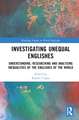
Investigating Unequal Englishes: Routledge Studies in World Englishes
Editat de Ruanni Tupasen Limba Engleză Paperback – 29 sep 2025
| Toate formatele și edițiile | Preț | Express |
|---|---|---|
| Paperback (1) | 380.99 lei 6-8 săpt. | |
| Taylor & Francis Ltd (Sales) – 29 sep 2025 | 380.99 lei 6-8 săpt. | |
| Hardback (1) | 1014.06 lei 6-8 săpt. | |
| Taylor & Francis – 22 mai 2024 | 1014.06 lei 6-8 săpt. |
Din seria Routledge Studies in World Englishes
-
 Preț: 376.89 lei
 -
 Preț: 405.66 lei
 -
 Preț: 404.93 lei
 -
 Preț: 405.51 lei
 -
 Preț: 398.46 lei
 -
 Preț: 380.09 lei
 -
 Preț: 399.23 lei
 -
 Preț: 383.59 lei
 -
 Preț: 383.02 lei
 -
 Preț: 380.81 lei
 -
 Preț: 385.78 lei
 -
 Preț: 385.06 lei
 -
 Preț: 386.51 lei
 -
 Preț: 381.34 lei
 -
 Preț: 380.09 lei
 -
 Preț: 373.76 lei
 -
 Preț: 380.81 lei
 -
 Preț: 380.62 lei
 -
 Preț: 375.65 lei
 -
 Preț: 368.43 lei
 -
 Preț: 381.34 lei
 - 18%
 Preț: 1014.06 lei
 - 18%
 Preț: 1070.32 lei
Preț: 380.99 lei
Nou
Puncte Express: 571
Preț estimativ în valută:
67.42€ • 79.06$ • 59.21£
67.42€ • 79.06$ • 59.21£
Carte tipărită la comandă
Livrare economică 02-16 februarie 26
Preluare comenzi: 021 569.72.76
Specificații
ISBN-13: 9781032410241
ISBN-10: 1032410248
Pagini: 190
Dimensiuni: 156 x 234 x 11 mm
Greutate: 0.29 kg
Editura: Taylor & Francis Ltd (Sales)
Seria Routledge Studies in World Englishes
ISBN-10: 1032410248
Pagini: 190
Dimensiuni: 156 x 234 x 11 mm
Greutate: 0.29 kg
Editura: Taylor & Francis Ltd (Sales)
Seria Routledge Studies in World Englishes
Cuprins
Preface
(Re)framing Unequal Englishes: unequal personhood, deficit ideology and epistemic injustice
PREM PHYAK
PART 1: Experiencing unequal Englishes in everyday life
1 Memory work of a World Englishes (WE) advocate experiencing Unequal Englishes
ROBY MARLINA
2 ‘Deficient’ English and social inequality: ethnographic findings from two rural Bangladeshi madrasas
QUMRUL HASAN CHOWDHURY
3 Unequal Englishes and stancetaking in Michelle Chong’s parodic performances of Filipino domestic workers in Singapore
CHRISTIAN GO
PART 2: Constructing unequal Englishes in school
4 Constructing Unequal English-speakerhood in Chile: a narrative analysis perspective
MANUEL VÁSQUEZ, ANDRÉS GUTIÉRREZ, ROMMY ANABALÓN SCHAAF AND MARCO ESPINOZA
5 Unequal Englishes, native English speaker teachers, and social variables: an intersectional approach
JUNSHUAN LIU AND SONGQING LI
6 Students’ critical voices and (re)positioning toward “standard Englishes”
RIBUT WAHYUDI
PART 3: Unpacking unequal Englishes as ideology
7 ‘Half-native’ and cheap English teachers: Probing unequal Englishes through multimodal critical discourse analysis
JULIUS C. MARTINEZ
8 Unequal Englishes in multimodal texts: visibilizing opaque power relations through critical discourse analysis
JAYSON PARBA AND TOMOAKI MORIKAWA
9 Unequal Englishes through Chinglish: conflicting language ideologies in the official discourse
GUOWEN SHANG
PART 4: Centring Unequal Englishes in research
10 Unequal sounds: an inclusive mother-tongue approach to Philippine English phonology
ANNIE MAE C. BEROWA
11 Moroccan English through epistemological polylogue: opportunity for speaking back, hopes for localization, and the postcolonial framework
HAMZA R’BOUL, HASSAN BELHIAH, MOHAMMED GUAMGUAMI AND AHLAM LAMJAHDI
Way forward: Down to earth with Unequal Englishes
MARIO SARACENI
(Re)framing Unequal Englishes: unequal personhood, deficit ideology and epistemic injustice
PREM PHYAK
PART 1: Experiencing unequal Englishes in everyday life
1 Memory work of a World Englishes (WE) advocate experiencing Unequal Englishes
ROBY MARLINA
2 ‘Deficient’ English and social inequality: ethnographic findings from two rural Bangladeshi madrasas
QUMRUL HASAN CHOWDHURY
3 Unequal Englishes and stancetaking in Michelle Chong’s parodic performances of Filipino domestic workers in Singapore
CHRISTIAN GO
PART 2: Constructing unequal Englishes in school
4 Constructing Unequal English-speakerhood in Chile: a narrative analysis perspective
MANUEL VÁSQUEZ, ANDRÉS GUTIÉRREZ, ROMMY ANABALÓN SCHAAF AND MARCO ESPINOZA
5 Unequal Englishes, native English speaker teachers, and social variables: an intersectional approach
JUNSHUAN LIU AND SONGQING LI
6 Students’ critical voices and (re)positioning toward “standard Englishes”
RIBUT WAHYUDI
PART 3: Unpacking unequal Englishes as ideology
7 ‘Half-native’ and cheap English teachers: Probing unequal Englishes through multimodal critical discourse analysis
JULIUS C. MARTINEZ
8 Unequal Englishes in multimodal texts: visibilizing opaque power relations through critical discourse analysis
JAYSON PARBA AND TOMOAKI MORIKAWA
9 Unequal Englishes through Chinglish: conflicting language ideologies in the official discourse
GUOWEN SHANG
PART 4: Centring Unequal Englishes in research
10 Unequal sounds: an inclusive mother-tongue approach to Philippine English phonology
ANNIE MAE C. BEROWA
11 Moroccan English through epistemological polylogue: opportunity for speaking back, hopes for localization, and the postcolonial framework
HAMZA R’BOUL, HASSAN BELHIAH, MOHAMMED GUAMGUAMI AND AHLAM LAMJAHDI
Way forward: Down to earth with Unequal Englishes
MARIO SARACENI
Notă biografică
Ruanni Tupas is Associate Professor of Sociolinguistics in Education at the Institute of Education, University College London, UK. He has published extensively on TESOL, bi/multilingual education and World Englishes.
Recenzii
Investigating Unequal Englishes sheds light on the dominance of Anglocentrism and monolingual biases and ideologies, and hegemonic language policies and practices favouring the English language across the world. It highlights the questionable and hierarchical status, role, function, and use of Standard English and the perpetual linguistic inequalities and injustices faced by speakers of different varieties of Englishes. The edited volume rightly argues that only the critical and metalinguistic awareness of policy-makers, ELT administrators, teachers, students, and community members can make them sensitive to individual and collective marginalisation and disempowerment based on languages. Hence, the volume is a must-read for academics, researchers, and language practitioners, intending to initiate the process of decolonisation at grassroots levels, work for the de-eliticisation of English, and promote and nurture linguistic and epistemic equity in the world.
Shaila Sultana, University of Dhaka, Bangladesh
Joined by experts from around the world, Ruanni Tupas, the renowned scholar responsible for the concept of “Unequal Englishes,” explores the realities of hierarchical power structures among varieties of English in various contexts. This is a highly significant volume which investigates one of the most fundamental aspects of language in society, and thus should be read not only by researchers of World Englishes and critical applied linguistics but also by everyone involved in language education.
Nobuyuki Hino, Otemon Gakuin University and Osaka University, Japan
There are undoubtedly benefits to the global spread of English, most obviously in the facilitation of communication across different cultural contexts or increased access to varied opportunities. However, are such benefits evenly distributed? As Tupas and colleagues show, it is no longer possible to treat the inherent and emergent inequalities in Englishes as a problem facing only a minority of speakers and communities. It is indeed a globally pervasive problem, but this volume helps us to identify its underlying causes while imagining potential ways forward.
Jerry Won Lee University of California, Irvine, USA
Delving deeper into the lens of Unequal Englishes with new contexts and encompassing methodologies, this volume is essential reading for researchers of the growing social inequalities in the pluralization and localization of Global Englishes. A key text for new generations of critical applied/sociolinguists.
Virginia Zavala, Pontificia Universidad Católica del Perú, Peru
Shaila Sultana, University of Dhaka, Bangladesh
Joined by experts from around the world, Ruanni Tupas, the renowned scholar responsible for the concept of “Unequal Englishes,” explores the realities of hierarchical power structures among varieties of English in various contexts. This is a highly significant volume which investigates one of the most fundamental aspects of language in society, and thus should be read not only by researchers of World Englishes and critical applied linguistics but also by everyone involved in language education.
Nobuyuki Hino, Otemon Gakuin University and Osaka University, Japan
There are undoubtedly benefits to the global spread of English, most obviously in the facilitation of communication across different cultural contexts or increased access to varied opportunities. However, are such benefits evenly distributed? As Tupas and colleagues show, it is no longer possible to treat the inherent and emergent inequalities in Englishes as a problem facing only a minority of speakers and communities. It is indeed a globally pervasive problem, but this volume helps us to identify its underlying causes while imagining potential ways forward.
Jerry Won Lee University of California, Irvine, USA
Delving deeper into the lens of Unequal Englishes with new contexts and encompassing methodologies, this volume is essential reading for researchers of the growing social inequalities in the pluralization and localization of Global Englishes. A key text for new generations of critical applied/sociolinguists.
Virginia Zavala, Pontificia Universidad Católica del Perú, Peru