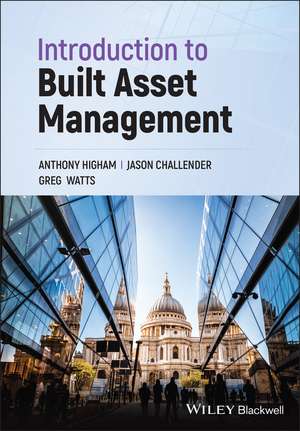
Introduction to Built Asset Management
Autor C Highamen Limba Engleză Paperback – 9 feb 2022
Resursele care însoțesc volumul Introduction to Built Asset Management, precum sarcinile de autoevaluare și întrebările de tip seminar, transformă acest manual dintr-o simplă expunere teoretică într-un instrument de lucru riguros. Apreciem modul în care C Higham reușește să integreze faza operațională a unei clădiri în ciclul său de viață total, eliminând bariera tradițională dintre construcția propriu-zisă și mentenanța ulterioară. Găsim în această lucrare o analiză tehnică detaliată a acordurilor-cadru și a indicatorilor cheie de performanță (KPI), elemente esențiale pentru eficientizarea output-ului în industria construcțiilor moderne.
Perspectiva autorului este una multidisciplinară, punând un accent deosebit pe digitalizare prin utilizarea sistemelor Building Information Modelling (BIM) și Geographic Information Systems (GIS). Cititorul care a aplicat ideile din Building and Facilities Maintenance Management de Jason Challender va găsi aici o completare necesară, orientată spre sustenabilitate și reziliență la carbon. În timp ce alte lucrări se concentrează pe procese operaționale standard, Introduction to Built Asset Management explorează piața de retrofit și adaptarea infrastructurii existente la noile cerințe de mediu.
Structura narativă a cărții este logică și progresivă, facilitând înțelegerea modului în care deciziile de proiectare influențează costurile pe termen lung. Tonul este tehnic și pragmatic, evitând generalitățile în favoarea unor soluții aplicabile în managementul proprietăților și ingineria civilă. Considerăm că volumul umple un gol important în literatura de specialitate, oferind cadrul metodologic pentru gestionarea activelor într-o eră a responsabilității ecologice.
Preț: 506.29 lei
Carte tipărită la comandă
Livrare economică 08-22 iunie
Specificații
ISBN-10: 1119106583
Pagini: 288
Dimensiuni: 169 x 244 x 17 mm
Greutate: 0.47 kg
Editura: Wiley
Locul publicării:Chichester, United Kingdom
V-ar putea interesa
-
 International Case Studies in Asset ManagementChris Lloyd-8%Preț: 458.86 lei498.77 lei
 -
 Asset ManagementChris Lloyd-19%Preț: 482.58 lei595.78 lei
 -
 Introduction to Building ManagementD. Coles-37%Preț: 316.73 lei503.98 lei
 -
 Preț: 405.23 lei
 -
 Design-Tech: Building Science for ArchitectsJason Alread-8%Preț: 450.24 lei489.39 leiRecomandat
 -
 Preț: 316.62 lei
 -
 Sport Facility Operations Management: A Global PerspectiveEric C. SchwarzPreț: 439.26 lei
 -
 Construction Project ManagementS Keoki Sears-11%Preț: 602.55 lei677.02 lei
 -
 Bim and Construction ManagementBrad HardinPreț: 354.00 lei
 -
 The BIM Manager's HandbookDominik HolzerPreț: 282.53 lei
 -
 -19%Preț: 427.71 lei528.03 lei
 -
 Managing Construction TechnologyKurt Maldovan-19%Preț: 426.42 lei526.44 lei
 -
 Preț: 346.38 lei
 -
 Code of Practice for Programme Management in the Built EnvironmentCiob (the Chartered Institute of Building)-19%Preț: 470.91 lei581.36 lei
 -
 How to Measure Anything in Project ManagementDouglas W. HubbardPreț: 332.60 lei
 -
 Preț: 127.21 lei
 -
 Maintenance of EverythingStewart BrandPreț: 225.07 lei
 -
 Preț: 425.10 lei
 -
 -24%Preț: 939.19 lei1235.77 lei
 -
 -33%Preț: 372.42 lei555.53 lei
De ce să citești această carte
Recomandăm această carte studenților și profesioniștilor din inginerie civilă și managementul facilităților care doresc să stăpânească tehnologiile moderne de monitorizare a clădirilor. Cititorul câștigă o înțelegere profundă a integrării BIM în mentenanță și a strategiilor de reducere a amprentei de carbon. Este un ghid practic esențial pentru cei care vizează optimizarea duratei de viață a activelor construite prin metode sistematice și instrumente digitale de ultimă oră.
Despre autor
C Higham este un specialist recunoscut în domeniul construcțiilor, cu o expertiză consolidată în managementul activelor construite și tehnologia întreținerii clădirilor. Prin activitatea sa, autorul contribuie la modernizarea programelor de învățământ superior, punând accent pe viziunea pe termen lung asupra proiectelor de construcții. În cadrul editurii Wiley, acesta a dezvoltat materiale didactice care îmbină rigoarea academică cu necesitățile practice ale industriei, fiind un promotor al sustenabilității și al digitalizării în administrarea infrastructurii urbane și a patrimoniului construit.
Descriere
Introduction to Built Asset Management
Provides a multidisciplinary introduction to building maintenance management and execution, covering a wide range of current technical and management issues
The maintenance and upgrading of existing buildings is no longer viewed as separate from the operational phase of the completed building. Maintenance and management are now regarded as fundamental parts of a building’s life cycle, forming a significant percentage of the construction industry’s total output. As higher education programmes in the UK and elsewhere continue to place greater emphasis on the longer-term view of construction projects, students and instructors require a thorough and up-to-date textbook that emphasises the comprehensive nature of building maintenance.
Introduction to Built Asset Management is a systematic introduction to both the technology and management issues central to building maintenance and refurbishment. Covering the entire life cycle of built assets, the textbook reviews the role of framework agreements, describes key performance indicators, discusses recent advancements in the procurement of maintenance activities and more. Detailed yet accessible chapters include illustrative examples, seminar questions and self-assessment tasks that enable students to measure their progress as they work through the material. Designed to meet the needs of today’s learners, this much-needed textbook:
- Addresses a variety of both environmental and commercial concerns
- Evaluates important concepts of sustainability, sustainable maintenance and carbon resilience
- Discusses the growing retrofit market in the wider context of asset management and maintenance
- Describes information management tools such as building information modelling (BIM) and geographic information systems (GIS)
Introduction to Built Asset Management is ideally suited for courses in construction, construction management, building surveying and facilities management with modules in built asset management and maintenance.