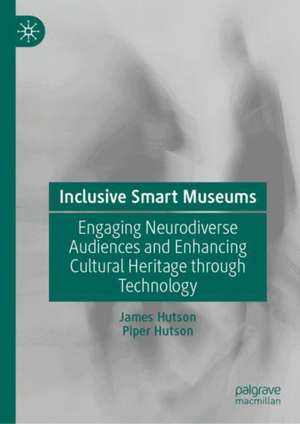
Inclusive Smart Museums: Engaging Neurodiverse Audiences and Enhancing Cultural Heritage through Technology
Autor James Hutson, Piper Hutsonen Limba Engleză Hardback – 14 apr 2024
With a unique focus on neurodivergent, this book seeks to elucidate the manner and extent to which cutting-edge technologies can support community building, offering an invaluable resource for museum administrators, curators, exhibition designers, and heritage professionals who are responsible for creating and maintaining inclusive and accessible cultural heritage spaces. It includes practical solutions and examples showcasing best practices and innovative techniques to engage neurodiverse audience effectively. Academics and researchers interested in the fields of cultural heritage, museum studies, accessibility, and emerging technologies will also find the book useful.
Preț: 596.76 lei
Preț vechi: 655.78 lei
-9% Precomandă
Puncte Express: 895
Carte nepublicată încă
Livrare prin curier în România Precomanda se expediază când titlul devine disponibil.
Transport gratuit pentru acest produs Plată online sau ramburs, în funcție de opțiunile comenzii.
Retur gratuit în 14 zile Comandă securizată și suport în română.
Doresc să fiu notificat când acest titlu va fi disponibil:
Se trimite...
Specificații
ISBN-13: 9783031520297
ISBN-10: 3031520297
Pagini: 232
Ilustrații: Approx. 230 p. 30 illus.
Dimensiuni: 148 x 210 mm
Ediția:2024
Editura: Springer Nature Switzerland
Colecția Palgrave Macmillan
Locul publicării:Cham, Switzerland
ISBN-10: 3031520297
Pagini: 232
Ilustrații: Approx. 230 p. 30 illus.
Dimensiuni: 148 x 210 mm
Ediția:2024
Editura: Springer Nature Switzerland
Colecția Palgrave Macmillan
Locul publicării:Cham, Switzerland
Cuprins
Introduction.- a. Cultural Heritage.- b. Neurodiverse Audiences.- c. Overview of Chapters.- I. Storytelling.- a. Digital Storytelling.- i. Overview of digital storytelling techniques.- ii. How digital storytelling can enhance cultural heritage.- iii. Case studies of digital storytelling projects in museums and heritage sites.- b. Personal Narratives.- i. The role of personal narratives in cultural heritage.- ii. Techniques for collecting and preserving personal narratives.- iii. Case studies of personal narrative projects in heritage contexts.- c. Community Storytelling.- i. The importance of community engagement in cultural heritage.- ii. Methods for facilitating community storytelling.- iii. Examples of community storytelling projects in heritage contexts.- II. Gamification.- a. Game-based Learning.- i. Overview of game-based learning in heritage contexts.- ii. The cognitive benefits of game-based learning.- iii. Examples of game-based learning projects in heritage contexts.- b. Treasure Hunts.- i. How treasure hunts can be used to engage audiences with heritage.- ii. The design and implementation of treasure hunts in heritage context.- iii. Case studies of treasure hunt projects in heritage sites.- c. Gamified Digital Storytelling.- i. How gamification can enhance digital storytelling in heritage contexts.- ii. The design and implementation of gamified digital storytelling.- iii. Examples of gamified digital storytelling projects in heritage contexts.- III. Immersive Technologies.- a. Adaptive Extended Reality.- i. Overview of adaptive extended reality technology.- ii. How adaptive extended reality can enhance heritage experiences.- iii. Examples of adaptive extended reality projects in heritage contexts.- b. Avatars.- i. The use of avatars in heritage contexts.- ii. The design and implementation of avatar-based heritage experiences.- iii. Case studies of avatar-based heritage projects.- c. Digital Twins.- i. Overview of digital twin technology.- ii. How digital twins can enhance heritage experiences.- iii. Examples of digital twin projects in heritage contexts.- d. Wearable Devices.- i. The use of wearable technology in heritage contexts.- ii. The design and implementation of wearable device-based heritage experiences.- iii. Case studies of wearable device-based heritage projects.- IV. Inclusivity & Environment.- a. Sensory Kits.- i. The use of sensory kits in heritage contexts.- ii. The design and implementation of sensory kits for heritage experiences.- iii. Examples of sensory kit projects in heritage contexts.- b. Social Stories.- i. The role of social stories in heritage contexts.- ii. Techniques for creating and using social stories in heritage experiences.- iii. Case studies of social story projects in heritage contexts.- c. Sensory Maps.- i. The use of sensory maps in heritage contexts.- ii. The design and implementation of sensory maps for heritage experiences.- iii. Examples of sensory map projects in heritage contexts.- d. Immersive Storymaps.- i. The use of immersive storymaps in heritage contexts.- ii. The design and implementation of immersive storymaps for heritage experiences.- iii. Examples of immersive storymap projects in heritage contexts.- Conclusion: Future Directions for Neuro-Inclusivity in Museums and Heritage Sites.- References.- List of used references and literature.- Additional reading and resources for further research in this field.
Textul de pe ultima copertă
This book investigates the intersection of technology and heritage, focusing on the use of immersive techniques (digital storytelling, gamification, extended reality) to develop more inclusive and engaging experiences in museums and heritage sites for neurodiverse audiences. Through the four sections (Storytelling; Gamification; Immersive Technologies; Inclusivity and Environment), the authors discuss how storytelling techniques can support accessibility; explore the advantages of game-based learning and treasure hunts to engage and educate diverse audiences; examine the impact of immersive technologies; and investigate the use of sensory kits, social stories, sensory maps, and immersive storymaps to create accessible and inclusive heritage experiences.
With a unique focus on neurodivergent, this book seeks to elucidate the manner and extent to which cutting-edge technologies can support community building, offering an invaluable resource for museum administrators, curators, exhibition designers, and heritage professionals who are responsible for creating and maintaining inclusive and accessible cultural heritage spaces. It includes practical solutions and examples showcasing best practices and innovative techniques to engage neurodiverse audience effectively. Academics and researchers interested in the fields of cultural heritage, museum studies, accessibility, and emerging technologies will also find the book useful.
With a unique focus on neurodivergent, this book seeks to elucidate the manner and extent to which cutting-edge technologies can support community building, offering an invaluable resource for museum administrators, curators, exhibition designers, and heritage professionals who are responsible for creating and maintaining inclusive and accessible cultural heritage spaces. It includes practical solutions and examples showcasing best practices and innovative techniques to engage neurodiverse audience effectively. Academics and researchers interested in the fields of cultural heritage, museum studies, accessibility, and emerging technologies will also find the book useful.
James Hutson is Lead XR Disruptor and Department Head of Art History and Visual Culture for the College of Arts and Humanitie at Lindenwood University, USA. He actively researches the potential educational and social benefits of emerging technologies, such as immersive realities and gamification of education, and has used his expertise to explore new avenues for making cultural heritage accessible to all individuals.
Piper Hutson is Corporate Art Curator and an instructor in higher education at Lindenwood University, USA. With over sixteen years of experience in galleries across the United States, her expertise lies in 19th-century British art, art education, and inclusivity in cultural heritage collections for neurodiverse populations. She has authored several works on inclusivity in the workplace and best practices for supporting neurodiversity in cultural heritage institutions.
Caracteristici
Features a unique approach at the intersection of neurodiversity, technology, and cultural heritage institutions Presents actionable guidance and real-world case studies to support community building through emerging technologies Shows how digital storytelling, gamification, XR, avatars, wearable devices can support neurodiverse audience in museums
Descriere
Descriere de la o altă ediție sau format:
This book delves into the significant and timely intersection of cultural heritage, neurodiversity, and smart museums, exploring how various immersive techniques can create more inclusive and engaging heritage experiences for neurodiverse audiences.
This book delves into the significant and timely intersection of cultural heritage, neurodiversity, and smart museums, exploring how various immersive techniques can create more inclusive and engaging heritage experiences for neurodiverse audiences.