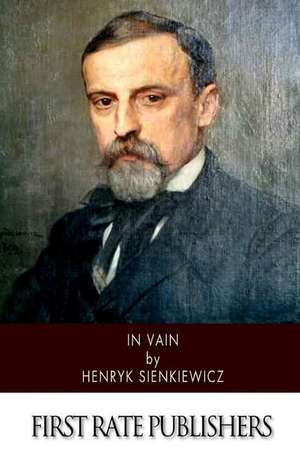
In Vain
Autor Henryk Sienkiewiczen Limba Engleză Paperback
Preț: 39.29 lei
Puncte Express: 59
Carte disponibilă
Livrare economică 01-15 decembrie
Livrare prin curier în România Termenul estimat este afișat lângă disponibilitate.
Transport gratuit de la 400.00 lei Plată online sau ramburs, în funcție de opțiunile comenzii.
Retur gratuit în 14 zile Comandă securizată și suport în română.
Specificații
ISBN-13: 9781500883652
ISBN-10: 1500883654
Pagini: 78
Dimensiuni: 152 x 229 x 4 mm
Greutate: 0.12 kg
Editura: CREATESPACE
ISBN-10: 1500883654
Pagini: 78
Dimensiuni: 152 x 229 x 4 mm
Greutate: 0.12 kg
Editura: CREATESPACE
V-ar putea interesa
-
 The HippopotamusStephen Fry-30%Preț: 55.66 lei80.05 lei
-
 The Girl You Left BehindJojo MoyesPreț: 81.15 lei
-
 After YouJojo Moyes-16%Preț: 61.76 lei73.39 lei
-
 The BravoJames Fenimore CooperPreț: 115.36 lei
-
 The PlanterHerman WhitakerPreț: 122.00 lei
-
 What Never DiesBarbey D'AurevillyPreț: 203.34 lei
-
 The Supreme CrimeDorothea GerardPreț: 110.42 lei
-
 Finn and His CompanionsStandish O'GradyPreț: 95.77 lei
-
 Changes in Li VillageChao Shu-LiPreț: 118.58 lei
-
 -25%Preț: 59.03 lei79.13 lei
-
 Preț: 231.66 lei
-
 Creation Myths of Primitive AmericaJeremiah CurtinPreț: 56.55 lei
-
 Quo VadisSienkiewicz HenrykPreț: 159.63 lei
-
 The Ancient Highway: A Novel of High Hearts and Open RoadsJames Oliver CurwoodPreț: 115.40 lei
-
 Conscript: A Tale of the Empire, theAlexandre DumasPreț: 120.17 lei
-
 The DressmakerRosalie Ham-17%Preț: 59.70 lei72.19 lei
Notă biografică
Henryk Adam Aleksander Pius Sienkiewicz (1846 - 1916) was a Polish journalist, novelist and the Nobel Prize laureate. He is best remembered for his historical novels, especially for his internationally known best-seller Quo Vadis (1896). Born into an impoverished Polish noble family in Russian-ruled Congress Poland, in the late 1860s Sienkiewicz began publishing journalistic and literary pieces. In the late 1870s he traveled to the United States, sending back travel essays that won him popularity with Polish readers. In the 1880s he began serializing novels that further increased his popularity. He soon became one of the most popular Polish writers at the turn of the 20th century and numerous translations gained him international renown, culminating in his receipt of the 1905 Nobel Prize in Literature for his "outstanding merits as an epic writer."