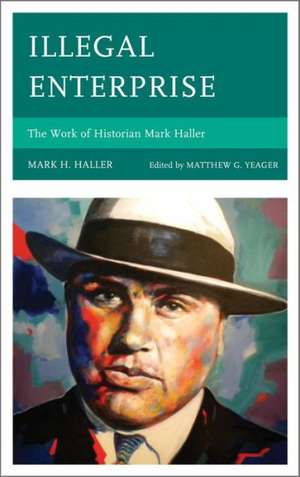
Illegal Enterprise: The Work of Historian Mark Haller
Autor Mark H. Haller Editat de Matthew G. Yeageren Limba Engleză Paperback – 20 feb 2015
Preț: 279.24 lei
Preț vechi: 379.61 lei
-26%
Puncte Express: 419
Carte tipărită la comandă
Livrare economică 01-15 decembrie
Livrare prin curier în România Termenul estimat este afișat lângă disponibilitate.
Transport gratuit de la 400.00 lei Plată online sau ramburs, în funcție de opțiunile comenzii.
Retur gratuit în 14 zile Comandă securizată și suport în română.
Specificații
ISBN-13: 9780761865056
ISBN-10: 0761865055
Pagini: 298
Ilustrații: 5 charts
Dimensiuni: 149 x 230 x 21 mm
Greutate: 0.41 kg
Editura: Bloomsbury Publishing
Colecția University Press of America
Locul publicării:New York, United States
ISBN-10: 0761865055
Pagini: 298
Ilustrații: 5 charts
Dimensiuni: 149 x 230 x 21 mm
Greutate: 0.41 kg
Editura: Bloomsbury Publishing
Colecția University Press of America
Locul publicării:New York, United States
V-ar putea interesa
-
 CaponeLaurence BergreenPreț: 153.99 lei
 -
 The Chicago OutfitJohn J BinderPreț: 129.22 lei
 -
 Gangland Chicago: Criminality and Lawlessness in the Windy CityRichard C. LindbergPreț: 325.93 lei
 -
 CrackDavid FarberPreț: 110.67 lei
 -
 Button ManAndrew GrossPreț: 62.87 lei
 -
 Mafia: A Global HistoryRyan Gingeras-17%Preț: 103.17 lei124.52 lei
 -
 CasinoNicholas PileggiPreț: 67.32 lei
 -
 Organized CrimeKlaus Von Lampe-22%Preț: 658.90 lei844.73 lei
 -
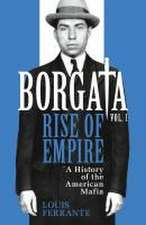 Borgata: Rise of Empire: A History of the American MafiaLouis Ferrante-26%Preț: 69.81 lei93.97 lei
 -
 Homo CriminalisMark GaleottiPreț: 141.38 lei
 -
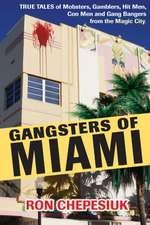 -30%Preț: 127.47 lei182.73 lei
 -
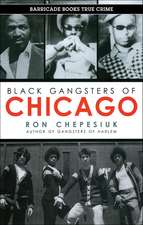 Black Gangsters of ChicagoRon Chepesiuk-29%Preț: 94.81 lei133.22 lei
 -
 -26%Preț: 140.80 lei189.77 lei
 -
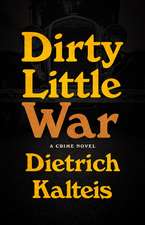 Dirty Little War: A Crime NovelDietrich KalteisPreț: 125.10 lei
 -
 Money to BurnAsta Olivia NordenhofPreț: 106.92 lei
 -
 City of Devils: A Shanghai NoirPaul French-26%Preț: 68.58 lei93.24 lei
 -
 The BusinessDick Hobbs-17%Preț: 55.29 lei66.29 lei
 -
 Hoods: The Gangs of Nottingham: A Study in Organised CrimeCarl Fellstrom-18%Preț: 53.29 lei64.97 lei
Cuprins
Part I: Chicago
Chapter 1: Illinois Association for Criminal Justice
Chapter 2: John Landesco and the Illinois Crime Survey (1929)
Chapter 3: Organized Crime in Urban Society: Chicago in the Twentieth Century (1971)
Chapter 4: Biographical Sketches: Al Capone, Jack Guzik, Arnold Rothstein, Meyer Lansky and Max Hoff; Definition of Organized Crime
Part II : Philadelphia
Chapter 5: Philadelphia Bootlegging and the Report of the Special August Grand Jury (1985)
Chapter 6: The Bruno Family of Philadelphia: Organized Crime as a Regulatory Agency (1994)
Chapter 7: Loansharking in Philadelphia: Social Control in an Illegal Enterprise (1992)
Part III - Illegal Enterprise Theory
Chapter 8: The Changing Structure of American Gambling in the Twentieth Century (1979)
Chapter 9: Loansharking in American Cities: Historical Analysis of a Marginal Enterprise (1977)
Chapter 10: Bootleggers as Businessmen: From City Slums to City Builders (1985)
Chapter 11: Illegal Enterprise: A Theoretical and Historical Interpretation (1990)
Subject Index
Chapter 1: Illinois Association for Criminal Justice
Chapter 2: John Landesco and the Illinois Crime Survey (1929)
Chapter 3: Organized Crime in Urban Society: Chicago in the Twentieth Century (1971)
Chapter 4: Biographical Sketches: Al Capone, Jack Guzik, Arnold Rothstein, Meyer Lansky and Max Hoff; Definition of Organized Crime
Part II : Philadelphia
Chapter 5: Philadelphia Bootlegging and the Report of the Special August Grand Jury (1985)
Chapter 6: The Bruno Family of Philadelphia: Organized Crime as a Regulatory Agency (1994)
Chapter 7: Loansharking in Philadelphia: Social Control in an Illegal Enterprise (1992)
Part III - Illegal Enterprise Theory
Chapter 8: The Changing Structure of American Gambling in the Twentieth Century (1979)
Chapter 9: Loansharking in American Cities: Historical Analysis of a Marginal Enterprise (1977)
Chapter 10: Bootleggers as Businessmen: From City Slums to City Builders (1985)
Chapter 11: Illegal Enterprise: A Theoretical and Historical Interpretation (1990)
Subject Index
Recenzii
This book is well suited for undergraduate classes within criminology or criminal justice programs that focus on policy. The language in the book is written in a manner that citizens outside of criminology will benefit as well. . . .For those in the criminology field, most well-trained criminologists will be familiar with several of the examples of well-documented programs and studies provided in the book, such as problem-oriented policing and drug treatment courts. . . .Mathew Yeager has given us a worthy compendium of Haller's major work and contributions on the subject of how organized crime is actually organized, including some of Haller's publications which are now difficult to find.
It is organized to showcase three of Haller's unique contributions to the field: rediscovery and highlighting of the circumstances and content of John Landesco's 1929 study of organized crime in Chicago; a description and commentary on the activities of the Angelo Bruno family in Philadelphia; and an analysis...of Illegal Enterprise accompanied by studies of three particular businesses, gambling, loan sharking and bootlegging. They are tied together through Haller's self-perception "as a social scientist, using the tools of a trained historian".... [I]f I were designing an introductory course in Organized Crime, Illegal Enterprisewould be one of the books on my recommended reading list.
This monograph brings together the major works and unpublished papers of Mark Haller, whose scholarship spans more than forty years. . . . His pioneering work on organized crime in the United States influenced the move away from organized crime as a bureaucracy of evil to a modern view that recognizes the phenomenon as an enterprise of interconnected partnerships devoid of an overarching leadership. . . . This book is a valuable addition to the literature on organized crime, providing a one-volume source for the essential work of Mark Haller.
It is organized to showcase three of Haller's unique contributions to the field: rediscovery and highlighting of the circumstances and content of John Landesco's 1929 study of organized crime in Chicago; a description and commentary on the activities of the Angelo Bruno family in Philadelphia; and an analysis...of Illegal Enterprise accompanied by studies of three particular businesses, gambling, loan sharking and bootlegging. They are tied together through Haller's self-perception "as a social scientist, using the tools of a trained historian".... [I]f I were designing an introductory course in Organized Crime, Illegal Enterprisewould be one of the books on my recommended reading list.
This monograph brings together the major works and unpublished papers of Mark Haller, whose scholarship spans more than forty years. . . . His pioneering work on organized crime in the United States influenced the move away from organized crime as a bureaucracy of evil to a modern view that recognizes the phenomenon as an enterprise of interconnected partnerships devoid of an overarching leadership. . . . This book is a valuable addition to the literature on organized crime, providing a one-volume source for the essential work of Mark Haller.