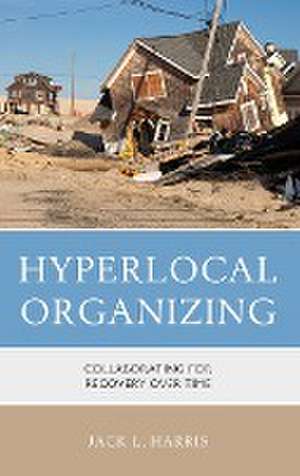
Hyperlocal Organizing: Collaborating for Recovery Over Time: Environmental Communication and Nature: Conflict and Ecoculture in the Anthropocene
Autor Jack L. Harrisen Limba Engleză Hardback – 21 oct 2022
| Toate formatele și edițiile | Preț | Express |
|---|---|---|
| Paperback (1) | 209.11 lei 6-8 săpt. | |
| Bloomsbury Publishing – 21 mar 2024 | 209.11 lei 6-8 săpt. | |
| Hardback (1) | 500.03 lei 6-8 săpt. | |
| Bloomsbury Publishing – 21 oct 2022 | 500.03 lei 6-8 săpt. |
Din seria Environmental Communication and Nature: Conflict and Ecoculture in the Anthropocene
- nou
 Preț: 555.32 lei
 - 31%
 Preț: 479.24 lei
 - 34%
 Preț: 586.45 lei
 - 34%
 Preț: 525.12 lei
 - 26%
 Preț: 245.08 lei
 - 25%
 Preț: 209.11 lei
 - 34%
 Preț: 499.57 lei
 - 34%
 Preț: 611.88 lei
 - 26%
 Preț: 247.64 lei
 - 25%
 Preț: 272.03 lei
 - 31%
 Preț: 494.33 lei
 - 31%
 Preț: 441.48 lei
 - 34%
 Preț: 501.30 lei
 - 31%
 Preț: 415.95 lei
 - 24%
 Preț: 211.95 lei
Preț: 500.03 lei
Preț vechi: 753.75 lei
-34%
Puncte Express: 750
Preț estimativ în valută:
88.49€ • 103.42$ • 76.83£
88.49€ • 103.42$ • 76.83£
Carte tipărită la comandă
Livrare economică 19 februarie-05 martie
Preluare comenzi: 021 569.72.76
Specificații
ISBN-13: 9781666927238
ISBN-10: 1666927236
Pagini: 172
Dimensiuni: 160 x 238 x 19 mm
Greutate: 0.43 kg
Editura: Bloomsbury Publishing
Colecția Lexington Books
Seria Environmental Communication and Nature: Conflict and Ecoculture in the Anthropocene
Locul publicării:New York, United States
ISBN-10: 1666927236
Pagini: 172
Dimensiuni: 160 x 238 x 19 mm
Greutate: 0.43 kg
Editura: Bloomsbury Publishing
Colecția Lexington Books
Seria Environmental Communication and Nature: Conflict and Ecoculture in the Anthropocene
Locul publicării:New York, United States
Cuprins
Table of Contents
Dedication
Acknowledgements
Introduction: Perpetual Disaster Response and Recovery: the New Normal?
Chapter 1: Communicating and Organizing after Disaster
Chapter 2: How Public Policy Shapes the Organizational Landscape of Disaster Recovery
Chapter 3: Writing Community Back into Disaster Recovery: Hyperlocal Organizing and Interorganizational Relationships
Chapter 4: Using Stakeholder Theory to Build Theories of Hyperlocal Organizing
Chapter 5: Hyperlocal Organizing after Hurricane Sandy: The View from Coastal New Jersey and Staten Island New York
Chapter 6: Empowering Community through Hyperlocal Organizing: Implications for Social Resilience and Democratic Governance
Appendix A
Appendix B
References
About the Author
Dedication
Acknowledgements
Introduction: Perpetual Disaster Response and Recovery: the New Normal?
Chapter 1: Communicating and Organizing after Disaster
Chapter 2: How Public Policy Shapes the Organizational Landscape of Disaster Recovery
Chapter 3: Writing Community Back into Disaster Recovery: Hyperlocal Organizing and Interorganizational Relationships
Chapter 4: Using Stakeholder Theory to Build Theories of Hyperlocal Organizing
Chapter 5: Hyperlocal Organizing after Hurricane Sandy: The View from Coastal New Jersey and Staten Island New York
Chapter 6: Empowering Community through Hyperlocal Organizing: Implications for Social Resilience and Democratic Governance
Appendix A
Appendix B
References
About the Author
Recenzii
After a disaster strikes, what happens once the rescue helicopters and cameras go away? In Hyperlocal Organizing, Harris offers an answer that is part cautionary tale and part template for academics and communities. Using research on the aftermath of Hurricane Sandy and drawing on examples from other disasters (e.g., September 11 and Hurricanes Katrina, Maria, and Harvey), Harris examines the overlooked details when "response morphs into recovery." In his analysis, the picture that emerges is how the Federal Emergency Management Administration, the Red Cross, and other established organizations come like bureaucratic hurricanes into affected communities. Generally, "top tier" organizations-though with some exceptions-have historically overlooked spontaneous volunteers, grassroots recovery efforts, and local organizations. The heart and soul of this book is the notion that recovery from crisis and disaster takes place at the grassroots, neighborhood, and community levels. As the United States and other countries continue to experience frequent, intense weather disasters, this book should serve as a guide on how to better integrate the top-tier responders more effectively with grassroots organizations, and also how to prepare communities for the most common scenarios they will face after the cameras leave: isolation and abandonment. Recommended. All readership levels.
Hyperlocal Organizing deftly walks readers through moment-by-moment analyses of material and human challenges in disaster recovery as neighbors, families, and volunteers first help and emergent groups form into local institutions. Rich examples and quotes from interviews and transcripts abound. Readers experience the boat flotillas that rescued workers stranded during 9-11, local restaurants and faith-based relief efforts that offered food and connection, and continuing struggles in New Orleans from Katrina and recurring storms. Details from the Hurricane Sandy long-term case study offer insights into communication management, social resilience, and democratic governance with transferrable applications to ever-emerging disruptions.
"Hyperlocal Organizing is a significant contribution to the literature on long-term recovery after disasters, especially from extreme natural events. The volume is conceptually rich, draws careful lessons from the response to Hurricane Sandy, and provides valuable guidance for community involvement in recovery from future events."
"Hyperlocal Organizing is a rich tour of the emergent actors, institutional players, and policies that shapes disaster response in the United States. This is a must-read for anyone interested in building social impact networks that support resilient communities."
"Jack Harris draws upon an interdisciplinary body of theory and his own extensive experience working with long-term recovery following Hurricane Sandy to develop the concept of hyperlocal organizing. In the process, he foregrounds and contributes to groundbreaking theories of organizational communication and interorganizational collaboration, and their connections with stakeholder theories and theories of democratic governance. With a theoretically compelling yet accessible voice, Jack Harris offers an inspiring example of how love of place motivates participation in long-term disaster research and recovery, and leadership for how to improve both."
Hyperlocal Organizing deftly walks readers through moment-by-moment analyses of material and human challenges in disaster recovery as neighbors, families, and volunteers first help and emergent groups form into local institutions. Rich examples and quotes from interviews and transcripts abound. Readers experience the boat flotillas that rescued workers stranded during 9-11, local restaurants and faith-based relief efforts that offered food and connection, and continuing struggles in New Orleans from Katrina and recurring storms. Details from the Hurricane Sandy long-term case study offer insights into communication management, social resilience, and democratic governance with transferrable applications to ever-emerging disruptions.
"Hyperlocal Organizing is a significant contribution to the literature on long-term recovery after disasters, especially from extreme natural events. The volume is conceptually rich, draws careful lessons from the response to Hurricane Sandy, and provides valuable guidance for community involvement in recovery from future events."
"Hyperlocal Organizing is a rich tour of the emergent actors, institutional players, and policies that shapes disaster response in the United States. This is a must-read for anyone interested in building social impact networks that support resilient communities."
"Jack Harris draws upon an interdisciplinary body of theory and his own extensive experience working with long-term recovery following Hurricane Sandy to develop the concept of hyperlocal organizing. In the process, he foregrounds and contributes to groundbreaking theories of organizational communication and interorganizational collaboration, and their connections with stakeholder theories and theories of democratic governance. With a theoretically compelling yet accessible voice, Jack Harris offers an inspiring example of how love of place motivates participation in long-term disaster research and recovery, and leadership for how to improve both."