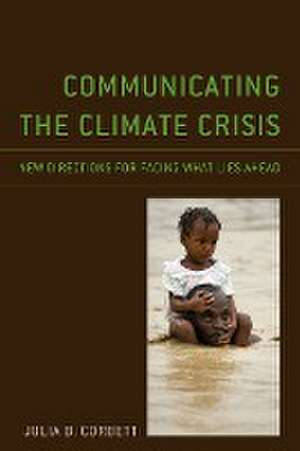
Communicating the Climate Crisis: New Directions for Facing What Lies Ahead: Environmental Communication and Nature: Conflict and Ecoculture in the Anthropocene
Autor Julia B. Corbetten Limba Engleză Paperback – 10 mar 2022





Preț: 245.00 lei
Preț vechi: 340.12 lei
-28%
Puncte Express: 368
Carte tipărită la comandă
Livrare economică 08-22 iunie
Specificații
ISBN-13: 9781793638045
ISBN-10: 1793638047
Pagini: 230
Ilustrații: 2 b/w photos; 2 tables; 5 textboxes;
Dimensiuni: 155 x 218 x 14 mm
Greutate: 0.38 kg
Editura: Bloomsbury Publishing
Colecția Lexington Books
Seria Environmental Communication and Nature: Conflict and Ecoculture in the Anthropocene
Locul publicării:New York, United States
ISBN-10: 1793638047
Pagini: 230
Ilustrații: 2 b/w photos; 2 tables; 5 textboxes;
Dimensiuni: 155 x 218 x 14 mm
Greutate: 0.38 kg
Editura: Bloomsbury Publishing
Colecția Lexington Books
Seria Environmental Communication and Nature: Conflict and Ecoculture in the Anthropocene
Locul publicării:New York, United States
Cuprins
Table of Contents
Chapter 1: Eairth
Chapter 2: Fossil Fuel Culture
Chapter 3: Individuals as Social Actors, Not Consumers
Chapter 4: Emotions and Climate Silence
Chapter 5: Breaking the Silence: Strategies for Talking About Climate Change
Chapter 6: Justice and Faith: The Moral Imperative of Climate Change
Chapter 7: A New Relationship with Eairth
Chapter 8: Telling a New Story
Chapter 1: Eairth
Chapter 2: Fossil Fuel Culture
Chapter 3: Individuals as Social Actors, Not Consumers
Chapter 4: Emotions and Climate Silence
Chapter 5: Breaking the Silence: Strategies for Talking About Climate Change
Chapter 6: Justice and Faith: The Moral Imperative of Climate Change
Chapter 7: A New Relationship with Eairth
Chapter 8: Telling a New Story
Recenzii
Corbett.[makes] a valuable contribution to the contemporary climate change conversation. In a sea of politically divisive, self-serving denier narratives and fear-inspiring scientific predictions, Corbett steers a course of hopeful, informed, and effective "conversations," addressing readers directly to inspire positive action. Tables and extensive chapter notes provide valuable research sources, and each chapter includes hands-on persuasive suggestions for how to evoke emotionally authentic responses in others. While Corbett acknowledges that top-down strategies emanating from international, national/federal, and regional government sources are likely the most effective for dealing with a global problem (as confirmed by evidence from addressing contemporary free-rider COVID-19 vaccination hesitancy/denier issues), her book focuses almost exclusively on bottom-up, grassroots strategies. This contrast nearly amounts to a problem, but Corbett's text conveys hope that creating direct responses evoked by personal stories/narratives will help readers contribute to ground-level, incremental solutions and pressures, ultimately influencing top-down decision makers. This book is sure to function as a source of helpful academic information as well as a primer for the ongoing development of communication and social practices around grassroots actions to foster community-based climate change solutions. Highly recommended. All readers.
This monograph, written by a communication scholar and supported by abundant literature, seems distinctly more personal than many others on this subject. Corbett seems to speak directly to the reader, using second person and sometimes first person liberally and talking freely about the emotions many experience in the face of climate change. How should we think about this era, how does it make us feel, and what should we do and say? Reading excerpts from this book is like having a conversation with a friend about climate. The author suggests we should try to imagine "new stories" about the future, certainly a hopeful idea. This seems a very thoughtful book that encourages reflection.
In this comprehensive and engagingly written book, Julia Corbett lays out not only the scientific, philosophical, and emotional dimensions of global climate change, but a compelling primer for more effective communication about the most pressing environmental crisis of our time. This is a book for teachers and students, activists and politicians, scientists and artists-for anyone hoping to do a better job of communicating climate change or to understand how effective communication can enable all of us to face our changing planet.
In her book Communicating the Climate Crisis, Julia Corbett stands unblinking in front of humanity's fiercest enemy-like David stood before Goliath. In a calming voice, she patiently explains to her readers how we made this foe, and how with the strategic use of communication we can unmake it-and thereby create a better and more sustainable world.
Showing how fossil fuels are deeply embedded in our life practices and beliefs, Corbett argues with simplicity and clarity that a deep cultural and communicative shift can lead to a lasting solution to climate change. Embracing a paradigmatic reposition from an individual to a social focus, she opens up new intellectual and practical perspectives for climate communication. This accessible and elegant book can move climate communication out of its stasis and toward a more efficacious discipline. The field of climate communication needs to take note.
In Communicating the Climate Crisis, Julia Corbett brings together scientific research and numerous reflexive accounts of observations of human relations with the natural world. The book offers a fascinating narrative on the web of meanings and materialities involved in climate change, and Corbett's writing style is both catchy and eloquent in bridging scholarship and lived experience. Going beyond academic analysis of climate change communication, she conducts an empowering dialogue with the reader that includes a wealth of practical suggestions for climate-focused social interaction.
Julia Corbett clearly recognizes that climate communication has long ceased to be about "imparting" the science; if common ground is to be found, it must account for our emotions, values, and moral convictions. This book makes climate communication a central vehicle for rethinking and redefining our relationship to this planet, for finding communion at last with our beautiful and endangered "Eairth.
Climate change: often, just hearing those words makes you want to curl up in a ball and hope it goes away. Corbett empathetically unpacks the sources of our fear and anxiety that drive denial and dissociation. In doing so, she drags some of our most feared monsters out from under the bed into the light; and she doesn't stop there. This book also offers tangible suggestions on how to tackle our monsters, overcome our fears, and connect with each other in meaningful ways that we all crave. Positive and empowering, Corbett shows how envisioning a better future together is the first step to making it a reality.
Too many prescriptions for communicating climate change start with flawed us-versus-them, problem-solution delineations of the challenge and thus end with simplistic message menus that are bound to fail. In refreshing contrast, Julia Corbett embraces the super-wicked complexity of this, the ultimate clash between human aspirations and planetary limits. She wisely calls as much for deep listening as engaging narrative and offers a solid map toward impact.
This monograph, written by a communication scholar and supported by abundant literature, seems distinctly more personal than many others on this subject. Corbett seems to speak directly to the reader, using second person and sometimes first person liberally and talking freely about the emotions many experience in the face of climate change. How should we think about this era, how does it make us feel, and what should we do and say? Reading excerpts from this book is like having a conversation with a friend about climate. The author suggests we should try to imagine "new stories" about the future, certainly a hopeful idea. This seems a very thoughtful book that encourages reflection.
In this comprehensive and engagingly written book, Julia Corbett lays out not only the scientific, philosophical, and emotional dimensions of global climate change, but a compelling primer for more effective communication about the most pressing environmental crisis of our time. This is a book for teachers and students, activists and politicians, scientists and artists-for anyone hoping to do a better job of communicating climate change or to understand how effective communication can enable all of us to face our changing planet.
In her book Communicating the Climate Crisis, Julia Corbett stands unblinking in front of humanity's fiercest enemy-like David stood before Goliath. In a calming voice, she patiently explains to her readers how we made this foe, and how with the strategic use of communication we can unmake it-and thereby create a better and more sustainable world.
Showing how fossil fuels are deeply embedded in our life practices and beliefs, Corbett argues with simplicity and clarity that a deep cultural and communicative shift can lead to a lasting solution to climate change. Embracing a paradigmatic reposition from an individual to a social focus, she opens up new intellectual and practical perspectives for climate communication. This accessible and elegant book can move climate communication out of its stasis and toward a more efficacious discipline. The field of climate communication needs to take note.
In Communicating the Climate Crisis, Julia Corbett brings together scientific research and numerous reflexive accounts of observations of human relations with the natural world. The book offers a fascinating narrative on the web of meanings and materialities involved in climate change, and Corbett's writing style is both catchy and eloquent in bridging scholarship and lived experience. Going beyond academic analysis of climate change communication, she conducts an empowering dialogue with the reader that includes a wealth of practical suggestions for climate-focused social interaction.
Julia Corbett clearly recognizes that climate communication has long ceased to be about "imparting" the science; if common ground is to be found, it must account for our emotions, values, and moral convictions. This book makes climate communication a central vehicle for rethinking and redefining our relationship to this planet, for finding communion at last with our beautiful and endangered "Eairth.
Climate change: often, just hearing those words makes you want to curl up in a ball and hope it goes away. Corbett empathetically unpacks the sources of our fear and anxiety that drive denial and dissociation. In doing so, she drags some of our most feared monsters out from under the bed into the light; and she doesn't stop there. This book also offers tangible suggestions on how to tackle our monsters, overcome our fears, and connect with each other in meaningful ways that we all crave. Positive and empowering, Corbett shows how envisioning a better future together is the first step to making it a reality.
Too many prescriptions for communicating climate change start with flawed us-versus-them, problem-solution delineations of the challenge and thus end with simplistic message menus that are bound to fail. In refreshing contrast, Julia Corbett embraces the super-wicked complexity of this, the ultimate clash between human aspirations and planetary limits. She wisely calls as much for deep listening as engaging narrative and offers a solid map toward impact.