
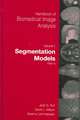
Handbook of Biomedical Image Analysis: Topics in Biomedical Engineering. International Book Series
Editat de David Wilson, Swamy Laxminarayanen Limba Engleză Mixed media product – 9 iun 2005
Together these three volumes of the Handbook of Biomedical Image Analysis, Volume 1 - Segementation Part A; Volume 2-Segmentation Part B; and Volume 3 - Registration, illustrate the role of the fusion of registration and segmentation systems for complete biomedical applications therapy delivery benefiting the biomedical doctors, clinical researchers, radiologists and others.
Each volume in this set features a CD-ROM containing pedagogical material and numerous color illustrations.
| Toate formatele și edițiile | Preț | Express |
|---|---|---|
| Paperback (2) | 1453.97 lei 6-8 săpt. | |
| Springer Us – 9 iun 2005 | 1453.97 lei 6-8 săpt. | |
| Springer Us – 26 noi 2014 | 2771.97 lei 6-8 săpt. | |
| Hardback (2) | 2364.86 lei 6-8 săpt. | |
| Springer Us – 9 iun 2005 | 2364.86 lei 6-8 săpt. | |
| Springer Us – 9 iun 2005 | 2698.54 lei 39-44 zile |


Preț: 1623.28 lei
Preț vechi: 2766.94 lei
-41% Nou
Puncte Express: 2435
Preț estimativ în valută:
287.35€ • 334.13$ • 251.08£
287.35€ • 334.13$ • 251.08£
Carte indisponibilă temporar
Doresc să fiu notificat când acest titlu va fi disponibil:
Se trimite...
Preluare comenzi: 021 569.72.76
Specificații
ISBN-13: 9780387231266
ISBN-10: 0387231269
Pagini: 2038
Ilustrații: LVI, 2038 p. 791 illus., 30 illus. in color. With CD-ROM. 3 volume-set.
Dimensiuni: 165 x 248 x 137 mm
Ediția:2005
Editura: Springer Us
Colecția Springer
Seria Topics in Biomedical Engineering. International Book Series
Locul publicării:New York, NY, United States
ISBN-10: 0387231269
Pagini: 2038
Ilustrații: LVI, 2038 p. 791 illus., 30 illus. in color. With CD-ROM. 3 volume-set.
Dimensiuni: 165 x 248 x 137 mm
Ediția:2005
Editura: Springer Us
Colecția Springer
Seria Topics in Biomedical Engineering. International Book Series
Locul publicării:New York, NY, United States
V-ar putea interesa
-
 Pathological AltruismBarbara Oakley-27%Preț: 546.40 lei750.89 lei
 -
 Conceptualizing Sexual Harassment as Discursive PracticeShereen G. Bingham-28%Preț: 475.02 lei658.63 lei
 -
 Rheumatology Board ReviewKaren Law-5%Preț: 471.63 lei496.45 leiRecomandat
 -
 -34%Preț: 296.74 lei449.04 lei
 -
 Midfacial RejuvenationMorris E. Hartstein-5%Preț: 700.92 lei737.81 lei
 -
 Manual of Clinical OncologyBartosz Chmielowski M.D., Ph.D-22%Preț: 372.53 lei478.47 lei
 -
 Flaps: Practical Reconstructive SurgeryKayvan Shokrollahi-23%Preț: 1761.11 lei2287.16 lei
 -
 The Longest InjusticeAlex AlexandrowiczPreț: 207.64 lei
 -
 Prison(er) EducationWilsonPreț: 210.05 lei
 -
 Preț: 215.54 lei
Public țintă
ResearchCuprins
Volume 1: A Basic Model for IVUS Image Simulation.- Quantitative Functional Imaging with Positron Emission Tomography.- Advances in Magnetic Resonance Angiography and Physical Principles.- Recent Advances in the Level Set Method - Shape from Shading Models.- Wavelets in Medical Image Processing - Improving the Initialization, Convergence, and Memory Utilization for Defomable Models.- Level Set Segmentation of Biological Volume Database.- Advanced Segmentation (Level Set) Techniques.- A Regional-aided Color Geometric Snake.- Co-Volume Level Set Method in Subjective Surface Based Medical Image Segmentation.
Volume 2: Model-Based Brain Tissue Classification.- Supervised Texture Classification for Intravascular Tissue Characterization.- Medical Image Segmentation: Methods and Applications in Functional Imaging.- Automatic Segmentation of Pancreatic Tumors in Computed Tomography.- Computerized Analysis and Vasodilation Parameterization in Flow-Mediated Dilation Tests from Ultrasonic Image Sequences.- Statistical and Adaptive Approaches for Optimal Segmentation in Medical Images.- Automatic Analysis of Color Fundus Photographs and its Application to the Diagnosis of Diabetic Retinopathy.- Segmentation Issues in Carotid Artery Atherosclerotic Plague Analysis with MRI.- Accurate Lumen Identification, Detection, and Quantification in MR Plague Volumes.- Hessian-based Multiscale Enhancement, Description, and Quantification of Second-Order 3D Local Structures from Medical Volume Data.- A Knowledge-Based Scheme for Digital Mammography - Simultaneous Fuzzy Segmentation of Medical Images.- Computer Aided Diagnosis of Mammographic Calcification Clusters: Impact of Segmentation.- Computer Supported Segmentation of Radiological Data.
Volume 3: Medical Image Registration: Theory Algorithms, and Case Studies.- State of the Art of Level Set Methods in Segmentation and Registration of Medical Imaging Modalities.- Three-Dimensional Rigid and Non-Rigid Image Restriction for the Pelvis and Prostate.- Stereo and Temporal Retinal Image Registration by Mutual Information Maximization.- Quantification of Brain Aneurysm Dimensions from CTA for Surgical Planning of Coiling Intervention.- Inverse Consistent Image Registration.- A Computer-Aided Design System for Segmentation of Volumetric Images.- Inter-subject Non-Rigid Registration: an Overview with Classification and the Romeo Algorithm.- Elastic Registration for Biomedical Applications.- Cross-entropy, reversed cross-entropy, and symmetric divergence similarity measures for 3D image registration: a comparative study.- Quo Vadis, Atlas-Based Segmentation?
Volume 2: Model-Based Brain Tissue Classification.- Supervised Texture Classification for Intravascular Tissue Characterization.- Medical Image Segmentation: Methods and Applications in Functional Imaging.- Automatic Segmentation of Pancreatic Tumors in Computed Tomography.- Computerized Analysis and Vasodilation Parameterization in Flow-Mediated Dilation Tests from Ultrasonic Image Sequences.- Statistical and Adaptive Approaches for Optimal Segmentation in Medical Images.- Automatic Analysis of Color Fundus Photographs and its Application to the Diagnosis of Diabetic Retinopathy.- Segmentation Issues in Carotid Artery Atherosclerotic Plague Analysis with MRI.- Accurate Lumen Identification, Detection, and Quantification in MR Plague Volumes.- Hessian-based Multiscale Enhancement, Description, and Quantification of Second-Order 3D Local Structures from Medical Volume Data.- A Knowledge-Based Scheme for Digital Mammography - Simultaneous Fuzzy Segmentation of Medical Images.- Computer Aided Diagnosis of Mammographic Calcification Clusters: Impact of Segmentation.- Computer Supported Segmentation of Radiological Data.
Volume 3: Medical Image Registration: Theory Algorithms, and Case Studies.- State of the Art of Level Set Methods in Segmentation and Registration of Medical Imaging Modalities.- Three-Dimensional Rigid and Non-Rigid Image Restriction for the Pelvis and Prostate.- Stereo and Temporal Retinal Image Registration by Mutual Information Maximization.- Quantification of Brain Aneurysm Dimensions from CTA for Surgical Planning of Coiling Intervention.- Inverse Consistent Image Registration.- A Computer-Aided Design System for Segmentation of Volumetric Images.- Inter-subject Non-Rigid Registration: an Overview with Classification and the Romeo Algorithm.- Elastic Registration for Biomedical Applications.- Cross-entropy, reversed cross-entropy, and symmetric divergence similarity measures for 3D image registration: a comparative study.- Quo Vadis, Atlas-Based Segmentation?
Caracteristici
The first time a work is being written which covers the role of image segmentation and image registration together The three volumes together constitute a real system for effective use in biomedical applications therapy, whether theory (the student) or application (the professional)
Notă biografică
Jasjit Suri, Ph.D. has spent the last 20 years in the field of computer and electrical engineering, and more than a decade in imaging sciences. Dr. Suri has a masters in computer sciences from the University of Illinois, a doctorate from the University of Washington, Seattle, and will soon receive his EMBA from the Weatherhead School of Management at Case Western Reserve University, Cleveland, Ohio. Dr. Suri has published over 100 technical publications in medical imaging, is a senior member of IEEE, member of the engineering honor societies Eta-Kappa-Nu and Tau-Beta-Phi, and a recipient of the President's Gold Medal in 1980. Prof. Swamy Laxminarayan, D.Sci. championed the field of Biomedical Engineering for over 30 years having held a variety of senior positions within the industry. He is an internationally recognized scientist, engineer, and educator with over 200 technical publications in biomedical information technology, computation biology, signal and image processing, biotechnology, and physiological system modeling. Prof. Laxminarayan is a fellow of AIMBE and a recipient of IEEE 3rd Millennium Medal.
Textul de pe ultima copertă
Handbook of Biomedical Image Analysis: Segmentation Models (Volume II) is dedicated to the segmentation of complex shapes from the field of imaging sciences using different mathematicaltechniques. This volume is aimed at researchers and educators in imaging sciences, radiological imaging, clinical and diagnostic imaging, physicists covering different medical imaging modalities, as well as researchers in biomedical engineering, applied mathematics, algorithmic development, computer vision, signal processing, computer graphics and multimedia in general, both in academia and industry.
Key Features:
--- Model-based brain tissue classification
--- Supervised texture classification for intravascular tissue characterization
--- Medical image segmentation: methods and applications in functional imaging
--- Automatic segmentation of pancreatic tumors in CT
--- Computerized analysis and vasodilation parameterization in flow-mediated dilation tests from ultrasonic image sequences
--- Adaptive approaches to optical segmentation in brain MRI Images
--- Automatic analysis of color fundus photographs and its application to the diagnosis of diabetic retinopathy
--- Segmentation issues of carotid plaque analysis in MRI
--- Accurate lumen identification, detection, and quantification in MR plaque volumes
--- Hessian-based multiscale enhancement, description, and quantification of second-order 3D local structures from medical volume data
--- A knowledge-based scheme for digital mammography
--- Simultaneous fuzzy segmentation
--- CAD of mammographic calicification: impact of segmentation
About the Editors:
Jasjit Suri, Ph.D. has spent over 20 years in the field of computer and electrical engineering, and more than a decade in imaging sciences. Dr. Suri has a masters degree in computer sciences from the University of Illinois and a doctorate in Electrical Engineering from the University of Washington, Seattle. Dr. Suri has published over 125 technical publications in medical imaging, as well as being a senior member of IEEE and a member of the engineering honor societies Eta-Kappa-Nu and Tau-Beta-Phi, and a recipient of the President's Gold Medal in 1980. He is also a fellow of American Institute of Medical and Biological Engineering.
David Wilson, Ph D. is a Professor of Biomedical Engineering and Radiology at Case Western Reserve University, having gained his doctorate from Rice University. He has over 60 refereed journal publications and is co-owner of several patents. Professor Wilson has actively developed biomedical imaging at CWRU. He has led a faculty recruitment effort, and he has served as PI or has been an active leader on multiple research and equipment developmental awards given to CWRU, including an NIH planning grant award for an in vivo Cellular and Molecular Imaging Center and an Ohio Wright Center of Innovation award. Swamy Laxminarayan, Dsc championed the field of Biomedical Engineering for over 30 years, having held a variety of senior positions within the industry. He is an internationally recognized scientist, engineer, and educator and has been published in over 200 technical publications in biomedical information technology, computation biology, signal and image processing, biotechnology, and physiological system modeling. Prof. Laxminarayan is a fellow of AIMBE and a recipient of IEEE 3rd Millennium Medal.
Key Features:
--- Model-based brain tissue classification
--- Supervised texture classification for intravascular tissue characterization
--- Medical image segmentation: methods and applications in functional imaging
--- Automatic segmentation of pancreatic tumors in CT
--- Computerized analysis and vasodilation parameterization in flow-mediated dilation tests from ultrasonic image sequences
--- Adaptive approaches to optical segmentation in brain MRI Images
--- Automatic analysis of color fundus photographs and its application to the diagnosis of diabetic retinopathy
--- Segmentation issues of carotid plaque analysis in MRI
--- Accurate lumen identification, detection, and quantification in MR plaque volumes
--- Hessian-based multiscale enhancement, description, and quantification of second-order 3D local structures from medical volume data
--- A knowledge-based scheme for digital mammography
--- Simultaneous fuzzy segmentation
--- CAD of mammographic calicification: impact of segmentation
About the Editors:
Jasjit Suri, Ph.D. has spent over 20 years in the field of computer and electrical engineering, and more than a decade in imaging sciences. Dr. Suri has a masters degree in computer sciences from the University of Illinois and a doctorate in Electrical Engineering from the University of Washington, Seattle. Dr. Suri has published over 125 technical publications in medical imaging, as well as being a senior member of IEEE and a member of the engineering honor societies Eta-Kappa-Nu and Tau-Beta-Phi, and a recipient of the President's Gold Medal in 1980. He is also a fellow of American Institute of Medical and Biological Engineering.
David Wilson, Ph D. is a Professor of Biomedical Engineering and Radiology at Case Western Reserve University, having gained his doctorate from Rice University. He has over 60 refereed journal publications and is co-owner of several patents. Professor Wilson has actively developed biomedical imaging at CWRU. He has led a faculty recruitment effort, and he has served as PI or has been an active leader on multiple research and equipment developmental awards given to CWRU, including an NIH planning grant award for an in vivo Cellular and Molecular Imaging Center and an Ohio Wright Center of Innovation award. Swamy Laxminarayan, Dsc championed the field of Biomedical Engineering for over 30 years, having held a variety of senior positions within the industry. He is an internationally recognized scientist, engineer, and educator and has been published in over 200 technical publications in biomedical information technology, computation biology, signal and image processing, biotechnology, and physiological system modeling. Prof. Laxminarayan is a fellow of AIMBE and a recipient of IEEE 3rd Millennium Medal.