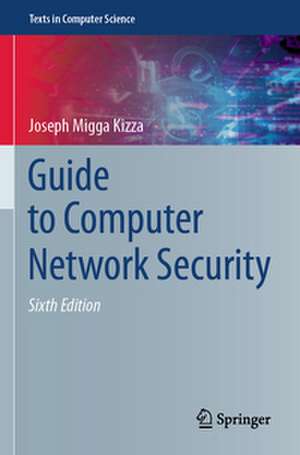
Guide to Computer Network Security: Texts in Computer Science
Autor Joseph Migga Kizzaen Limba Engleză Paperback – 21 ian 2025
Metodologia abordată în Guide to Computer Network Security pune accent pe arhitectura sistemelor reziliente și pe integrarea securității în întregul ecosistem digital, de la design patterns la securitatea virtualizată. Observăm o tranziție clară de la securitatea tradițională a rețelelor spre modele de calcul agile, impulsionate de inteligența artificială și de noile platforme virtuale. Subliniem faptul că această ediție a șasea, publicată în 2024, nu se limitează la aspectele teoretice, ci propune o structură riguros aplicativă prin exerciții de dificultate variată și proiecte practice care încheie fiecare capitol, facilitând testarea algoritmilor și protocoalelelor de apărare. Complementar lui Security in Computing de Charles Pfleeger, care se concentrează pe politici de securitate și protecție modulară, volumul lui Kizza extinde analiza către zonele emergente ale metaversului și tehnologiei blockchain. Dacă Pfleeger oferă bazele politicilor, Kizza aduce în discuție implementările tehnice în ecosisteme inteligente și rețele sociale, oferind o perspectivă tehnică actualizată asupra dependenței umane de infrastructura digitală. Poziționăm această lucrare în contextul operei autorului ca pe un pilon tehnic ce completează Ethical and Secure Computing. Dacă în lucrările anterioare Joseph Migga Kizza punea accent pe cadrul etic și social, în această ediție remarcăm o integrare a acestor provocări direct în arhitectura sistemelor de securitate. Cuprinsul reflectă o progresie logică: de la fundamentele rețelelor și analiza vulnerabilităților, la soluții specifice precum criptografia, firewall-urile, sistemele de detecție a intruziunilor și criminalistica informatică (digital forensics). Partea finală explorează impactul platformelor virtuale asupra securității viitoare, oferind cititorului un instrument de referință complet pentru mediile industriale intensive în date.
Din seria Texts in Computer Science
- 20%
 Preț: 330.09 lei
 - 20%
 Preț: 501.92 lei
 - 17%
 Preț: 396.70 lei
 - 20%
 Preț: 496.15 lei
 - 20%
 Preț: 445.89 lei
 - 20%
 Preț: 417.78 lei
 - 13%
 Preț: 442.58 lei
 - 15%
 Preț: 720.22 lei
 - 20%
 Preț: 484.25 lei
 - 20%
 Preț: 342.08 lei
 - 20%
 Preț: 693.33 lei
 - 20%
 Preț: 400.45 lei
 - 20%
 Preț: 344.40 lei
 - 20%
 Preț: 592.76 lei
 -
 Preț: 491.23 lei
 - 20%
 Preț: 379.48 lei
 - 15%
 Preț: 756.39 lei
 - 20%
 Preț: 373.23 lei
 - 20%
 Preț: 382.69 lei
 - 20%
 Preț: 310.74 lei
 - 20%
 Preț: 735.08 lei
 - 20%
 Preț: 671.21 lei
 - 20%
 Preț: 640.40 lei
 - 23%
 Preț: 795.37 lei
 - 20%
 Preț: 546.95 lei
 - 25%
 Preț: 322.31 lei
 - 20%
 Preț: 571.17 lei
 - 20%
 Preț: 589.70 lei
 - 20%
 Preț: 338.01 lei
 - 20%
 Preț: 359.44 lei
 - 20%
 Preț: 492.01 lei
 - 20%
 Preț: 583.46 lei
 - 30%
 Preț: 391.47 lei
 -
 Preț: 415.60 lei
 - 20%
 Preț: 514.49 lei
 - 20%
 Preț: 346.44 lei
 - 20%
 Preț: 750.96 lei
 - 20%
 Preț: 359.75 lei
 - 20%
 Preț: 320.19 lei
Preț: 569.72 lei
Preț vechi: 712.15 lei
-20%
Carte tipărită la comandă
Livrare economică 28 noiembrie-04 decembrie
Specificații
ISBN-10: 303147743X
Pagini: 672
Dimensiuni: 155 x 235 x 36 mm
Greutate: 1 kg
Ediția:Sixth Edition 2024
Editura: Springer
Colecția Texts in Computer Science
Seria Texts in Computer Science
V-ar putea interesa
-
 Computer Networks: A Systems ApproachLarry L. Peterson-41%Preț: 558.53 lei941.05 lei
 -
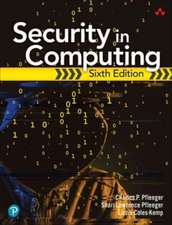 Security in ComputingCharles Pfleeger-20%Preț: 718.35 lei897.93 lei
 -
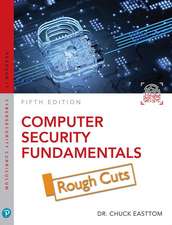 Computer Security FundamentalsWilliam Easttom-20%Preț: 503.67 lei629.59 lei
 -
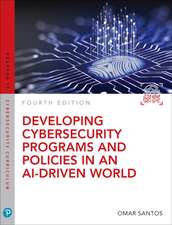 -20%Preț: 533.03 lei666.29 lei
 -
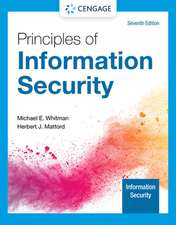 Principles of Information SecurityHerbert Mattord-23%Preț: 603.92 lei787.47 lei
 -
 Systematic Security: A CISO’s PlaybookTimur Qader-20%Preț: 367.98 lei459.97 leiRecomandat
 -
 Security+ Guide To Network Security FundamentalsMARK D. CIAMPA-20%Preț: 737.68 lei922.11 lei
 -
 -24%Preț: 432.06 lei571.07 lei
 -
 -43%Preț: 726.86 lei1268.03 lei
 -
 Cryptography and Network SecurityWilliam Stallings-20%Preț: 634.17 lei792.71 lei
 -
 Computer SecurityWilliam Stallings-9%Preț: 654.62 lei719.37 lei
 -
 Cybersecurity For Dummies, 3rd EditionJoseph Steinberg-20%Preț: 142.17 lei177.71 lei
 -
 Preț: 123.51 lei
 -
 -36%Preț: 295.82 lei462.12 lei
 -
 -36%Preț: 282.74 lei439.76 lei
 -
 Advances in AI for Cloud, Edge, and Mobile Computing ApplicationsShrikaant Kulkarni-20%Preț: 1296.62 lei1620.78 lei
 -
 Computer Security and the InternetPaul C. van Oorschot-20%Preț: 453.22 lei566.53 lei
 -
 Challenges in the IoT and Smart EnvironmentsReza Montasari-20%Preț: 1009.35 lei1261.68 lei
 -
 Cybersecurity EssentialsKodi A. Cochran-20%Preț: 265.48 lei331.85 lei
De ce să citești această carte
Recomandăm acest volum profesioniștilor și studenților care caută un echilibru între rigoarea teoretică și aplicațiile practice. Cititorul câștigă o viziune actualizată asupra riscurilor cibernetice din 2024, învățând să gestioneze securitatea în medii complexe, de la dispozitive mobile la infrastructuri cloud și blockchain. Proiectele practice incluse permit aplicarea imediată a conceptelor de apărare și răspuns la incidente, oferind un avantaj competitiv în peisajul tehnologic actual.
Despre autor
Joseph Migga Kizza este profesor de informatică și fost șef al Departamentului de Știința Calculatoarelor și Inginerie la Universitatea din Tennessee, Chattanooga. Cu o carieră dedicată securității rețelelor și eticii în era informației, a condus centrul UTC InfoSec, fiind o voce autorizată în dezbaterile internaționale despre securitatea spațiului cibernetic. Autor al mai multor manuale de succes publicate la Springer, Kizza a fost distins cu premiul internațional IIS pentru cercetare exemplară în inginerie și calcul. Expertiza sa se reflectă în capacitatea de a sintetiza teme complexe precum arhitectura computerelor și securitatea sistemelor de senzori într-un format accesibil și riguros.
Descriere scurtă
In the context of growing human dependence on a digital ecosystem, this book stresses the importance of security awareness—whether in homes, businesses, or public spaces. It also embraces the new and more agile and artificial-intelligence-boosted computing systems models, online social networks, and virtual platforms that are interweaving and fueling growth of an ecosystem of intelligent digital and associated social networks. This fully updated edition features new material on new and developing artificial intelligence models across all computing security systems spheres, blockchain technology, and the metaverse, leading toward security systems virtualizations.
Topics and features:
- Explores the range of risks and vulnerabilities in all connected digital systems
- Presents exercises of varying levels of difficulty at the end of each chapter, and concludes with a diverse selection of practical projects
- Describes the fundamentals of traditional computer network security, and common threats to security
- Discusses the role and challenges of artificial intelligence in advancing the security of computing systems’ algorithms, protocols, and best practices
- Raises thought-provoking questions regarding legislative, legal, social, technical, and ethical challenges, such as the tension between privacy and security
- Offers supplementary material for students and instructors at an associated website, including slides, additional projects, and syllabus suggestions
Professor Joseph Migga Kizza is a professor, former Head of the Department of Computer Science and Engineering, and a former Director of the UTC InfoSec Center, at the University of Tennessee at Chattanooga, USA. He also authored the successful Springer textbooks Ethical and Social Issues in the Information Age and Ethical and Secure Computing: A Concise Module.
Cuprins
Recenzii
"This book focuses on educating readers on the security problems that are likely to be encountered. … Overall, this is a well-written text that will provide readers with a solid foundation in information security. … it would also be appropriate as an introductory text for practitioners entering the field and for providing background and business context of security-related business issues for nontechnical managers." (W. T. Neumann, ACM Computing Reviews, May, 2009)
“This excellent book by Joseph Migga Kizza is very welcome. The author steers … to give a thorough, complete and very readable guide to the subject. … the book is well structured and presented – offering the basis of a strong balanced course. … stands by itself as a valuable guide. … Who is it for? A very good core text for an undergraduate course in network security, and valuable for any IT professional needing to refresh his or her understanding in this area … .” (Times Higher Education, Issue viii, December, 2009)
Textul de pe ultima copertă
This authoritative Guide to Computer Network Security explores computer network infrastructures and protocol design security flaws, and discusses current security solutions and best practices in both fixed and mobile computer networks. The book broadly surveys thought-provoking security issues, discussing and raising questions about the impact of new technologies and protocols (with particular emphasis on the rapid growth and skyrocketing interests and use in mobile technologies). It further explores the security threats and vulnerabilities in the current network infrastructure and protocols, and outlines current security efforts. The text assumes a modest familiarity with basic computer programming and networking.
Features:
• Covers the very core of network security, and includes chapters about the very latest in ‘handling disasters’ and ‘security in mobile network systems’
• Presents an in-depth discussion of standardization, again informing the reader on current trends on the topic
• Raises awareness of the security problems in cyberspace, and more particularly, computer network security
• Discusses computer network infrastructure and protocol design flaws and vulnerabilities
• Explores the role of legislation and law enforcement in maintaining computer and computer network security
• Proposes efficient and widely acceptable solutions and best practices to security problems, and encourages readers to investigate other possiblesolutions
• Alerts the reader to the daunting security problems in increasingly popular mobile network systems
• Includes two types of end-of-chapter exercises: quickly workable questions, as well as more thought-provoking advanced exercises
• Devotes one complete chapter to lab exercises: weekly, semester assignments and hard open-research projects
• Endeavours to use open source software tools throughout
• Provides support materials for lecturers and students such as PowerPoint slides, syllabus suggestions, solutions, instructor manual and student laboratory materials
This text/reference is an invaluable instructional and research tool for undergraduates in computer and information security. It is also a rich resource for practitioners, and professionals looking to gain an understanding of computer network infrastructure and information network security.
Dr Joseph Migga Kizza has also written Computer Network Security and Ethical and Social Issues in the Information Age.
Key Topics:
Network Vulnerabilities
Hostile Scripts
Security Assessment
Authentication
Cryptography
Computer and Network Forensics
Network Security Protocols
Security in Wireless and Sensor Networks