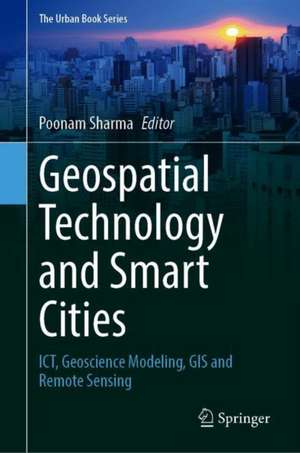
Geospatial Technology and Smart Cities: ICT, Geoscience Modeling, GIS and Remote Sensing: The Urban Book Series
Editat de Poonam Sharmaen Limba Engleză Hardback – 7 iul 2021
Notăm cu interes apariția volumului Geospatial Technology and Smart Cities, o lucrare care vine să completeze o lacună evidentă în literatura academică actuală: lipsa unei punți integrate între cercetarea fundamentală în geostiințe și aplicațiile practice de planificare urbană în contextul orașelor inteligente. Recomandăm acest titlu ca pe o resursă esențială pentru înțelegerea modului în care datele geospațiale pot gestiona provocările climatice și demografice contemporane. Volumul acoperă aceeași arie tematică precum Geoinformatics for Sustainable Urban Development, dar cu o abordare mult mai tehnică și axată pe modelare computațională, oferind soluții specifice pentru cartografierea riscurilor și managementul energiei solare.
Structura cărții este riguros organizată în secțiuni ce pornesc de la rolul tehnologiei în dezvoltarea urbană și avansează spre analize complexe ale expansiunii teritoriale. Notăm prezența unor capitole inovatoare, precum cel dedicat benchmarking-ului pentru accesul la iluminat global sau utilizarea hologramelor în simularea evoluției zonelor defavorizate. Această progresie de la teorie la simulare digitală 4D demonstrează relevanța volumului pentru curriculumul de urbanism și geografie.
În contextul operei editorului Poonam Sharma, această lucrare reprezintă o evoluție spre aplicații tehnice riguroase, păstrând totodată interesul pentru structuri educaționale și transfer de cunoștințe regăsit în Knowledge, Curriculum and Learning. Față de Advances in Urbanism, Smart Cities, and Sustainability, care explorează intersecția dintre AI și IoT, volumul de față se concentrează mai profund pe instrumentele de teledetecție și GIS, oferind o perspectivă interdisciplinară ce conectează sectorul guvernamental cu cel academic.
Din seria The Urban Book Series
- 15%
 Preț: 622.57 lei
 - 18%
 Preț: 702.08 lei
 - 15%
 Preț: 618.34 lei
 - 18%
 Preț: 752.72 lei
 - 15%
 Preț: 626.23 lei
 -
 Preț: 393.33 lei
 - 18%
 Preț: 970.48 lei
 - 15%
 Preț: 618.67 lei
 - 15%
 Preț: 628.97 lei
 - 18%
 Preț: 762.59 lei
 - 15%
 Preț: 623.93 lei
 - 15%
 Preț: 628.03 lei
 - 18%
 Preț: 702.82 lei
 - 20%
 Preț: 599.20 lei
 - 18%
 Preț: 1347.01 lei
 - 18%
 Preț: 1066.03 lei
 - 18%
 Preț: 919.01 lei
 - 18%
 Preț: 704.06 lei
 - 18%
 Preț: 912.09 lei
 - 15%
 Preț: 623.52 lei
 - 15%
 Preț: 624.38 lei
 - 18%
 Preț: 757.06 lei
 - 18%
 Preț: 705.18 lei
 - 15%
 Preț: 632.83 lei
 - 18%
 Preț: 964.40 lei
 - 18%
 Preț: 971.35 lei
 - 15%
 Preț: 637.87 lei
 - 18%
 Preț: 866.93 lei
 - 18%
 Preț: 858.26 lei
 - 15%
 Preț: 629.64 lei
 -
 Preț: 390.20 lei
 - 18%
 Preț: 917.28 lei
 - 18%
 Preț: 930.04 lei
 - 15%
 Preț: 620.73 lei
 - 20%
 Preț: 881.05 lei
 - 15%
 Preț: 625.77 lei
 - 20%
 Preț: 679.21 lei
 - 15%
 Preț: 618.21 lei
 - 18%
 Preț: 965.96 lei
 - 18%
 Preț: 913.62 lei
 - 18%
 Preț: 959.85 lei
 - 15%
 Preț: 627.58 lei
 - 18%
 Preț: 1082.72 lei
 - 15%
 Preț: 622.73 lei
 - 18%
 Preț: 1360.52 lei
Preț: 939.96 lei
Preț vechi: 1236.78 lei
-24%
Carte tipărită la comandă
Livrare economică 20-26 iunie
Specificații
ISBN-10: 3030719448
Pagini: 497
Ilustrații: XVIII, 497 p. 204 illus., 179 illus. in color.
Dimensiuni: 155 x 235 mm
Greutate: 1 kg
Ediția:1st ed. 2021
Editura: Springer International Publishing
Colecția Springer
Seria The Urban Book Series
Locul publicării:Cham, Switzerland
De ce să citești această carte
Recomandăm această carte urbaniștilor și cercetătorilor care doresc să treacă de la conceptul teoretic de „smart city” la implementări bazate pe date. Cititorul câștigă acces la studii de caz actuale despre insulele de căldură și managementul inundațiilor, primind un set de instrumente practice pentru utilizarea GIS și a teledetecției în rezolvarea crizelor urbane moderne. Este un ghid tehnic indispensabil pentru proiectarea infrastructurii reziliente.
Despre autor
Poonam Sharma este un cercetător și editor cu o traiectorie academică și profesională diversă, reflectată în varietatea temelor abordate în lucrările sale. A deținut funcția de Director al Harvard Entrepreneurs Club, unde a sprijinit dezvoltarea inițiativelor studențești, experiență care i-a consolidat viziunea asupra legăturii dintre inovație și aplicabilitatea practică. În cariera sa editorială, a explorat domenii variate, de la epistemologie și curriculum în Knowledge, Curriculum and Learning, până la ghiduri de antreprenoriat. Această expertiză multidisciplinară îi permite să coordoneze volume complexe în cadrul The Urban Book Series, facilitând dialogul între experți tehnici și factori de decizie în dezvoltarea urbană.