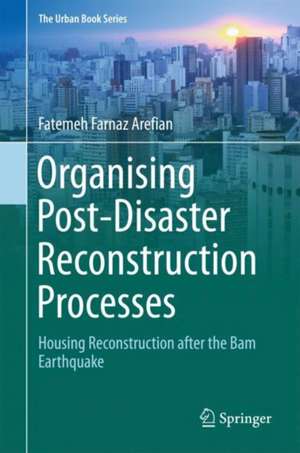
Organising Post-Disaster Reconstruction Processes: Housing Reconstruction after the Bam Earthquake: The Urban Book Series
Autor Fatemeh Farnaz Arefianen Limba Engleză Hardback – 26 feb 2018
Descoperim în Organising Post-Disaster Reconstruction Processes o analiză riguroasă a primei ediții din 2018, care investighează mecanismele complexe din spatele reconstrucției urbane. Spre deosebire de manualele generale de management, această lucrare se concentrează pe studiul de caz al cutremurului din Bam (2003), oferind un cadru analitic pentru organizarea programelor de reconstrucție care vizează nu doar refacerea fizică, ci și reducerea riscurilor viitoare. Suntem de părere că valoarea acestui volum rezidă în modul în care tratează designul organizațional ca pe un sistem dinamic, capabil de ajustări corective în timpul implementării.
Cartea extinde cadrul propus de Sustainable Housing Reconstruction de Esther Charlesworth cu date noi și specifice despre contextul administrativ și social din Iran. În timp ce Esther Charlesworth oferă o perspectivă globală prin multiple studii de caz, Fatemeh Farnaz Arefian alege profunzimea, disecând natura multi-organizațională a procesului din Bam. Lucrarea se integrează coerent în opera autoarei, completând temele de reziliență abordate în Historic Cities in the Face of Disasters și explorările socio-economice din Urban Change in Iran.
Structura este organizată logic în cinci părți: după o introducere metodologică, textul trece prin contextul seismic al regiunii și culminează cu analize sofisticate ale sistemelor socio-tehnice. Capitolele finale (9-12) sunt esențiale pentru înțelegerea modului în care configurația strategică a unui program de reconstrucție poate influența succesul pe termen lung în comunitățile afectate.
Din seria The Urban Book Series
- 15%
 Preț: 647.09 lei
 - 18%
 Preț: 702.08 lei
 - 15%
 Preț: 618.34 lei
 - 18%
 Preț: 761.17 lei
 - 15%
 Preț: 626.23 lei
 - 20%
 Preț: 911.38 lei
 - 18%
 Preț: 970.48 lei
 - 20%
 Preț: 679.21 lei
 - 18%
 Preț: 1347.70 lei
 - 18%
 Preț: 762.59 lei
 - 15%
 Preț: 623.93 lei
 - 18%
 Preț: 878.03 lei
 - 18%
 Preț: 919.01 lei
 - 18%
 Preț: 718.65 lei
 - 18%
 Preț: 1347.01 lei
 - 15%
 Preț: 618.67 lei
 - 18%
 Preț: 1092.64 lei
 - 15%
 Preț: 654.41 lei
 - 18%
 Preț: 731.82 lei
 - 18%
 Preț: 959.85 lei
 - 18%
 Preț: 935.94 lei
 - 18%
 Preț: 757.06 lei
 - 18%
 Preț: 705.18 lei
 - 15%
 Preț: 632.83 lei
 - 15%
 Preț: 621.42 lei
 - 18%
 Preț: 1009.69 lei
 - 15%
 Preț: 628.03 lei
 - 18%
 Preț: 866.93 lei
 -
 Preț: 407.19 lei
 - 18%
 Preț: 985.35 lei
 - 18%
 Preț: 917.28 lei
 - 15%
 Preț: 620.73 lei
 - 18%
 Preț: 946.73 lei
 - 15%
 Preț: 625.77 lei
 - 18%
 Preț: 1107.23 lei
 - 15%
 Preț: 618.21 lei
 - 15%
 Preț: 637.87 lei
 - 18%
 Preț: 913.62 lei
 - 15%
 Preț: 628.97 lei
 - 18%
 Preț: 986.48 lei
 -
 Preț: 390.20 lei
 - 15%
 Preț: 624.38 lei
 - 15%
 Preț: 622.73 lei
 - 18%
 Preț: 1384.27 lei
Preț: 623.52 lei
Preț vechi: 733.55 lei
-15%
Carte disponibilă
Livrare economică 24 octombrie-07 noiembrie
Specificații
ISBN-10: 3319709100
Pagini: 237
Ilustrații: XXII, 279 p. 47 illus., 45 illus. in color.
Dimensiuni: 155 x 235 mm
Greutate: 0.64 kg
Ediția:1st ed. 2018
Editura: Springer International Publishing
Colecția Springer
Seria The Urban Book Series
Locul publicării:Cham, Switzerland
De ce să citești această carte
Această lucrare este esențială pentru specialiștii în planificare urbană și managementul dezastrelor care doresc să înțeleagă logica organizațională din spatele reconstrucției la scară mare. Cititorul câștigă o perspectivă critică asupra modului în care structurile administrative pot facilita sau bloca reziliența comunitară, folosind lecțiile învățate dintr-unul dintre cele mai semnificative proiecte de reconstrucție urbană din secolul XXI.
Despre autor
Fatemeh Farnaz Arefian este un expert recunoscut în managementul reconstrucției și rezilienței urbane, cu un interes academic profund pentru regiunea Orientului Mijlociu. Opera sa, publicată în principal la Springer International Publishing, explorează intersecția dintre conservarea patrimoniului, dezvoltarea urbană și răspunsul la catastrofe. Prin lucrări precum Urban Heritage Along the Silk Roads și Persian Paradises at Peril, autoarea s-a impus ca o voce autoritară în analiza modului în care orașele istorice și peisajele culturale din Iran se adaptează provocărilor modernizării și riscurilor naturale, aducând o perspectivă cross-disciplinară necesară în studiile urbane contemporane.
Descriere scurtă
The housing reconstruction programme in Bam was a complex case, offering various learning opportunities to understand organising reconstruction processes especially in urban areas. The case study research explores how the urban housing reconstruction programme system was formed purposefully towards the delivery of the stated objectives and created an innovative housing process throughout the urban area. It identifies consistencies and inconsistencies among the influential organisational attributes of the programme delivery system formation. The system evolved through corrective adjustments (either formally or informally) during its implementation to reflect unfolding consequences of inconsistencies in initial formation and emerging contextual issues in the field.