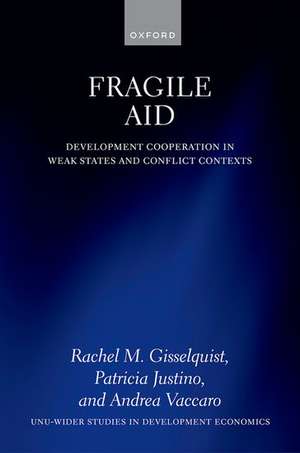
Fragile Aid: Development Cooperation in Weak States and Conflict Contexts: WIDER Studies in Development Economics
Editat de Rachel M. Gisselquist, Patricia Justino, Andrea Vaccaroen Limba Engleză Hardback – apr 2025
Descoperim în Fragile Aid un set riguros de instrumente analitice concepute pentru a naviga complexitatea asistenței internaționale în cele mai dificile medii politice. Editorii Rachel M. Gisselquist, Patricia Justino și Andrea Vaccaro pun la dispoziția specialiștilor cadre de evaluare și modele de analiză macro-cantitativă, menite să măsoare impactul real al ajutorului extern acolo unde instituțiile statului sunt precare sau absente. Apreciem în mod deosebit structura volumului, care nu se limitează la teorie, ci oferă șabloane de bune practici derivate din studii de caz concrete, esențiale pentru implementarea agendei de eficacitate a dezvoltării.
Abordarea diferă de Fragile States de Wim Naudé prin faptul că este mai puțin abstractă și mult mai aplicabilă; în timp ce Naudé se concentrează pe definirea eșecului statal, Fragile Aid se axează pe mecanismele tehnice de livrare a ajutorului în condiții de fragilitate. Comparativ cu The Fragmentation of Aid de Timo Casjen Mahn, care analizează arhitectura globală a donatorilor, acest volum coboară la nivelul execuției pe teren, oferind soluții pentru construirea unor instituții reziliente.
Această lucrare reprezintă o evoluție firească în opera editorului Rachel M. Gisselquist. Dacă în volumele anterioare, precum Aid and Institution-Building in Fragile States, accentul era pus pe diagnosticul instabilității, în Fragile Aid descoperim o rafinare a soluțiilor. Cartea consolidează temele recurente ale autorului despre legătura dintre pace și dezvoltare, dar aduce un plus de rigoare empirică prin integrarea datelor cross-naționale recente, oferind o perspectivă matură asupra modului în care cooperarea internațională poate genera progres social și politic în zone de conflict.
Din seria WIDER Studies in Development Economics
- 32%
 Preț: 659.22 lei
 - 32%
 Preț: 545.13 lei
 - 32%
 Preț: 714.62 lei
 - 32%
 Preț: 558.37 lei
 - 32%
 Preț: 590.18 lei
 - 32%
 Preț: 619.20 lei
 - 32%
 Preț: 829.43 lei
 - 19%
 Preț: 700.68 lei
 - 31%
 Preț: 664.65 lei
 - 14%
 Preț: 875.04 lei
 - 16%
 Preț: 182.83 lei
 - 19%
 Preț: 682.02 lei
 - 33%
 Preț: 871.22 lei
 - 29%
 Preț: 539.26 lei
 - 20%
 Preț: 413.34 lei
 - 32%
 Preț: 1045.53 lei
 - 33%
 Preț: 1010.47 lei
 - 33%
 Preț: 962.98 lei
 - 32%
 Preț: 1162.87 lei
 - 32%
 Preț: 1095.19 lei
 - 22%
 Preț: 214.91 lei
 - 30%
 Preț: 754.51 lei
 - 20%
 Preț: 413.53 lei
 - 28%
 Preț: 454.43 lei
 - 32%
 Preț: 1290.85 lei
 - 32%
 Preț: 1295.43 lei
 - 27%
 Preț: 408.44 lei
 - 33%
 Preț: 1537.97 lei
 - 21%
 Preț: 1503.66 lei
 - 32%
 Preț: 1079.96 lei
 - 24%
 Preț: 580.26 lei
 - 32%
 Preț: 1291.04 lei
 - 32%
 Preț: 1094.17 lei
 - 27%
 Preț: 549.39 lei
 - 25%
 Preț: 606.73 lei
 - 31%
 Preț: 1117.74 lei
 - 32%
 Preț: 1228.24 lei
 - 29%
 Preț: 496.30 lei
 - 18%
 Preț: 490.29 lei
 - 32%
 Preț: 1457.43 lei
 - 32%
 Preț: 1010.74 lei
 - 30%
 Preț: 1245.23 lei
 - 19%
 Preț: 378.70 lei
 - 29%
 Preț: 553.18 lei
Preț: 538.29 lei
Preț vechi: 808.59 lei
-33%
Carte disponibilă
Livrare economică 19-25 noiembrie
Specificații
ISBN-10: 019896028X
Pagini: 240
Dimensiuni: 160 x 240 x 20 mm
Greutate: 0.52 kg
Editura: OUP OXFORD
Colecția OUP Oxford
Seria WIDER Studies in Development Economics
Locul publicării:Oxford, United Kingdom
V-ar putea interesa
-
 Dead AidDambisa Moyo-19%Preț: 63.70 lei78.35 lei
 -
 Left BehindPaul CollierPreț: 93.10 lei
 -
 -32%Preț: 659.22 lei968.16 lei
 -
 -32%Preț: 656.92 lei966.77 lei
 -
 Aid to Africa: So Much To Do, So Little DoneCarol Lancaster-9%Preț: 642.77 lei706.34 lei
 -
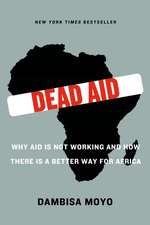 Dead AidDambisa MoyoPreț: 102.95 lei
 -
 Shared Prosperity in a Fractured WorldDani RodrikPreț: 165.33 lei
 -
 Hunger Inc.: Building Solidarity Beyond the Food BankKayleigh GarthwaitePreț: 122.54 lei
 -
 Preț: 423.92 lei
 -
 Preț: 391.11 lei
 -
 The Companion to Development StudiesVandana Desai-8%Preț: 543.23 lei590.48 lei
 -
 International DevelopmentMichael WoolcockPreț: 154.81 lei
 -
 -26%Preț: 1036.63 lei1404.38 lei
 -
 Developing Countries: Political, Economic & Social IssuesArthur Ramazzotti-27%Preț: 1331.54 lei1813.60 lei
 -
 Doom LoopEswar S. PrasadPreț: 185.03 lei
 -
 State Building: Governance and World Order in the 21st CenturyFrancis Fukuyama-19%Preț: 57.38 lei70.92 lei
 -
 Exploring the Effectiveness of International Knowledge CooperationStephan KlingebielPreț: 364.12 lei
 -
 The Nationalisation of UK Aid and DevelopmentMelita Lazell-18%Preț: 785.95 lei958.47 lei
 -
 Countries and RegionsGuang YangPreț: 442.68 lei
De ce să citești această carte
Această carte este indispensabilă profesioniștilor din domeniul economiei dezvoltării și oficialilor guvernamentali care lucrează în contexte de criză. Veți câștiga o înțelegere profundă a modului în care asistența externă poate fi calibrată pentru a nu destabiliza și mai mult statele fragile. Este un ghid strategic care transformă principiile teoretice de eficacitate în pași acționabili pentru construcția instituțională.
Despre autor
Rachel M. Gisselquist este un expert recunoscut în economia dezvoltării, cu un focus special pe statele fragile și guvernare. Contribuțiile sale în cadrul proiectelor UNU-WIDER au modelat dezbaterea actuală despre eficacitatea ajutorului extern. Patricia Justino și Andrea Vaccaro completează echipa editorială, aducând expertiză vastă în analiza conflictelor și a economiei politice. Împreună, acești autori au publicat lucrări fundamentale care analizează intersecția dintre instituțiile statului, reziliența socială și impactul cooperării internaționale în regiunile afectate de instabilitate cronică.