Cantitate/Preț
Produs

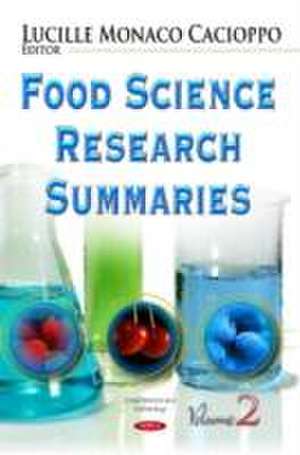
Food Science Research Summaries: Volume 2

Editat de Lucille T Cacioppo
en Hardback – iun 2014

Structura volumului Food Science Research Summaries este concepută ca un compendiu tehnic, oferind o privire de ansamblu asupra direcțiilor actuale din industria alimentară globală. Organizarea conținutului sub formă de rezumate de cercetare permite o parcurgere rapidă a unor subiecte complexe, de la mecanismele moleculare ale mierii în vindecarea rănilor, până la siguranța chimică a alimentelor și trasabilitatea produselor în rețelele de valoare. Această abordare fragmentată, dar exhaustivă, transformă volumul într-un instrument de referință pentru actualizarea cunoștințelor academice.

Pe același raft cu State-of-the-Art Technologies in Food Science, cartea se distinge prin formatul de tip „summaries”, care prioritizează esențializarea datelor în detrimentul analizei narative extinse. În timp ce lucrări precum Functional Foods and Nutraceuticals se concentrează pe formulări și inovații specifice, volumul editat de Lucille T Cacioppo acoperă un spectru mai larg, incluzând atât procesele de producție a laptelui, cât și metabolismul plantelor. Această lucrare continuă viziunea editorială a lui Cacioppo, observată și în Environmental & Agricultural Research Summaries sau Mind & Body Research Summaries, unde accentul cade pe colectarea contribuțiilor de la experți globali pentru a oferi o sinteză interdisciplinară. Subliniem rigoarea cu care sunt tratate teme de nișă, precum impactul procesării non-termice asupra componentelor bioactive, oferind cititorului o imagine clară a progresiei științifice în domeniu.

Citește tot Restrânge

Specificații

ISBN-13: 9781631178634
ISBN-10: 1631178636
Pagini: 312
Dimensiuni: 180 x 260 x 22 mm
Greutate: 0.74 kg
Editura: Nova Science Publishers Inc
Colecția Nova Science Publishers, Inc (US)
Locul publicării:United States

De ce să citești această carte

Recomandăm acest volum specialiștilor din industria alimentară și cercetătorilor care au nevoie de o actualizare rapidă și fundamentată științific asupra tendințelor actuale. Veți găsi aici date esențiale despre alimente funcționale și siguranță alimentară, structurate eficient pentru a economisi timp, oferind în același timp rigoarea academică specifică editurii Nova Science Publishers Inc.


Descriere

This book compiles research summaries from a number of different focuses in the important field of food science.

Cuprins

Preface; Advances in Cereal & Pseudocereal Research for Functional Foods; Cellular & Molecular Mechanisms of Honey Wound Healing; Chemical Food Safety & Health; Finger Millet: A Valued Cereal; Food as Medicine; Food Product Traceability in Value Networks; Honey: Current Research & Clinical Applications; Milk Production; Nutraceuticals & Functional Foods: Natural Remedy Title; Occurrences, Structure, Biosynthesis, & Health Benefits Based on Their Evidences of Medicinal Phytochemicals in Vegetables & Fruits. Volume 1; Seeds as Functional Foods & Nutraceuticals: New Frontiers in Food Science; Tannins & Phenolics in Animal Nutrition: Chemistry & Challenges; Traditional & Modern Japanese Soy Foods: Manufacturing, Nutrition & Cuisine of a Variety of Soy Foods for Health & Joy of Taste; Nitrogen Nutrition & Amino Acid Metabolism in Cucumber; Non-Thermal Food Processing: Impact on Chemical, Nutritional & Bioactive Components; Carotenoids & Adiposity; ß-Carotene & Peroxisome Proliferator-Activated Receptor Gamma; Beta-Carotene: Functions, Health Benefits, Adverse Effects & Applications; Approaches for the Stabilization & Administration of Beta-Carotene; Effects of Dietary Beta-Carotene on Lung Function, Respiratory Symptoms & Chronic Obstructive Pulmonary Disease; Milk Composition Disturbance & Animal Organism Dysfunction Caused by Aflatoxins: A Review; Size Characterization of Fat Globules in Dairy Products by Field Flow Fractionation; Dairy System Impacts on Milk Fat Composition Related to Human Health; Milk Fat Globules' Microstructure; Rheology, Texture & Functionality of Soy Protein Isolate-Based Potato Puree: Instrumental, Sensory & Structural Relationships; Soy Protein: Research Advances on the Relationships among the Processing Techniques, Nutritional Quality, Functional Properties & Applications in Various Food Products; Soybean Proteins Applied to Microencapsulation as Wall Material: A Review; Bio-Prevalence, Determination & Reduction of Aflatoxin B1 in Cereals; Aflatoxin Occurrence; Toxicology & Control; Immunosuppressive Actions of Aflatoxin & Its Role in Disease Susceptibility; Aflatoxins Hazards & Regulations Impacts on Brazil Nuts Trade; Polymorphisms of DNA Repair Genes & Toxicological Effects of Aflatoxin B1 Exposure; Incidence of Aspergillus Section Flavi & Interrelated Mycoflora in Peanut Agroecosystems in Argentina; Toxicological Effects, Risk Assessment & Legislation for Aflatoxins; Food Sources & Occurrence of Aflatoxins: The Experience in Greece; Aflatoxins As Serious Threats to Economy & Health; Apple Pomace: Source of Value Added Products; Nondestructive Measurement of Apples Using Machine Vision, NIR Spectrophotometer & Electronic Nose; Microbiology of Apples & Apple Products & Related Health Hazards; Apples, Obesity, Metabolic Syndrome & Diabetes; Characterization of Apples & Apple Juices by Determining Organic & Inorganic Nutrients; The Use of Microsatellite Markers & Morphological Traits in Characterising & Maintaining Genetic Diversity in a Cultivated Apple Germplasm Collection; Analysis of Apple Juice Aroma by Means of Headspace-Trap HRGC/MS & Sensory Evaluation; Contamination of Apples; Fruit Quality of Sicilian, Commercially Affirmed, & Newly Selected Apple Varieties: Potential Resources for Genetic Improvement & Specialty Markets; Effect of System Composition on Potassium Sorbate Degradation & Its Effect on Microbiological & Sensory Stability; The Question of Food Miles: Thinking Locally; Natural Derivatives as Promising Alternatives to Chemical Food Preservatives; Chemical Strategies Applied to Maize & Peanut Storage Agroecosystem in Argentina to Prevent Aflatoxin Contamination; Controlled Atmosphere-Based Improved Storage of Cold Raw Milk: Potential of N2 Gas; Comparison of the Additive Effect of Training & Three Different Diets on Energy Metabolism in Rat; Effect of Storage on Pesticide Residue Dissipation in Food Grains: A Review; Edible & Biodegradable Packaging for Food Storage; Pulses Facing the New Age: Functional Compounds on Gene Expression & Health Connection; Table Olives: A Natural Vehicle for Health-Promoting Bacteria & Bioactive Compounds; Mediterranean Diet: Functional Foods & Physical Activity, Benefits for Human Health; European Consumers Acceptance of Healthy Food Products: A Review of Functional Foods; Fermentation of Tomato Juice with the Probiotic Yeast Saccharomyces Cerevisiae Boulardii; Market Strategies to Maximise Consumer Acceptance of Functional Dairy-based Foods & Beverages; Immunoassays for Measuring Coeliac Harmful Proteins & Peptides in Gluten-Free Foods; Gluten Related Disorders: An Update; Gluten Formation: Its Sources, Composition & Health Effects; Wheat Gluten: Composition & Health Effects; Meat Analogue Produced with Soy Protein Isolate & Vital Gluten by Thermoplastic Extrusion: Technological, Physicochemical & Nutritional Characteristics; Potential of Gliadin for Biomaterial Applications; Gluten Ataxia: Anti-Gliadin-Antibody-Positive Cerebellar Ataxia; Celiac Disease: New Therapeutic Options; New Perspectives on Gluten-Free Food Products; Impact of Different Honey Types on the Content of Trace Minerals, Composition of Phenolic & Flavonoid Antioxidants & Antioxidant Activity Contributing to Human Health; High Performance Liquid Chromatography Determination of Antibiotics in Honey; Phenolic Compounds in Honey as Health Promoters; Quality Control of Honey Using Spectroscopic Methods; Medicalisation of Honey, its Therapeutic Properties, Composition & Health Benefits; Characterization of Antioxidant Activity, Flavonoid Content & Antimicrobial Activity of Clover Argentinean Honeys; Beekeeping in Burkina Faso; Inventory of Fixtures; Production Process & Technological Aspects of Honey Flavored Hard Candy; Determination of Geographical & Botanical Origin of Honey: From Sensory Evaluation to the State of the Art of Non-invasive Technology; Meat Consumption & Effects on Human Health; Strategies to Improve the Healthy Properties of Meat & Meat Products; Nutritional Value of Fermented Meat Products; Bioactive Peptides Derived from Beef Hydrolysates of Hanwoo & Their Bioactivities; Understanding Meat Eaters Perceptions of Personal & Societal Meat Avoidance Behaviors; Evaluation of Natural Levels of Substances Commonly-Used As Food Additives in Fresh Meat Preparations; The Quality of Dietary Protein in Africa; Microbial Quality of Meat Dishes Served in Spanish Restaurants; Meat Products As Healthy Food: Use of Vegetable Oils & Other Functional Ingredients in Their Formulation; Dynamic Rheology & Sensory Properties Determined by Inulin/extra Virgin Olive Oil Blends in Mashed Potatoes: Effects of Hydrocolloids Addition & Freeze/Thaw; Olive Oil, Mitochondrial Oxidative Stress & Ageing; Virgin Olive Oil Antioxidants; Olive Oil & Postprandial Lipemia; Matrix-Assisted Laser Desorption/Ionization Time-of-Flight (MALDI−TOF) Mass Spectrometry Fingerprinting as a New Tool for Quality Control & Health Risk Assessment of Virgin Olive Oil; Last Advances in the Study of Olive Airborne Pollen Dynamic; Frying with Olive Oil & Health; Olive Oil Phenolics & Oxidative Stress; Olive Oil Traceability through DNA Markers; Is Region of Origin a Valuable Cue for the Consumer? The Case of Olive Oil Sector; Antioxidant Compounds of Olive Products & Human Health; Human Metabolism of Polyphenols from Extra Virgin Olive Oil; Novel Thermal & Non-Thermal Food Processing Technologies; Persistence of Transgenic DNA in Processed Foods of Animal Origin: A Potential Biological Risk; Cassava (Manihot esculenta Crantz) as a Source of Chemically Safe Food: A Critical Review; Transformation of Vegetable Waste of the Food Industry into Value-Added Products: The Case of Cynara scolymus; Functional Mathematical Index (FMI): An Index Generator for Taming Quality, Applied to Food & Processes; Nutritional & Biological Potential of Functional Foods Containing the Hard-to-Cook Bean (Phaseolus vulgaris L.) Protein Hydrolysate; Basic Guidelines for Establishing Food Standards; Strategies for Annatto Seeds Processing with Pressurized Fluids in Food Industries; Principles of Quality Analysis & Critical Control Points Applicable to Food Processing; Engineered Colloidal Systems from Food-Grade Materials for Applications in Novel Processed Foods; Flavour Compounds in Legumes: Chemical & Sensory Aspects; Micronutrient Disorders & Various Mitigation Options in Indian Agriculture; Legumes: Properties, Nutrition, Consumption & Health; Role of Processing Industry for Food Security in India; Characteristics & Utilization of Black Rice; In-Season Wheat Yield Prediction in the Semiarid Pampa of Argentina using Artificial Neural Networks; Legumes as Cover Crops or Components of Intercropping Systems & Their Effects on Weed Populations & Crop Productivity; Optimizing Barley Grain use by Dairy Cows: A Betterment of Current Perceptions; Bioactivity of Oleanane Triterpenoids from Soy (Glycine Max Merr) Depends on the Chemical Structure; Enhanced Production of Β Carotene & L Asparaginase from a Tribal Food Alga, Vaucheria Uncinata; Wheat Grain: a Unique Prepartal Choice for Transition Holstein Heifers; Germinated Legumes: A Boon to Human Nutrition; Sucrose Metabolism & Grain Development of Contrasting Spikelets Located at Different Positions of the Rice Panicle; Wheat Grain in Dairy Rations: A Major Feasible Commodity Overlooked; Food Demand: Coping with its Growth; Sicilian Aromatic Plants: From Traditional Heritage to a New Agro-Industrial Exploitation; The Role of Spice Products Synthetic Cannabinoids in Systems Toxicity; Rosmarinus Officinalis L.: An Aromatic Plant with Interesting Biological Properties; The Use of Rosemary (Rosmarinus Officinalis) as Antioxidant in Meat Products in Comparison to BHA & BHT; Types, Uses & Fruit Quality of Brazilian Chili Peppers; Spices Not Just Spicy: Role in Human Health with Medicinal & Therapeutic Potentialities; Herbs & Spices Commonly-Used in Foods; Berries: Bioactive Constituents & Their Impact on Human Health; Resveratrol in Berries: A Review; Conjugated Polysaccharides as Potential Health Promoting Compounds in Berries & Cherries; Blueberries: Major Phytochemicals & Potential Health Effects in Cardiovascular Diseases; Flavour Properties & Chemistry of Berries; European Elderberry (Sambucus Nigra L.) & American Elderberry (Sambucus Canadensis L.): Botanical, Chemical & Health Properties of Flowers, Berries & Their Products; Myrtle (Myrtus communis L.) Berries: Composition & Properties; Colombian Bilberry (Vaccinium Meridionale Swartz): Chemical Composition, Antioxidant Activity, Anthocyanin & Non-Anthocyanin Phenolic Composition as Compared to Other Vaccinium Species; Updating Allergies to Berries of Genera Morus, Vaccinium & Fragaria; Problems & Methods to Improve the Market-Life of Berry Fruit; Berry Marketing: Overview of the Current Trends, Challenges & Future Opportunities to Connect Fresh Berry Producers & Consumers; Functional Breads Enhanced with Fruit-derived Polyphenol Antioxidants & Dietary Fibers; Bread Health & Consumption; Italian Durum Wheat Breads; Effect of Enzymes in Whole Bread in Brazil; Isolation of Small Starch Granules of Vicia Faba (haba) & Determination of their Fat Mimic Characteristics; Index.