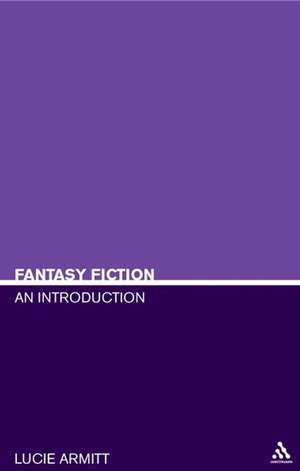
Fantasy Fiction: An Introduction: Literary Genres
Autor Lucie Armitten Limba Engleză Paperback – mar 2005
These introductions all share the same nine-part structure:
1.A broad definition of the genre and its essential elements
2.A timeline of historical developments
3.Critical concerns to bear in mind while reading
4.Detailed readings of several key texts
5.In-depth analysis of major themes and issues
6.Signposts for further study
7.A summary of the most important criticism in the field
8.A glossary of terms
9.An annotated, critical reading list
Writers covered in this book include:
Lewis Carroll, Edward Lear, George Orwell, J.R.R. Tolkien, Mary Shelley, J.K. Rowling, H.G. Wells, Thomas More, Jonathan Swift, Charlotte Perkins Gilman, Yann Martel, Jeanette Winterson, and William Gibson.

Preț: 326.75 lei
Preț vechi: 396.61 lei
-18%
Puncte Express: 490
Carte tipărită la comandă
Livrare economică 30 noiembrie-14 decembrie
Livrare prin curier în România Termenul estimat este afișat lângă disponibilitate.
Transport gratuit de la 400.00 lei Plată online sau ramburs, în funcție de opțiunile comenzii.
Retur gratuit în 14 zile Comandă securizată și suport în română.
Specificații
ISBN-13: 9780826416858
ISBN-10: 0826416853
Pagini: 244
Dimensiuni: 138 x 214 x 16 mm
Greutate: 0.25 kg
Editura: Bloomsbury Publishing
Colecția Continuum
Seria Literary Genres
Locul publicării:New York, United States
ISBN-10: 0826416853
Pagini: 244
Dimensiuni: 138 x 214 x 16 mm
Greutate: 0.25 kg
Editura: Bloomsbury Publishing
Colecția Continuum
Seria Literary Genres
Locul publicării:New York, United States
V-ar putea interesa
-
 -31%Preț: 1481.57 lei2150.10 lei
 -
 Everyday Stories: The Literary AgendaRachel Bowlby-17%Preț: 169.72 lei204.52 lei
 -
 Herta MüllerBrigid Haines-31%Preț: 740.31 lei1076.08 lei
 -
 The End of Your Life Book ClubWill SchwalbePreț: 117.46 lei
 -
 James Ellroy: A Companion to the Mystery FictionJames N. MancallPreț: 377.23 lei
 -
 The Figure of the DetectiveCharles BrownsonPreț: 304.26 lei
 -
 Horror Fiction: An IntroductionProfessor Gina WiskerPreț: 291.81 lei
 -
 -14%Preț: 235.59 lei273.63 lei
 -
 Preț: 281.23 lei
 -
 Why Literature?: The Value of Literary Reading and What It Means for TeachingDr. Cristina Vischer BrunsPreț: 191.06 lei
 -
 Gonzo Republic: Hunter S. Thompson's AmericaWilliam Stephenson-17%Preț: 205.51 lei247.84 lei
 -
 The Romanticism HandbookDr Sue Chaplin-23%Preț: 244.10 lei317.92 lei
 -
 Preț: 183.66 lei
 -
 Shetland:Ann Cleeves-34%Preț: 182.81 lei277.50 lei
 -
 DiscognitionSteven ShaviroPreț: 105.62 lei
Cuprins
CONTENTS
Chapter 1-What is Fantasy Writing?
Introduction
Beyond the Horizon
Epic Space
Chapter 2-Fantasy as Timeline
Introduction
The Origins of Modern Fantasy
Early Modern Fantasy
Tree versus Leaf: Reading the Present through the Past
Phantasm versus Fantasia
Chapter 3-How to Read Fantasy; Or, Dreams and Their Fictional Readers
Introduction
Reading Dreams
Medieval Dream Vision
The World in/of the Mirror
Chapter 4-The Best and Best Known
Introduction
Play and Nonsense: Lewis Carroll and Edward Lear
Cartographies and Geographies of Fantasy: Animal Farm and Gulliver's Travels
J.R.R. Tolkien, The Lord of the Rings
Mary Shelley, Frankenstein: Discourses of Monstrosity
The Monsters of Middle Earth
Adolescent Monsters: Harry Potter
H.G. Wells, The First Men in the Moon and The Time Machine
'Other Desires': Homoeroticism and the Feminine
Mothers and Mirrors: Harry Potter
Chapter 5-The Utopia as an Underlying Feature of All Major Modes of Fantasy
Introduction
Thomas More, Utopia
Jonathan Swift, Gulliver's Travels
Charlotte Perkins Gilman, Herland
H. G. Wells, The First Men in the Moon and The Time Machine
Inter-Generic Texts: The Time Machine and A Connecticut Yankee at King Arthur's Court
Yann Martel, Life of Pi
George Orwell, Animal Farm
Technology Versus Magic: A Connecticut Yankee and Harry Potter
Jeanette Winterson, The PowerBook
William Gibson, Neuromancer
Chapter 6-One Key Question: Is There Life for Fantasy Beyond Genre?
Introduction
Ghosts and Their Readers
Charles Dickens, A Christmas Carol
Charles Dickens, 'The Signalman'
Henry James, The Turn of the Screw
Edith Wharton, 'The Eyes'
Chapter 7-Fantasy Criticism
Introduction
Interrogating the Boundaries of Fantasy: Todorov, Marin, and Tolkien
Determining Spaces: Tolkien, Bettelheim, and Zipes
Fantasy as (Dream-)Screen: Psychoanalytic Approaches
New Bodies/New Knowledge: Massey, Haraway, Botting
Chapter 8-A Glossary of Terms
Chapter 9-Selected Reading List
Index
Chapter 1-What is Fantasy Writing?
Introduction
Beyond the Horizon
Epic Space
Chapter 2-Fantasy as Timeline
Introduction
The Origins of Modern Fantasy
Early Modern Fantasy
Tree versus Leaf: Reading the Present through the Past
Phantasm versus Fantasia
Chapter 3-How to Read Fantasy; Or, Dreams and Their Fictional Readers
Introduction
Reading Dreams
Medieval Dream Vision
The World in/of the Mirror
Chapter 4-The Best and Best Known
Introduction
Play and Nonsense: Lewis Carroll and Edward Lear
Cartographies and Geographies of Fantasy: Animal Farm and Gulliver's Travels
J.R.R. Tolkien, The Lord of the Rings
Mary Shelley, Frankenstein: Discourses of Monstrosity
The Monsters of Middle Earth
Adolescent Monsters: Harry Potter
H.G. Wells, The First Men in the Moon and The Time Machine
'Other Desires': Homoeroticism and the Feminine
Mothers and Mirrors: Harry Potter
Chapter 5-The Utopia as an Underlying Feature of All Major Modes of Fantasy
Introduction
Thomas More, Utopia
Jonathan Swift, Gulliver's Travels
Charlotte Perkins Gilman, Herland
H. G. Wells, The First Men in the Moon and The Time Machine
Inter-Generic Texts: The Time Machine and A Connecticut Yankee at King Arthur's Court
Yann Martel, Life of Pi
George Orwell, Animal Farm
Technology Versus Magic: A Connecticut Yankee and Harry Potter
Jeanette Winterson, The PowerBook
William Gibson, Neuromancer
Chapter 6-One Key Question: Is There Life for Fantasy Beyond Genre?
Introduction
Ghosts and Their Readers
Charles Dickens, A Christmas Carol
Charles Dickens, 'The Signalman'
Henry James, The Turn of the Screw
Edith Wharton, 'The Eyes'
Chapter 7-Fantasy Criticism
Introduction
Interrogating the Boundaries of Fantasy: Todorov, Marin, and Tolkien
Determining Spaces: Tolkien, Bettelheim, and Zipes
Fantasy as (Dream-)Screen: Psychoanalytic Approaches
New Bodies/New Knowledge: Massey, Haraway, Botting
Chapter 8-A Glossary of Terms
Chapter 9-Selected Reading List
Index
Recenzii
mention
' a useful study of influences from outside the genre...[and] an interesting glimpse into the way an apparent outsider reads works of fantasy, finding patterns of meaning that fantasy fans often miss or suppress.' Foundation - The International Review of Science Fiction, Issue 97, Brian Attebury
' a useful study of influences from outside the genre...[and] an interesting glimpse into the way an apparent outsider reads works of fantasy, finding patterns of meaning that fantasy fans often miss or suppress.' Foundation - The International Review of Science Fiction, Issue 97, Brian Attebury