
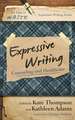
Expressive Writing: Counseling and Healthcare: It's Easy to W.R.I.T.E. Expressive Writing
Autor Kate Thompson, Kathleen Adams Cuvânt înainte de Christina Baldwinen Limba Engleză Hardback – 20 aug 2015
In this groundbreaking collection, you'll discover:
how expressive writing can call us into healing communityexciting new discoveries about how writing can support neuroplasticity and actually help change our brains-and thus our thinking and behaviornew research on the role of expressive writing for prevention of compassion fatigue in RNshow transformative writing can create art from the ashes of traumathe role of journal writing for emotional balance sensible ideas about the synergy of expressive writing and play therapy for children, teens, and adultsinterventions and strategies for the use of expressive writing in acute psychiatric carehow interactive expressive writing helps deaf teens communicate inarticulate feelings and thoughtshow cancer survivors can use expressive writing to reclaim identity and strength post-treatment the role of expressive writing in developing the roots of resilience for practitioners
Preț: 524.60 lei
Preț vechi: 733.75 lei
-29%
Puncte Express: 787
Carte tipărită la comandă
Livrare economică 28 noiembrie-12 decembrie
Livrare prin curier în România Termenul estimat este afișat lângă disponibilitate.
Transport gratuit pentru acest produs Plată online sau ramburs, în funcție de opțiunile comenzii.
Retur gratuit în 14 zile Comandă securizată și suport în română.
Specificații
ISBN-13: 9781475807721
ISBN-10: 1475807724
Pagini: 252
Dimensiuni: 161 x 236 x 22 mm
Greutate: 0.52 kg
Editura: Bloomsbury Publishing
Colecția Rowman & Littlefield
Seria It's Easy to W.R.I.T.E. Expressive Writing
Locul publicării:New York, United States
ISBN-10: 1475807724
Pagini: 252
Dimensiuni: 161 x 236 x 22 mm
Greutate: 0.52 kg
Editura: Bloomsbury Publishing
Colecția Rowman & Littlefield
Seria It's Easy to W.R.I.T.E. Expressive Writing
Locul publicării:New York, United States
V-ar putea interesa
-
 Visual StorytelllingTodd James Pierce-23%Preț: 625.60 lei812.46 lei
 -
 Preț: 155.69 lei
 -
 Selling a ScreenplaySyd FieldPreț: 126.85 lei
 -
 Journal to the SelfKathleen AdamsPreț: 108.95 lei
 -
 Learning to Write: First Language/Second LanguageAviva FreedmanPreț: 244.34 lei
 -
 The Stepney Doorstep SocietyKate Thompson-36%Preț: 59.82 lei93.54 lei
 -
 -19%Preț: 507.07 lei626.01 lei
 -
 The Art of Writing NonfictionAndré FontainePreț: 153.02 lei
 -
 Biography as High Adventure: Life-Writers Speak on Their ArtStephen B. OatesPreț: 234.64 lei
 -
 Is 8 Enough?Kate ThompsonPreț: 62.24 lei
 -
 The Rowman & Littlefield Guide to Writing with SourcesJames P. Davis-22%Preț: 106.56 lei137.24 lei
 -
 Writing for MuseumsMargot WallacePreț: 371.47 lei
 -
 Writing after Retirement: Tips from Successful Retired WritersCarol Smallwood-29%Preț: 427.35 lei598.13 lei
 -
 -27%Preț: 219.85 lei300.21 lei
 -
 Poetry and TerrorPeter Dale Scott-18%Preț: 731.53 lei892.12 lei
 -
 The Allotment GirlsKate ThompsonPreț: 65.73 lei
 -
 Clyde Fitch and the American Theatre: An Olive in the CocktailKevin Lane Dearinger-33%Preț: 895.15 lei1342.87 lei
 -
 -29%Preț: 194.90 lei273.90 lei
 -
 English for the Thoughtful Child - Volume OneMary F HydePreț: 102.54 lei
 -
 Finding FridayKate ThompsonPreț: 106.38 lei
 -
 Islam as Education: Pedagogies of Pilgrimage, Prophecy, and JihadAaron J. Ghiloni-36%Preț: 677.18 lei1052.89 lei
Cuprins
Foreword
,
,
Preface
, Kathleen Adams
,
Section 1: Theory
,
,
In This Together:
Writing in Health and Social Care
, Graham Hartill and
Victoria Field
,
Your Brain on Ink: Expressive
Writing and Neuroplasticity
, Deborah Ross
,
Expressive Writing for Caregiver Resilience: A Research Perspective
, John Evans,
Meredith Mealer,
Karen Jooste, and
Marc Moss
,
Writing the Darkness:
A Transformative Writing Model
, Sherry Reiter
,
Emotional Balance,
the Therapy Session, and the Journal
, Beth Jacobs
,
Section 2: Practice
,
,
WOWSA! Play-Based Journal Therapy
, Cherie Spehar
,
Therapeutic Writing in Psychiatric Care
, Carol Ross
,
Now That I See:
Journal Writing with Deaf Teens
, Donna Houston
,
Roots of Resilience:
Writing for Practitioner Self-Care
, Susan Smith Pierce
,
Creating a New Story after Brain Injury
, Barbara Stahura
,
After the Deep Dive:
Reflections on Writing beyond Cancer
, Jean Rowe
,
Epilogue
,
,
Honoring Silence
, Jeannie Wright and
Kate Thompson
,
About the Editors and Contributors
,
,
Acknowledgments
,
,
,
,
Preface
, Kathleen Adams
,
Section 1: Theory
,
,
In This Together:
Writing in Health and Social Care
, Graham Hartill and
Victoria Field
,
Your Brain on Ink: Expressive
Writing and Neuroplasticity
, Deborah Ross
,
Expressive Writing for Caregiver Resilience: A Research Perspective
, John Evans,
Meredith Mealer,
Karen Jooste, and
Marc Moss
,
Writing the Darkness:
A Transformative Writing Model
, Sherry Reiter
,
Emotional Balance,
the Therapy Session, and the Journal
, Beth Jacobs
,
Section 2: Practice
,
,
WOWSA! Play-Based Journal Therapy
, Cherie Spehar
,
Therapeutic Writing in Psychiatric Care
, Carol Ross
,
Now That I See:
Journal Writing with Deaf Teens
, Donna Houston
,
Roots of Resilience:
Writing for Practitioner Self-Care
, Susan Smith Pierce
,
Creating a New Story after Brain Injury
, Barbara Stahura
,
After the Deep Dive:
Reflections on Writing beyond Cancer
, Jean Rowe
,
Epilogue
,
,
Honoring Silence
, Jeannie Wright and
Kate Thompson
,
About the Editors and Contributors
,
,
Acknowledgments
,
,
Recenzii
Expressive Writing: Counseling and Healthcare provides a bridge in the much-needed world of psychological healing. It reminds us that creative approaches can provide breakthrough methods for clients to find their way to health. Spanning the diverse fields of poetry, journal therapy, spirituality, brain science, theories of self and much more, this book gives proof that expressive writing addresses a full spectrum of mental health challenges.
An exciting read that had me writing creatively even during the theory section; an inspiration to be more "playful, spontaneous and generous" with expressing ourselves and supporting others to do the same. This is a book that encompasses social, neurological and practical ways of employing expressive writing. It is ideal for students, practitioners, and academic courses. I particularly liked the idea of writing with the focus on re-wiring, reviving and healing neural pathways and the chapter on the significance and role of silence. I will definitely be adding Expressive Writing: Counseling and Healthcare to our reading list!
Thompson and Adams have gathered a rare collection of experts in the field who will bring this work to new audiences. The publication of original research material gives depth to the broadening field of expressive writing as a therapeutic modality. This book straddles the Atlantic with leaders in the field from the UK and the US, making it truly international in scope. This is an inspiring collection of chapters, edited into a coherent volume from the broad overview in the introduction to the existential epilogue.
Write on! This collection offers clear, congruent, and creative guidelines from senior practitioners on important clinical topics. This substantive series is a superbly curated resource for counselors, psychotherapists, and other helping professionals at all levels of experience. Highly recommended.
In 1990, trailblazer Kathleen Adams' Journal to the Self offered thrilling ideas about expressive writing that opened up new frontiers. More than a quarter-century later, Adams and Kate Thompson bring us to the edge of even newer frontiers of writing and healing in this collection of the latest exciting theories and practices. The authors in this book enlighten us with their research, their clinical work, and their theoretical understandings illustrating how writing offers relief, positive change, hope and zest.
In an outstanding chapter, Deborah Ross outlines neurophysiologic processes and how writing affects the brain. Drawing from the latest brain science, she presents with startling clarity how writing helps to establish and create neurological connections that bring about resilience, insight and inspiration. Ross provides beautiful examples that enable the reader to translate complex theory into practical and enjoyable methods of working with clients.
All authors describe their work with specific insight, curiosity, and presence, honoring complexity while providing writing tools that offer light and companionship along the healing journey. This book gives detailed and clear examples of how to use expressive writing techniques as doors to well-being by providing a means to both listen to oneself and to affect positive change.
This bubbling fountain of inspiration feeds us with . serious and playful journal writing strategies to help clients and patients.
I am impressed, in particular, with the inclusion of chapters addressing the newly understood neurobiological bases for the role of expressive writing in creating positive changes--not only in thought patterns but in building neuronal networks, strengthening immune function and reducing physical symptoms of illness. This important understanding is described and explained in clear language that is based on cutting-edge research, yet remains accurate without being distorted by being over-simplified.
I whole-heartedly recommend this book as a source of healing and insight to any individual wishing to create and strengthen resilient coping mechanisms when experiencing a personal health or emotional crisis, or as a powerful resource for professionals seeking to help others.
Can therapeutic writing help with brain injury, a diagnosis of cancer, or the isolation that can accompany deafness? Can poetry heal us? Can expressive writing cause the brain, quite literally, to change? In this extraordinary collection of essays, counselors and therapists on the frontier of therapeutic writing share their tools, processes, and the results they have achieved with their clients. Had I not already been a convert to the power of the pen, this groundbreaking book would have made me one.
An exciting read that had me writing creatively even during the theory section; an inspiration to be more "playful, spontaneous and generous" with expressing ourselves and supporting others to do the same. This is a book that encompasses social, neurological and practical ways of employing expressive writing. It is ideal for students, practitioners, and academic courses. I particularly liked the idea of writing with the focus on re-wiring, reviving and healing neural pathways and the chapter on the significance and role of silence. I will definitely be adding Expressive Writing: Counseling and Healthcare to our reading list!
Thompson and Adams have gathered a rare collection of experts in the field who will bring this work to new audiences. The publication of original research material gives depth to the broadening field of expressive writing as a therapeutic modality. This book straddles the Atlantic with leaders in the field from the UK and the US, making it truly international in scope. This is an inspiring collection of chapters, edited into a coherent volume from the broad overview in the introduction to the existential epilogue.
Write on! This collection offers clear, congruent, and creative guidelines from senior practitioners on important clinical topics. This substantive series is a superbly curated resource for counselors, psychotherapists, and other helping professionals at all levels of experience. Highly recommended.
In 1990, trailblazer Kathleen Adams' Journal to the Self offered thrilling ideas about expressive writing that opened up new frontiers. More than a quarter-century later, Adams and Kate Thompson bring us to the edge of even newer frontiers of writing and healing in this collection of the latest exciting theories and practices. The authors in this book enlighten us with their research, their clinical work, and their theoretical understandings illustrating how writing offers relief, positive change, hope and zest.
In an outstanding chapter, Deborah Ross outlines neurophysiologic processes and how writing affects the brain. Drawing from the latest brain science, she presents with startling clarity how writing helps to establish and create neurological connections that bring about resilience, insight and inspiration. Ross provides beautiful examples that enable the reader to translate complex theory into practical and enjoyable methods of working with clients.
All authors describe their work with specific insight, curiosity, and presence, honoring complexity while providing writing tools that offer light and companionship along the healing journey. This book gives detailed and clear examples of how to use expressive writing techniques as doors to well-being by providing a means to both listen to oneself and to affect positive change.
This bubbling fountain of inspiration feeds us with . serious and playful journal writing strategies to help clients and patients.
I am impressed, in particular, with the inclusion of chapters addressing the newly understood neurobiological bases for the role of expressive writing in creating positive changes--not only in thought patterns but in building neuronal networks, strengthening immune function and reducing physical symptoms of illness. This important understanding is described and explained in clear language that is based on cutting-edge research, yet remains accurate without being distorted by being over-simplified.
I whole-heartedly recommend this book as a source of healing and insight to any individual wishing to create and strengthen resilient coping mechanisms when experiencing a personal health or emotional crisis, or as a powerful resource for professionals seeking to help others.
Can therapeutic writing help with brain injury, a diagnosis of cancer, or the isolation that can accompany deafness? Can poetry heal us? Can expressive writing cause the brain, quite literally, to change? In this extraordinary collection of essays, counselors and therapists on the frontier of therapeutic writing share their tools, processes, and the results they have achieved with their clients. Had I not already been a convert to the power of the pen, this groundbreaking book would have made me one.