
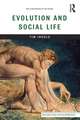
Evolution and Social Life: Routledge Classic Texts in Anthropology
Autor Tim Ingolden Limba Engleză Hardback – 19 iul 2016


Preț: 1209.12 lei
Preț vechi: 1474.55 lei
-18%
Puncte Express: 1814
Carte tipărită la comandă
Livrare economică 08-22 iunie
Specificații
ISBN-13: 9781138675858
ISBN-10: 1138675857
Pagini: 380
Dimensiuni: 156 x 234 mm
Greutate: 0.68 kg
Ediția:1
Editura: Taylor & Francis
Colecția Routledge
Seria Routledge Classic Texts in Anthropology
Locul publicării:Oxford, United Kingdom
ISBN-10: 1138675857
Pagini: 380
Dimensiuni: 156 x 234 mm
Greutate: 0.68 kg
Ediția:1
Editura: Taylor & Francis
Colecția Routledge
Seria Routledge Classic Texts in Anthropology
Locul publicării:Oxford, United Kingdom
V-ar putea interesa
-
 Preț: 401.27 lei
 -
 Aborigines of Taiwan: The Puyuma: From Headhunting to the Modern WorldJosiane Cauquelin-15%Preț: 442.42 lei520.50 lei
 -
 Preț: 386.61 lei
 -
 Challenging Institutional Analysis and Development: The Bloomington SchoolPaul Dragos Aligica-15%Preț: 400.73 lei471.45 lei
 -
 Ferry Tales: Mobility, Place, and Time on Canada's West CoastPhillip VanniniPreț: 397.04 lei
 -
 Blood-Brotherhood and Other Rites of Male AllianceNathan MillerPreț: 86.89 lei
 -
 Biosocial BecomingsTim Ingold-5%Preț: 660.68 lei695.46 lei
 -
 Companion to Anthro of ReligioJanice BoddyPreț: 398.95 lei
 -
 -21%Preț: 249.18 lei315.44 lei
 -
 Lines: A Brief HistoryTim IngoldPreț: 159.13 lei
 -
 Places of PainHariz HalilovichPreț: 217.34 lei
 -
 Measuring Wellbeing: Towards Sustainability?Karen ScottPreț: 402.16 lei
Public țintă
PostgraduateCuprins
Preface to the 2016 edition
Preface to the 1986 edition
1 The progress of evolution
2 Mankind ascending
3 The substance of history
4 Times of life
5 Chance, necessity and creativity
6 What is a social relationship?
7 Culture and consciousness
Preface to the 1986 edition
1 The progress of evolution
2 Mankind ascending
3 The substance of history
4 Times of life
5 Chance, necessity and creativity
6 What is a social relationship?
7 Culture and consciousness
Descriere
This book examines how evolution has been handled in anthropology from the mid-nineteenth century onwards. Almost thirty years after first publication, Ingold revisits the work and provides a substantial new preface that discusses the book’s history and more recent developments in the field.