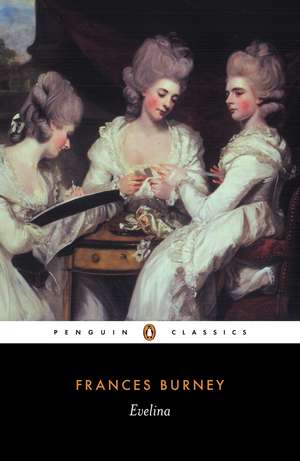
Evelina
Autor Frances Burneyen Limba Engleză Paperback – 26 aug 2004
Recomandăm această lectură celor care caută rădăcinile romanului de moravuri, pasionaților de structuri narative clasice și cititorilor care doresc să înțeleagă complexitatea ascunsă a etichetei sociale din secolul al XVIII-lea. În Evelina, descoperim nu doar povestea unei tinere care își caută locul într-o lume dominată de aristocrație, ci și o satiră ascuțită a pretențiilor clasei înalte. Structura epistolară a celor trei volume oferă o intimitate rară, permițându-ne să observăm tranziția personajului de la izolarea rurală la efervescența periculoasă a Londrei și a Bristolului. Stilul are ceva din finețea psihologică a prozei lui Jane Austen, fără să fie o imitație — Frances Burney mizează mai mult pe elemente comice de situație și pe o vulnerabilitate mai accentuată a eroinei în fața rigorilor sociale. Dacă în Cecilia, autoarea explorează greutatea unei moșteniri, în Evelina accentul cade pe procesul de învățare și pe formarea identității feminine într-o cultură eminamente masculină. Această ediție de la Penguin Books îmbogățește experiența lecturii prin includerea unor anexe esențiale: recenzii din epoca publicării și texte de epocă despre educația copiilor, care ancorează ficțiunea în realitatea istorică a vremii. Observăm aici germenii realismului social care vor defini literatura engleză ulterioară, totul fiind livrat cu un spirit ludic și o observație critică ce rămân surprinzător de proaspete.
Preț: 98.51 lei
Carte disponibilă
Livrare economică 16-30 noiembrie
Livrare express 31 octombrie-06 noiembrie pentru 40.79 lei
Specificații
ISBN-10: 0140433473
Pagini: 560
Ilustrații: further reading list
Dimensiuni: 129 x 198 x 33 mm
Greutate: 0.66 kg
Ediția:Revised
Editura: Penguin Classics
Locul publicării:London, United Kingdom
V-ar putea interesa
-
 Sense and SensibilityJane AustenPreț: 28.01 lei
 -
 XNORTHANGER ABBEY_CLASSICS PBJane AustenPreț: 28.01 lei
 -
 Romantic OutlawsCharlotte Gordon-20%Preț: 72.69 lei90.55 lei
 -
 Journals and LettersFrances BurneyPreț: 148.30 lei
 -
 The Black TulipAlexandre Dumas-37%Preț: 58.99 lei93.04 lei
 -
 The House of MirthEdith Wharton-31%Preț: 50.12 lei73.08 lei
 -
 Howards EndE. M. Forster-32%Preț: 49.40 lei72.96 lei
 -
 VilletteCharlotte Brontë-22%Preț: 63.58 lei81.88 lei
 -
 The Woman in WhiteWilkie Collins-28%Preț: 59.85 lei82.86 lei
 -
 Selected PoetryAlexander Pope-18%Preț: 52.75 lei64.47 lei
 -
 Mary and The Wrongs of WomanMary Wollstonecraft-19%Preț: 52.76 lei64.76 lei
 -
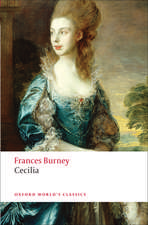 Cecilia: or Memoirs of an HeiressFanny Burney-15%Preț: 108.52 lei127.00 lei
 -
 Camilla: Picture of YouthFanny Burney-15%Preț: 102.04 lei119.48 lei
 -
 Lady SusanJane Austen-37%Preț: 18.29 lei29.02 lei
 -
 CandideVoltairePreț: 32.48 lei
 -
 VilletteCharlotte BrontëPreț: 40.16 lei
 -
 The Name of the Wind: The legendary must-read fantasy masterpiecePatrick Rothfuss-24%Preț: 84.05 lei110.02 lei
 -
 Vanity Fair: Official ITV tie-in editionWilliam Makepeace Thackeray-20%Preț: 49.05 lei61.15 lei
 -
 The Name of the WindPatrick RothfussPreț: 70.10 lei
 -
 The History of Emily MontagueFrances BrookePreț: 179.45 lei
 -
 Jane Austen: The Original Romance NovelistJanet Lewis Saidi-17%Preț: 65.91 lei79.80 leiRecomandat
 -
 A Known Scribbler: Frances Burney on Literary LifeFrances Burney-22%Preț: 237.70 lei303.97 lei
 -
 Women & PowerMary BeardPreț: 117.20 lei
 -
 Evelyn and Amelia WebsterJane AustenPreț: 37.94 lei
 -
 The Woman in WhiteWilkie CollinsPreț: 33.00 lei
 -
 House of MirthEdith WhartonPreț: 28.01 lei
 -
 Pride and PrejudiceJane AustenPreț: 31.55 lei
 -
 The RoverAphra BehnPreț: 60.67 lei
 -
 Preț: 34.20 lei
De ce să citești această carte
Pentru cititorul contemporan, această carte este o poartă către eleganța și capcanele societății georgiene. Veți câștiga o perspectivă autentică asupra modului în care o femeie își negocia independența și demnitatea în 1778. Este o lectură esențială pentru a înțelege evoluția literaturii britanice, oferind un amestec savuros de umor, intrigă romantică și critică socială fină, totul sub forma unor scrisori pline de viață.
Despre autor
Frances Burney (1752–1840), cunoscută și sub numele de Fanny Burney sau Madame d'Arblay, a fost o figură centrală a peisajului literar englez, activând ca romancieră, dramaturg și diaristă. Fiică a istoricului muzical Charles Burney, ea s-a autoeducat și a început să scrie încă din copilărie. Succesul fulminant al debutului său anonim cu Evelina a propulsat-o în cercurile intelectuale de elită, fiind admirată de personalități precum Samuel Johnson. De-a lungul carierei, a documentat cu acuratețe viața la curtea regelui George al III-lea, unde a servit ca asistentă a reginei Charlotte, și a lăsat în urmă peste douăzeci de volume de jurnale și scrisori, considerate astăzi documente istorice neprețuite.
Notă biografică
Margaret Anne Doody is Andrew W. Mellon Professor in the Humanities and Professor of English at Vanderbilt University.
Descriere scurtă
Descriere
Textul de pe ultima copertă
Good-looking, kind-hearted Evelina Anville has grown up in rural obscurity as the ward of a country parson. At the age of seventeen, she begins her progress from provincial life to fashionable London a transition that's complicated by vulgar relatives and her own naivete. Evelina's shrewd intelligence, however, perceives the hypocrisy behind the refined facades as she learns to balance the honesty and simplicity of her upbringing with the sophisticated etiquette of high society.
Written in the form of letters, this 1778 novel offers an intimate look at coming-of-age among England's eighteenth-century upper crust. Evelina's comic misadventures provide a subtle commentary on some of the problems faced by her contemporaries, from women's limited roles to class snobbery and prejudice. Fanny Burney's witty approach to manners and mores was a significant influence on Jane Austen, and her deft combination of satire, sentimentality, and farce provides sparkling entertainment.
Dover (2015) republication of the edition published by Thomas Lowndes, London, 1778.
See every Dover book in print at
www.doverpublications.com"
Recenzii
The Broadview edition is based on the second edition of the novel (1779), which incorporates Burney’s revisions and corrections. Its appendices include contemporary reviews of Evelina as well as eighteenth-century works on the family and on comedy.
“Longtime admirers of Frances Burney’s delightful eighteenth-century comedy of manners, Evelina, will no doubt rejoice in Broadview’s impressive new edition of the work, here ably introduced and annotated by Susan Kubica Howard. Readers new to the novel have a treat in store. Evelina remains, quite simply, the most accomplished and insouciant comic novel written by an Englishwoman before Austen’s Pride and Prejudice, and coruscates anew in the handsome presentation it is given here.” — Terry Castle, Stanford University
“Susan Kubica Howard’s research is impressively detailed, yet accessibly presented so that the edition will serve both seasoned scholars in the field and readers who may be encountering Evelina for the first time.” — Audrey Bilger, Claremont McKenna College
Cuprins
Introduction
Frances Burney: A Brief Chronology
A Note on the Text
Evelina
Introduction to Appendices Appendix A: Contemporary Reviews
- London Review (February 1778)
- Monthly Review (April 1778)
- Westminster Magazine (June 1778)
- Gentleman’s Magazine (September
- Critical Review (September 1778)
- George Savile, Marquis of Halifax, The Lady’s New-Year’s-Gift
- William Fleetwood, The Relative Duties of Parentsand Children, Husbands and Wives. Masters andServants
- Sarah, Duchess of Marlborough, “Correspondencewith her Granddaughter, Diana, Duchess of Bedford,1732-35”
- Samuel Richardson, Letters Written To and For ParticularFriends, on the Most Important Occasions
- [John Hill], On the Management and Education ofChildren
- Samuel Richardson, A Collection of the Moral andInstructive Sentiments, Maxims, Cautions, and Reflexions,Contained in the Histories of PAMELA, CLARISSA, and SIRCHARLES GRANDISON
- James Nelson, An Essay on the Government of Children
- Eliza Haywood, The Female Spectator
- Lady Sarah Pennington, An Unfortunate Mother’s Adviceto Her Absent Daughters
- “Portia” [pseud.], The Polite Lady
- Hester Mulso Chapone, Letters on the Improvement ofthe Mind
- Clara Reeve, Plans of Education
- Mrs. Bonhote, The Parental Monitor
- Thomas Gisborne, An Enquiry into the Duties of theFemale Sex
- Maria Edgeworth and Richard Lovell Edgeworth, Practical Education
- Francis Burney D’Arblay, Memoirs of Doctor Burney
- Anon., Pasquil’s Jests, Mixed with Mother Bunches Merriments
- Joseph Addison, The Spectator
- Anon., Scoggin’s Jests
- [John Mottley], Joe Miller’s Jest Book
- [Corbyn Morris], An Essay Towards Fixing the True Standards of Wit, Humour, Raillery, Satire, and Ridicule
- Eliza Haywood, The Female Spectator
- Jane Collier, An Essay on the Art of IngeniouslyTormenting
- Christopher Anstey, The New Bath Guide
- [James Quin], Quin’s Jests
- Anon., An Essay on Laughter
- William Hazlitt, Lectures on the English Comic Writers