
Ethnomethodology's Program: Working Out Durkheim's Aphorism: Legacies of Social Thought Series
Autor Harold Garfinkel Editat de Anne Warfield Rawlsen Limba Engleză Paperback – 11 iun 2002
Punctul de plecare al acestei lucrări fundamentale rezidă în reevaluarea critică a aforismului lui Durkheim, care susține că faptele sociale sunt fenomene concrete, nu doar construcții teoretice. Ethnomethodology's Program servește drept continuare directă și necesară pentru volumul Studies in Ethnomethodology din 1967, consolidând o perspectivă care a influențat decisiv științele sociale timp de peste jumătate de secol. Putem afirma că originalitatea textului constă în modul în care Harold Garfinkel demonstrează cum sociologia contemporană a pierdut contactul cu realitatea practică a ordinii sociale, transformând faptele în concepte abstracte.
Cartea este structurată riguros, începând cu o clarificare a postulatelor etnometodologiei și continuând cu o serie de studii empirice fascinante despre „acțiunea instruită”. Analizele sale asupra cursurilor de chimie pentru studenți sau asupra experimentelor lui Galileo cu planul înclinat oferă o claritate superioară lucrărilor anterioare, arătând cum ordinea socială este produsă prin practici complexe, executate în timp real de participanți. Această abordare extinde cadrul propus de Ethnomethodology de Michael Lynch cu date noi din experiențele practice ale științelor naturale, oferind o bază empirică solidă pentru ceea ce Harold Garfinkel numește „proprietăți de ordine autohtone”.
În contextul operei autorului, lucrarea se raportează direct la eforturile sale timpurii din Toward A Sociological Theory of Information de a integra elementele sociale în teoria informației. Dacă în lucrările din 1986, precum Routledge Revivals: Ethnomethodological Studies of Work (1986), accentul era pus pe diversitatea muncii, aici programul este mult mai ambițios: este o tentativă de a restabili rigoarea sociologiei ca știință a faptelor concrete, facilitată de editarea metodică a lui Anne Warfield Rawls.

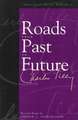

Preț: 367.32 lei
Preț vechi: 462.00 lei
-20%
Carte tipărită la comandă
Livrare economică 30 noiembrie-14 decembrie
Specificații
ISBN-10: 0742516423
Pagini: 320
Dimensiuni: 150 x 226 x 20 mm
Greutate: 0.41 kg
Ediția:0320
Editura: Bloomsbury Publishing
Colecția Rowman & Littlefield
Seria Legacies of Social Thought Series
Locul publicării:New York, United States
V-ar putea interesa
-
 The Oxford Handbook of Philosophy of Social ScienceHarold Kincaid-32%Preț: 1180.02 lei1733.01 lei
 -
 Ideas and Politics in Social Science ResearchDaniel Béland-33%Preț: 570.23 lei844.85 lei
 -
 Preț: 435.00 lei
 -
 Analyzing Quantitative DataDebra Wetcher-Hendricks-27%Preț: 899.34 lei1231.98 lei
 -
 Situating Everyday LifeSarah Pink-15%Preț: 535.63 lei630.16 lei
 -
 Doing Your Qualitative Psychology ProjectCath SullivanPreț: 373.03 lei
 -
 Developing Research ProposalsPam DenicoloPreț: 371.48 lei
 -
 -9%Preț: 1160.60 lei1275.39 lei
 -
 Flash Programming for the Social & Behavioral SciencesYana Weinstein-15%Preț: 443.73 lei522.03 lei
De ce să citești această carte
Recomandăm această carte oricărui cercetător în sociologie sau antropologie care dorește să înțeleagă rădăcinile ordinii sociale dincolo de abstractizările teoretice. Cititorul va câștiga o perspectivă metodologică unică asupra modului în care activitățile cotidiene și profesionale, de la formarea cozilor la experimente științifice, produc realitatea socială. Este o lectură esențială pentru a vedea cum teoria lui Durkheim poate fi aplicată riguros în cercetarea contemporană.
Despre autor
Harold Garfinkel a fost profesor emerit de sociologie la UCLA și este recunoscut la nivel mondial drept fondatorul etnometodologiei. Cariera sa, începută sub influența lui Talcott Parsons la Harvard, a fost marcată de o dorință constantă de a ancora sociologia în fenomenologia interacțiunii umane. Prin publicarea volumului Studies in Ethnomethodology în 1967, el a revoluționat modul în care înțelegem producerea ordinii sociale. De-a lungul a peste trei decenii la UCLA, Garfinkel a dezvoltat un program de cercetare distinct care a influențat nu doar sociologia, ci și studiile de comunicare și filosofia acțiunii.
Descriere
"Working out Durkheim's Aphorism," the title used for this new book, emphasizes Garfinkel's insistence that his position focuses on fundamental sociological issues-and that interpretations of his position as indifferent to sociology have been misunderstandings. Durkheim's aphorism states that the concreteness of social facts is sociology's most fundamental phenomenon. Garfinkel argues that sociologists have, for a century or more, ignored this aphorism and treated social facts as theoretical, or conceptual, constructions. Garfinkel in this new book shows how and why sociology must restore Durkheim's aphorism, through an insistence on the concreteness of social facts that are produced by complex social practices enacted by participants in the social order.
Garfinkel's new book, like Studies, will likely stand as another landmark in sociological theory, yet it is clearer and more
concrete in revealing human social practices.
Cuprins
Chapter 2 Editor's Introduction
Chapter 3 Author's Introduction
Chapter 4 Authors Acknowledgements As An Autobiographical Account
Part 5 I What is Ethnomethodology?
Chapter 6 1 Central Claims to Ethnomethodology
Chapter 7 2 EM Studies and Their Formal Analytic Alternates
Chapter 8 3 Rendering Theorems
Chapter 9 4 Tutorial Problems
Chapter 10 5 Ethnomethodological Policies and Methods
Part 11 II Instructed Action
Chapter 12 6 Instructions and Instructed Actions
Chapter 13 7 A Study of the Work of Teaching Undergraduate Chemistry in Lecture Format
Chapter 14 8 Autochthonous Order Properties of Formatted Queues
Chapter 15 9 An Ethnomethodological Study of the Work of Galileo's Inclined Plane Demonstration of the Real Motion of Free Falling Bodies
Recenzii
Ethnomethdology's Program is a mine of rich insight into ethnomethodology's history; providing details of Garfinkel's intellectual biography, models of ethnomethodological study to which to refer, and alternative ways of thinking about the study of social order and the work of the social sciences.
Ethnomethodology's Program is written in...[a] particular, expressive and careful manner.
This ambitious volume will not end the controversial discussions of ethnomethodology, but will certainly enrich them by providing enormous intellectual resources. Rawl's editing provides an in-depth, informed, and intelligible access to Garfinkel's thought, and the book will bring further recognition of the originality and significance of Garfinkel's many contributions.
In sum, Ethnomethodology 's Program : Working out Durkheim 's Aphorism is a challenging and dense extension of the initial work of Garfinkel. . . Sociologists already familiar with ethnomethodology will be delighted by these exciting presentations and sometimes unexpected, such as the phenomenon of the order over the telephone interviews, methods.