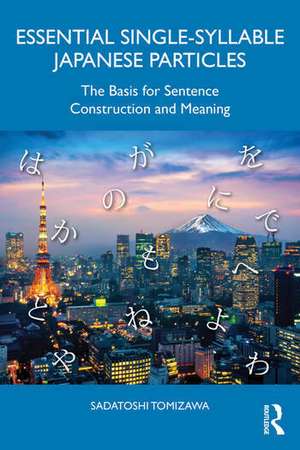
Essential Single-Syllable Japanese Particles: The Basis for Sentence Construction and Meaning
Autor Sadatoshi Tomizawaen Limba Engleză Paperback – 30 sep 2025
Preț: 383.89 lei
Puncte Express: 576
Carte disponibilă
Livrare economică 16-30 noiembrie
Livrare express 30 octombrie-05 noiembrie pentru 44.73 lei
Livrare prin curier în România Termenul estimat este afișat lângă disponibilitate.
Transport gratuit de la 400.00 lei Plată online sau ramburs, în funcție de opțiunile comenzii.
Retur gratuit în 14 zile Comandă securizată și suport în română.
Specificații
ISBN-13: 9781032864310
ISBN-10: 1032864311
Pagini: 368
Dimensiuni: 156 x 234 x 23 mm
Greutate: 0.68 kg
Ediția:1
Editura: Taylor & Francis
Colecția Routledge
Locul publicării:Oxford, United Kingdom
ISBN-10: 1032864311
Pagini: 368
Dimensiuni: 156 x 234 x 23 mm
Greutate: 0.68 kg
Ediția:1
Editura: Taylor & Francis
Colecția Routledge
Locul publicării:Oxford, United Kingdom
V-ar putea interesa
-
 Oxford Japanese Grammar and VerbsJonathan BuntPreț: 63.58 lei
 -
 Classical Japanese - A GrammarHaruo Shirane-14%Preț: 466.17 lei542.06 lei
 -
 -14%Preț: 71.46 lei83.33 leiRecomandat
 -
 Essential Japanese GrammarEverett F. BleilerPreț: 43.96 lei
 -
 Japanese Phrases for DummiesEriko SatoPreț: 64.36 lei
 -
 The 5 Love Languages Hardcover Special EditionGary ChapmanPreț: 144.78 lei
 -
 Japanese For Dummies, 3rd EditionHiroko M. ChibaPreț: 122.16 lei
 -
 -9%Preț: 106.49 lei117.43 lei
 -
 Japanese Linguistics in Use: An Introduction for Language LearnersDr. Toshiko Yamaguchi-20%Preț: 268.09 lei335.59 lei
 -
 Dictionary Of Japanese ParticlesSue A. KawashimaPreț: 125.35 lei
 -
 The Ultimate Japanese Phrasebook: 1800 Sentences for Everyday Use (free audio download)Kit Pancoast Nagamura-19%Preț: 132.11 lei163.97 lei
 -
 Preț: 55.79 lei
 -
 A Dictionary of Basic Japanese Grammar =Seiichi MakinoPreț: 279.07 lei
 -
 Preț: 112.28 lei
 -
 -15%Preț: 95.18 lei111.72 lei
 -
 -16%Preț: 54.87 lei65.70 lei
 -
 -16%Preț: 104.28 lei124.52 lei
 -
 -17%Preț: 66.46 lei79.95 lei
 -
 -32%Preț: 33.82 lei49.69 lei
 -
 Preț: 97.56 lei
Public țintă
Undergraduate CoreNotă biografică
Sadatoshi Tomizawa is a native Japanese and Professor of Japanese at Ball State University in Indiana, USA. He holds a BA in Literature, an MA in Applied Linguistics, and a PhD in Foreign Language Education. He has dedicated his career to studying and teaching Japanese language and culture since 1992.
Cuprins
Acknowledgments
Introduction
は: Introduction
は (1): Subject of Sentence
初めまして。 私は先生です。
は (2): Contrasting Two Things
毎日勉強しますが、週末はしません。
は (3): Topic of Sentence
明日は暇ですから、ゴルフをします。
は (4): Highest or Lowest Number
この中古車はよく走るので、70万円はします。
は: Review Exercise
が: Introduction
が (1): Newly Introduced Subject
皆さん、これが図書館です。
が (2): Existence
机の上に本があります。
が (3): With Question Word
カラオケに 誰が行きますか。
が (4): Relative Clause
これは私が書いた本です。
が (5): Subordinate Clause
友達が来たら、この本を返してください。
が (6): Subject Emphasis
それは私がします。
が (7): Contrastive Implication in Two Clauses
日本の春は好きですが、夏は嫌いです。
が (8): Transitional Implication in Two Clauses
その映画を見ましたが、とても良かったです。
が (9): Degree of Hesitation in Two Clauses
すみませんが、ここは禁煙です。
が (10): Soften Opinion or Request, at End of Sentence
社長は今会議中なんですが…。
が: Review Exercise
は+が Pattern: Introduction
は+が (1): い/な Adjectives
日本は物価が高いです。
は+が (2): Verbs
私は新しい ビデオゲームが欲しいです。
は+が: Review Exercise
を: Introduction
を(1): Object Case
コーヒーをお願いします。
を(2): Point of Leaving
父は毎朝七時に家を出ます。
を(3): Point of Movement
私は毎日公園を歩きます。
を: Review Exercise
か: Introduction
か(1): Question
これは何ですか。
か(2): Choice
私か兄が電話をします。
か(3): Indirect Question Clause
パーティーはどこがいいか分りません。
か(4): Uncertainty
明日は天気がいいかどうか分りますか。
か: Review Exercise
の: Introduction
の (1): Compound Noun
その映画のチケットが二枚あります。
の (2): Location
リモコンはテーブルの上にあります。
の (3): Apposition: Noun 1 の Noun 2
こちらが社長のスミスさんです。
の (4): Adjective: Noun 1 の
次の角で止まってください。
の (5): Subject in Short Relative Clause
これは先生の書いた本です。
の (6): Object Placeholder: "one"
テレビは小さいのがいいです。
の (7): Infinitive or Gerund: "to do" or "doing"
私は本を読むのが好きです。
の (8): Casual Question instead of か
昼ご飯はもう食べたの。
の: Review Exercise
に: Introduction
に(1): Existence and Location
そのお菓子は 箱にあります。
に(2): Time or Location
八時に学校に行きます。
に(3): Recipient
父は母に花をあげました。
に(4): Surface and Action
この紙に名前を書いてください。
に(5): Purpose
今年の夏日本に旅行に行きます。
に(6): Change or Choice
去年先生に成りました。
に(7): Frequency or Interval
一週間に三回テニスをします。
に(8): Passive or Causative Agent (doer)
漢字の点が良くて父にほめられました。
に(9): Appreciation for Agent
母にお金をもらったので、 DVDを買います。
に: Review Exercise
で: Introduction
で(1): Means
そのレストランは私の車で行きましょう。
で(2): Place and Action
毎日図書館で勉強しています。
で(3): Limit or Scope
このりんごは三つで100円です。
で(4): Superlative Form
これは学校で一番大きい建物です。
で(5): Price
これは一万円で買いました。
で(6): Reason or Cause
昨日風邪で会社を休みました。
で: Review Exercise
と: Introduction
と(1): "And"
本と新聞をお願いします。
と(2): "With"
日本に友達と行きます。
と(3): Noun Clause
そのDVDは高いと思います。
と(4): Name or Identity
私の息子は賢と言います。
と(5): Compare and Contrast
春と秋とどちらが好きですか。
と(6): "If"
ボーナスが多いと、 助かります。
と(7): "When"
アパートに帰ると、 両親が来ていたんです。
と: Review Exercise
も: Introduction
も(1): "Too", "Also", "Either"
私も日本語の先生です。
も(2): "Both"
私も先生も日本人です。
も(3): Quantity Emphasis
まんがの本を40冊も持っています。
も: Review Exercise
へ、や: Introduction
へ: Destination or Direction
金曜日は学校へ行きません。
や: Partial List
本や雑誌が沢山ありますね。
へ、や: Review Exercise
ね、よ、わ: Introduction
ね: Inflections
今日はとても暑いですね。
よ: Inflections
その仕事はもう終わりましたよ。
わ: Feminine Inflection
このケーキはおいしいわ。
ね、よ、わ: Review Exercise
Answer Keys for Exercises
Introduction
は: Introduction
は (1): Subject of Sentence
初めまして。 私は先生です。
は (2): Contrasting Two Things
毎日勉強しますが、週末はしません。
は (3): Topic of Sentence
明日は暇ですから、ゴルフをします。
は (4): Highest or Lowest Number
この中古車はよく走るので、70万円はします。
は: Review Exercise
が: Introduction
が (1): Newly Introduced Subject
皆さん、これが図書館です。
が (2): Existence
机の上に本があります。
が (3): With Question Word
カラオケに 誰が行きますか。
が (4): Relative Clause
これは私が書いた本です。
が (5): Subordinate Clause
友達が来たら、この本を返してください。
が (6): Subject Emphasis
それは私がします。
が (7): Contrastive Implication in Two Clauses
日本の春は好きですが、夏は嫌いです。
が (8): Transitional Implication in Two Clauses
その映画を見ましたが、とても良かったです。
が (9): Degree of Hesitation in Two Clauses
すみませんが、ここは禁煙です。
が (10): Soften Opinion or Request, at End of Sentence
社長は今会議中なんですが…。
が: Review Exercise
は+が Pattern: Introduction
は+が (1): い/な Adjectives
日本は物価が高いです。
は+が (2): Verbs
私は新しい ビデオゲームが欲しいです。
は+が: Review Exercise
を: Introduction
を(1): Object Case
コーヒーをお願いします。
を(2): Point of Leaving
父は毎朝七時に家を出ます。
を(3): Point of Movement
私は毎日公園を歩きます。
を: Review Exercise
か: Introduction
か(1): Question
これは何ですか。
か(2): Choice
私か兄が電話をします。
か(3): Indirect Question Clause
パーティーはどこがいいか分りません。
か(4): Uncertainty
明日は天気がいいかどうか分りますか。
か: Review Exercise
の: Introduction
の (1): Compound Noun
その映画のチケットが二枚あります。
の (2): Location
リモコンはテーブルの上にあります。
の (3): Apposition: Noun 1 の Noun 2
こちらが社長のスミスさんです。
の (4): Adjective: Noun 1 の
次の角で止まってください。
の (5): Subject in Short Relative Clause
これは先生の書いた本です。
の (6): Object Placeholder: "one"
テレビは小さいのがいいです。
の (7): Infinitive or Gerund: "to do" or "doing"
私は本を読むのが好きです。
の (8): Casual Question instead of か
昼ご飯はもう食べたの。
の: Review Exercise
に: Introduction
に(1): Existence and Location
そのお菓子は 箱にあります。
に(2): Time or Location
八時に学校に行きます。
に(3): Recipient
父は母に花をあげました。
に(4): Surface and Action
この紙に名前を書いてください。
に(5): Purpose
今年の夏日本に旅行に行きます。
に(6): Change or Choice
去年先生に成りました。
に(7): Frequency or Interval
一週間に三回テニスをします。
に(8): Passive or Causative Agent (doer)
漢字の点が良くて父にほめられました。
に(9): Appreciation for Agent
母にお金をもらったので、 DVDを買います。
に: Review Exercise
で: Introduction
で(1): Means
そのレストランは私の車で行きましょう。
で(2): Place and Action
毎日図書館で勉強しています。
で(3): Limit or Scope
このりんごは三つで100円です。
で(4): Superlative Form
これは学校で一番大きい建物です。
で(5): Price
これは一万円で買いました。
で(6): Reason or Cause
昨日風邪で会社を休みました。
で: Review Exercise
と: Introduction
と(1): "And"
本と新聞をお願いします。
と(2): "With"
日本に友達と行きます。
と(3): Noun Clause
そのDVDは高いと思います。
と(4): Name or Identity
私の息子は賢と言います。
と(5): Compare and Contrast
春と秋とどちらが好きですか。
と(6): "If"
ボーナスが多いと、 助かります。
と(7): "When"
アパートに帰ると、 両親が来ていたんです。
と: Review Exercise
も: Introduction
も(1): "Too", "Also", "Either"
私も日本語の先生です。
も(2): "Both"
私も先生も日本人です。
も(3): Quantity Emphasis
まんがの本を40冊も持っています。
も: Review Exercise
へ、や: Introduction
へ: Destination or Direction
金曜日は学校へ行きません。
や: Partial List
本や雑誌が沢山ありますね。
へ、や: Review Exercise
ね、よ、わ: Introduction
ね: Inflections
今日はとても暑いですね。
よ: Inflections
その仕事はもう終わりましたよ。
わ: Feminine Inflection
このケーキはおいしいわ。
ね、よ、わ: Review Exercise
Answer Keys for Exercises
Descriere
Unlike traditional particle reference books, ‘Essential Single-Syllable Japanese Particles’ is a revolutionary hybrid: a functionality-based guide and workbook designed to deconstruct and conquer the complexities of single-syllable Japanese particles only.