
Environmental Analysis by Electrochemical Sensors and Biosensors: Fundamentals: Nanostructure Science and Technology
Editat de Ligia Maria Moretto, Kurt Kalcheren Limba Engleză Hardback – noi 2014
The first three chapters discuss fundamentals, and the last three chapters cover the main groups of analytes of environmental interest.
| Toate formatele și edițiile | Preț | Express |
|---|---|---|
| Paperback (2) | 811.09 lei 43-57 zile | |
| Springer – 23 aug 2016 | 811.09 lei 43-57 zile | |
| Springer – 23 aug 2016 | 1267.63 lei 38-44 zile | |
| Hardback (2) | 764.86 lei 43-57 zile | |
| Springer – noi 2014 | 764.86 lei 43-57 zile | |
| Springer – noi 2014 | 1352.15 lei 43-57 zile |
Din seria Nanostructure Science and Technology
- 18%
 Preț: 1080.68 lei
 - 18%
 Preț: 1066.78 lei
 - 18%
 Preț: 886.60 lei
 -
 Preț: 390.23 lei
 -
 Preț: 389.88 lei
 - 18%
 Preț: 929.54 lei
 - 15%
 Preț: 618.50 lei
 - 15%
 Preț: 624.77 lei
 - 20%
 Preț: 633.43 lei
 - 15%
 Preț: 667.84 lei
 -
 Preț: 373.98 lei
 - 20%
 Preț: 610.67 lei
 -
 Preț: 382.85 lei
 - 15%
 Preț: 618.34 lei
 - 15%
 Preț: 565.07 lei
 - 18%
 Preț: 911.49 lei
 - 15%
 Preț: 621.48 lei
 - 18%
 Preț: 914.35 lei
 - 18%
 Preț: 912.09 lei
 - 18%
 Preț: 922.85 lei
 - 15%
 Preț: 610.63 lei
 - 19%
 Preț: 604.97 lei
 - 18%
 Preț: 963.02 lei
 - 18%
 Preț: 911.94 lei
 - 18%
 Preț: 910.58 lei
 - 20%
 Preț: 680.01 lei
 -
 Preț: 390.61 lei
 - 15%
 Preț: 622.59 lei
 - 18%
 Preț: 705.86 lei
 - 18%
 Preț: 910.71 lei
 - 18%
 Preț: 918.00 lei
 - 15%
 Preț: 669.13 lei
 - 15%
 Preț: 621.67 lei
 - 18%
 Preț: 913.16 lei
 - 5%
 Preț: 775.71 lei
 - 18%
 Preț: 918.17 lei
 - 18%
 Preț: 915.89 lei
 - 18%
 Preț: 1172.00 lei
 - 18%
 Preț: 1209.48 lei
Preț: 1352.15 lei
Preț vechi: 1648.96 lei
-18% Nou
Puncte Express: 2028
Preț estimativ în valută:
239.30€ • 280.64$ • 209.82£
239.30€ • 280.64$ • 209.82£
Carte tipărită la comandă
Livrare economică 26 ianuarie-09 februarie 26
Preluare comenzi: 021 569.72.76
Specificații
ISBN-13: 9781493906758
ISBN-10: 1493906755
Pagini: 728
Ilustrații: XIV, 713 p. 212 illus., 114 illus. in color.
Dimensiuni: 155 x 235 x 44 mm
Greutate: 1.19 kg
Ediția:2014
Editura: Springer
Colecția Springer
Seria Nanostructure Science and Technology
Locul publicării:New York, NY, United States
ISBN-10: 1493906755
Pagini: 728
Ilustrații: XIV, 713 p. 212 illus., 114 illus. in color.
Dimensiuni: 155 x 235 x 44 mm
Greutate: 1.19 kg
Ediția:2014
Editura: Springer
Colecția Springer
Seria Nanostructure Science and Technology
Locul publicării:New York, NY, United States
V-ar putea interesa
-
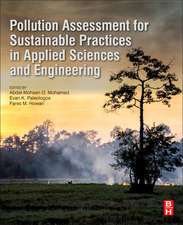 Pollution Assessment for Sustainable Practices in Applied Sciences and EngineeringAbdel-Mohsen O. Mohamed-25%Preț: 848.68 lei1132.40 lei
 -
 Preț: 342.63 lei
 -
 Managing Complexity: Earth Systems and Strategies for the FutureWalter R. Erdelen-25%Preț: 277.21 lei367.78 lei
 -
 Energy Security and SustainabilityAmritanshu Shukla-20%Preț: 329.86 lei414.67 lei
 -
 Preț: 432.59 lei
 -
 -18%Preț: 915.89 lei1116.95 lei
 -
 Reviews of Environmental Contamination and Toxicology Volume 213David M. Whitacre-20%Preț: 596.91 lei746.14 lei
 -
 Processes, Assessment and Remediation of Contaminated SedimentsDanny D. ReiblePreț: 411.88 lei
 -
 Petroleum Development and Environmental Conflict in Aotearoa New ZealandTerrence M. LoomisPreț: 349.31 lei
 -
 Uranium in Plants and the EnvironmentDharmendra K. Gupta-18%Preț: 859.76 lei1048.49 lei
 -
 Lead in Plants and the EnvironmentDharmendra K. Gupta-15%Preț: 618.03 lei727.08 lei
 -
 -15%Preț: 624.77 lei735.03 lei
 -
 Trends in Asian Water Environmental Science and TechnologyFutoshi Kurisu-20%Preț: 621.62 lei777.02 lei
 -
 Impact of Cesium on Plants and the EnvironmentDharmendra K. Gupta-15%Preț: 623.39 lei733.40 lei
 -
 Preț: 361.78 lei
 -
 Behaviour of Strontium in Plants and the EnvironmentDharmendra K. Gupta-15%Preț: 616.28 lei725.04 lei
 -
 -15%Preț: 618.83 lei728.03 lei
 -
 -15%Preț: 616.15 lei724.89 lei
 -
 Agricultural Implications of the Fukushima Nuclear AccidentTomoko M. NakanishiPreț: 410.79 lei
 -
 -18%Preț: 854.79 lei1042.42 lei
 -
 Advanced Sensors for Safety and SecurityAshok Vaseashta-18%Preț: 1174.45 lei1432.26 lei
 -
 -18%Preț: 917.87 lei1119.36 lei
 -
 -15%Preț: 616.64 lei725.45 lei
 -
 -15%Preț: 621.80 lei731.52 lei
 -
 -15%Preț: 558.94 lei657.58 lei
 -
 -18%Preț: 1190.96 lei1452.39 lei
Public țintă
ResearchCuprins
Section 1
Environmental analysis
Chapter 1
Introduction to Environmental Electroanalysis
Chapter 2
Soil
Chapter 3
Water
Chapter 4
Atmosphere
Chapter 5
Biosphere
Chapter 6
Extraterrestrial
Section 2
Fundamental Concepts of Sensors and Biosensors
Chapter 7
Electrochemical Sensors and Biosensors
Chapter 8
Electrochemical Sensors in Environmental Analysis
Chapter 9
Potentiometric Sensors
Chapter 10
Controlled potential techniques in amperometric sensing
Chapter 11
Biosensors on Enzymes, Tissues and Cells
Chapter 12
DNA Biosensors
Chapter 13
Immunosensors
Chapter 14
Other types of sensors: impedance-based sensors, FET sensors, acousticsensors
Section 3
Sensor Electrodes and Practical Concepts
Chapter 15
Macro-, Micro- and Nanoelectrodes
Chapter 16
Electrode materials (Bulk Materials and Modification)
Chapter17
Nanosized materials in amperometric sensors
Chapter 18
Electrochemical Sensors – Practical Approaches
Chapter19
Gas Sensors
Section 4
Sensors with Advanced Concepts
Chapter 20
Sensor arrays - Arrays of micro- and nanoelectrodes
Chapter 21
Sensors and Lab on Chip
Chapter 22
Electronic Noses
Chapter23
Remote Sensing
Environmental analysis
Chapter 1
Introduction to Environmental Electroanalysis
Chapter 2
Soil
Chapter 3
Water
Chapter 4
Atmosphere
Chapter 5
Biosphere
Chapter 6
Extraterrestrial
Section 2
Fundamental Concepts of Sensors and Biosensors
Chapter 7
Electrochemical Sensors and Biosensors
Chapter 8
Electrochemical Sensors in Environmental Analysis
Chapter 9
Potentiometric Sensors
Chapter 10
Controlled potential techniques in amperometric sensing
Chapter 11
Biosensors on Enzymes, Tissues and Cells
Chapter 12
DNA Biosensors
Chapter 13
Immunosensors
Chapter 14
Other types of sensors: impedance-based sensors, FET sensors, acousticsensors
Section 3
Sensor Electrodes and Practical Concepts
Chapter 15
Macro-, Micro- and Nanoelectrodes
Chapter 16
Electrode materials (Bulk Materials and Modification)
Chapter17
Nanosized materials in amperometric sensors
Chapter 18
Electrochemical Sensors – Practical Approaches
Chapter19
Gas Sensors
Section 4
Sensors with Advanced Concepts
Chapter 20
Sensor arrays - Arrays of micro- and nanoelectrodes
Chapter 21
Sensors and Lab on Chip
Chapter 22
Electronic Noses
Chapter23
Remote Sensing
Notă biografică
Ligia Maria Moretto graduated in Chemical engineering at the Federal University of Rio Grande do Sul, Brazil, and received her PhD in 1994 from the University Ca’ Foscari of Venice with a thesis “Ion-exchange voltammetry for the determination of copper and mercury. Application to seawater.” Her academic career began at the University of Caxias do Sul, Brazil, and followed at the Research Institute of Nuclear Energy, Sao Paulo, Brazil. In 1996 she had the habilitation as researcher in analytical chemistry at the University Ca’ Foscari of Venice. Working at the Laboratory of Electrochemical Sensors, her research field is the development of electrochemical sensor and biosensors based on modified electrodes, the study of gold arrays and ensembles of nanoelectrodes, with particular attention to environmental applications. She has published more than 60 full papers, several book chapters, and has presented 90 contributions at international conferences, resulting in more than 1100 citations. Dr. Moretto also collaborates as an invited professor and invited researcher with several institutions in Brazil, France, Argentina, Canada and USA.
Kurt Kalcher completed his studies at the Karl-Franzens University (KFU) with a dissertation in inorganic chemistry entitled “Contributions to the Chemistry of Cyantrichloride, CINCCI2”; he also received his PhD in 1980 from the same institution. In 1981 he then went for a postdoctoral stay at the Nuclear Research Center in Jülich (Germany) under the supervision of Professor Nürnberg and Dr. Valenta, and conducted intensive electroanalytical research while he was there. Dr. Kalcher continued his academic career at KFU with his habilitation on chemically modified carbon paste electrodes in analytical chemistry in 1988. Since then, he has been employed there as an associate professor. His research interests include the development of electrochemical sensors and biosensors for thedetermination of inorganic and biological analytes on the basis of carbon paste, screen-printed carbon and boron-doped diamond electrodes, as well as design, automation and data handling with small analytical devices using microprocessors. He has published around 200 full papers and has presented about 200 contributions at international conferences. These activities have resulted in more than 3100 citations. Dr. Kalcher has received numerous guest professor position offers in Bosnia-Herzegovina, Poland, Slovenia, and Thailand.
Kurt Kalcher completed his studies at the Karl-Franzens University (KFU) with a dissertation in inorganic chemistry entitled “Contributions to the Chemistry of Cyantrichloride, CINCCI2”; he also received his PhD in 1980 from the same institution. In 1981 he then went for a postdoctoral stay at the Nuclear Research Center in Jülich (Germany) under the supervision of Professor Nürnberg and Dr. Valenta, and conducted intensive electroanalytical research while he was there. Dr. Kalcher continued his academic career at KFU with his habilitation on chemically modified carbon paste electrodes in analytical chemistry in 1988. Since then, he has been employed there as an associate professor. His research interests include the development of electrochemical sensors and biosensors for thedetermination of inorganic and biological analytes on the basis of carbon paste, screen-printed carbon and boron-doped diamond electrodes, as well as design, automation and data handling with small analytical devices using microprocessors. He has published around 200 full papers and has presented about 200 contributions at international conferences. These activities have resulted in more than 3100 citations. Dr. Kalcher has received numerous guest professor position offers in Bosnia-Herzegovina, Poland, Slovenia, and Thailand.
Textul de pe ultima copertă
Electrochemical sensors represent the oldest type of chemical sensors and are widely present in chemical laboratories, industries, healthcare and in many aspects of our daily life. During the past few decades biosensors mimicking biological receptors for the sake of analytical assessment have emerged as an extremely important and fruitful field in fundamental and applied electroanalytical chemistry. Research and routine analysis in environmental sciences have shown that electrochemical sensors and biosensors may supply useful information for solving problems from the quite general to the highly specific, dealing with environmental pollution or many other questions in connection with (bio)geochemical cycles or fundamental environmental chemical processes. Environmental analytical chemistry is a multidisciplinary field requiring the cooperation of chemists, biochemists, physicists, engineers and many other specialists, a collaboration which defines and guarantees the development and applicability of robust and highly sensitive sensors for chemical analysis and environmental monitoring. The aim of this book is to give an overview of the role of electrochemical sensors in environmental chemical analysis and on their operating principles. It provides detailed information on the applicability of such sensors to the determination of all the different substances of environmental importance. It is designed on one hand as a textbook for students and teachers, and, on the other, as a manual for researchers and applied scientists and engineers who are fully or marginally confronted with problems in context with environmental chemistry. Due to its multidisciplinary character the book synthesizes various viewpoints of different sciences and addresses chemists, physicists, pharmacists, medical doctors, engineers and in fact all who are interested, professionally or non-professionally, in the chemistry of our environment.
Caracteristici
Focuses on the use of electrochemical sensors and biosensors Focuses on theoretical considerations and practical applications for environmental analysis Addresses thoroughly and exhaustively all relevant parameters, specific analytes, and groups of chemical substances important in the environment Includes supplementary material: sn.pub/extras