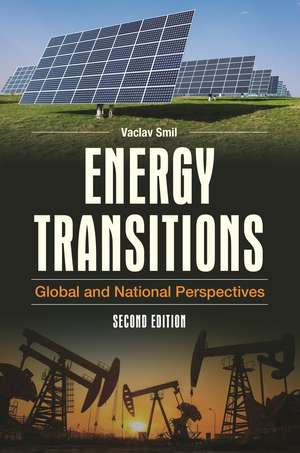
Energy Transitions
Autor Vaclav Smilen Limba Engleză Paperback – 31 dec 2016
Descoperim în Energy Transitions o analiză riguroasă și lipsită de iluzii asupra modului în care omenirea își schimbă sursele de putere. Folosind baze de date statistice internaționale de o precizie chirurgicală, Vaclav Smil demonstrează de ce trecerea de la combustibilii fosili la energiile regenerabile este un proces inerent lent și complex. Putem afirma că forța acestui volum rezidă în ancorarea sa istorică: autorul nu privește decarbonizarea ca pe un eveniment izolat, ci ca pe o continuare a „Marii Secvențe a Combustibililor”, de la biomasă la cărbune și hidrocarburi. Structura cărții este una progresivă, plecând de la proprietățile de bază ale sistemelor energetice și infrastructură, către studii de caz naționale detaliate. Reținem capitolele dedicate contrastelor dintre supraputeri precum SUA și Rusia sau liderii asiatici Japonia și China, care evidențiază ritmurile diferite de adaptare la noile realități tehnologice. Această ediție actualizată integrează impactul unor factori perturbatori recenți, de la ascensiunea mașinilor electrice la lecțiile învățate după Fukushima. Energy Transitions completează perspectiva oferită de New Energies de Stephen Gross, adăugând o dimensiune cantitativă și o critică pragmatică a planurilor naționale de tranziție care adesea ignoră inerția sistemelor fizice. Spre deosebire de abordările pur istorice, Smil pune accent pe „energiile intermitente” și pe limitările tehnice ale rețelelor actuale. În contextul operei sale, volumul servește ca un pilon tehnic pentru temele explorate în Energy and Civilization sau Grand Transitions, oferind datele brute necesare pentru a înțelege mecanismele care guvernează supraviețuirea și prosperitatea noastră modernă.
Preț: 402.39 lei
Preț vechi: 544.18 lei
-26%
Carte tipărită la comandă
Livrare economică 07-21 decembrie
Specificații
ISBN-10: 144085324X
Pagini: 296
Dimensiuni: 154 x 232 x 20 mm
Greutate: 0.45 kg
Ediția:Revised
Editura: Bloomsbury Publishing
Locul publicării:New York, United States
V-ar putea interesa
-
 Preț: 67.84 lei
 -
 -32%Preț: 63.14 lei92.27 lei
 -
 White NoiseDon DelilloPreț: 107.81 lei
 -
 The Oxford Handbook of PragmaticsYan Huang-17%Preț: 385.97 lei464.90 lei
 -
 12 Rules for LifeJordan B. Peterson-23%Preț: 151.43 lei195.57 lei
 -
 Preț: 267.53 lei
 -
 Power DensityVaclav Smil-6%Preț: 232.27 lei247.47 lei
 -
 An Execution in the Family: One Son's JourneyRobert MeeropolPreț: 120.25 lei
 -
 -15%Preț: 471.41 lei554.60 lei
 -
 The Syntax and Pragmatics of AnaphoraYan HuangPreț: 460.64 lei
 -
 Madness and CivilizationMichel FoucaultPreț: 110.80 lei
 -
 The E-Myth Landscape ContractorMichael E. GerberPreț: 328.45 lei
 -
 NonflictAmir KfirPreț: 82.97 lei
 -
 Natural Gas - Fuel for the 21st CenturyVaclav SmilPreț: 270.50 lei
 -
 Preț: 304.58 lei
 -
 The One-Straw RevolutionMasanobu FukuokaPreț: 86.49 lei
 -
 Sowing Seeds in the DesertMasanobu Fukuoka-35%Preț: 92.66 lei142.34 lei
 -
 The Meaning of Human ExistenceEdward O. WilsonPreț: 84.26 lei
 -
 Winning on PurposeDarci DarnellPreț: 183.49 lei
 -
 The Doctor Will See You NowTamer Seckin MDPreț: 201.11 lei
 -
 -15%Preț: 103.88 lei122.21 lei
 -
 EnergyVaclav SmilPreț: 71.72 lei
 -
 OilVaclav SmilPreț: 78.39 lei
 -
 The Ride of a LifetimeRobert Iger-20%Preț: 110.74 lei138.12 lei
 -
 Forty-One False StartsJanet MalcolmPreț: 71.14 lei
 -
 -25%Preț: 81.71 lei108.67 lei
 -
 Preț: 149.00 lei
De ce să citești această carte
Această carte este esențială pentru studenți și profesioniști care au nevoie de o evaluare realistă, nu utopică, a viitorului energetic. Cititorul câștigă o înțelegere profundă a motivelor pentru care tranziția către energia verde durează decenii, nu ani. Este un antidot necesar împotriva simplificărilor politice, oferind instrumente de analiză bazate pe fizică și istorie economică.
Despre autor
Vaclav Smil este profesor emerit la Universitatea din Manitoba și unul dintre cei mai respectați experți mondiali în istoria energiei și a inovației tehnice. Recunoscut pentru abordarea sa interdisciplinară care combină științele mediului, economia și politicile publice, Smil a publicat peste 40 de cărți traduse în numeroase limbi. Opera sa, apreciată constant de figuri precum Bill Gates, se concentrează pe realitățile materiale ale civilizației, demontând mituri prin analize numerice stricte. În lucrări precum How the World Really Works sau Numbers Don't Lie, el continuă să exploreze fundamentele fizice ale societății contemporane.
Descriere
Based on the best international and national statistical sources, the second edition of Energy Transitions: Global and National Perspectives supplies an in-depth evaluation of how economies and nations around the world are striving to move away from traditional energy sources, the unfolding decarbonization process, and problems with intermittent energies and national transition plans. It supplies readers with a clear introduction to the basic properties of energy systems and key concepts of their appraisal, puts energy transition patterns in long-term historical perspective, and looks at the energy transition in eight of the world's leading economies. The last chapters focus on the advances in the decarbonization of the global energy supply and consider how the energy transition will continue in the coming decades.
This fully updated and substantially expanded edition addresses the many new developments affecting energy supply, such as the recent expansion of hydraulic fracturing, oil price fluctuations, the Fukushima nuclear power plant catastrophe, advances in solar and wind generation, adoption of combined cycle gas turbines, and increased availability of electric cars. The coverage highlights the differences in the pace of transitions in various countries, thereby providing a complete and accurate picture of the current state of energy development in different parts of the world. The book serves as an invaluable resource for students as well as for anyone interested in a realistic appraisal of the current state of energy transitions in various nations and regions and the likely future development of the global energy supply.
Cuprins
Introduction: The Book's Raison d'Être
Chapter 1 Energy Systems: Their Basic Properties
Resources and Prime Movers
Conversions and Uses
Infrastructures and Impacts
Chapter 2 Energy Transitions: Universal Patterns
Processes and Paces: Complexities of Energy Transitions
Grand Fuel Sequence: From Biomass to Coal and Hydrocarbons
A New Quality: Generation of Electricity
History of Prime Movers: From Muscles to Machines
Quantifying the Transitions: Uncertainties and Trends
Chapter 3 National Transitions: Commonalities and Particularities
United Kingdom and France: Great European Powers
Netherlands and Sweden: Very Different Experiences
United States and Russia: Energy Superpowers
Japan and China: Asia's Leaders
Changing Patterns: Commonalities and Exceptions
Chapter 4 Decarbonization: Progress So Far
Slow Gains: Relative Global Decarbonization
Inadequate Shifts: Hydrocarbons and Primary Electricity
New Renewables: Solar Energy and Wind Electricity
Modern Biofuels: Electricity and Liquids
National Trajectories: Aspirations and Accomplishments
Chapter 5 Looking Ahead: Possibilities and Constraints
Long-term Forecasts: Past Failures and New Visions
Climate Change Challenge: How Much More CO2 Can We Emit?
Indispensable Fossil Fuels: Steel, Cement, Ammonia, and Plastics
Pace of Transitions: Innovations, Inertia, and Surprises
Realistic Anticipations: More Than a Great Transition
Chapter 6 Recapitulations
Appendices
References
Index