
Empowering Aesthetics: Contemporary Art from Post-Socialist Central Europe: Radical Aesthetics-Radical Art
Autor Dr Denisa Tomkováen Limba Engleză Hardback – 24 apr 2025
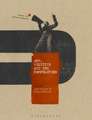
Engaging with contemporary philosophy and feminist, queer and decolonial (art) theory (Sara Ahmed, Judith Butler, Angela Dimitrakaki, Boris Groys, Jack Halberstam, Grant Kester, Ewa Majewska, Paul B. Preciado, Legacy Russell, Madina Tlostanova, etc.), this book highlights a shift in the understanding of the artwork and aesthetic experience that is enduring rather than immediate, drawing attention to a given community. The projects discussed in this book are created with the artist and the wider community or family in mind and are created in intersubjective connection with others. This volume highlights that empowering aesthetics perform an important function in challenging these narratives while contributing to building an inclusive collective memory that emancipates systematically marginalized individuals and communities.



Preț: 522.32 lei
Preț vechi: 789.08 lei
-34%
Puncte Express: 783
Preț estimativ în valută:
92.38€ • 107.100$ • 80.32£
92.38€ • 107.100$ • 80.32£
Carte disponibilă
Livrare economică 14-28 februarie
Specificații
ISBN-13: 9781350447226
ISBN-10: 1350447226
Pagini: 224
Ilustrații: 15 bw illus
Dimensiuni: 138 x 218 x 18 mm
Greutate: 0.36 kg
Editura: Bloomsbury Publishing
Colecția Bloomsbury Academic
Seria Radical Aesthetics-Radical Art
Locul publicării:London, United Kingdom
ISBN-10: 1350447226
Pagini: 224
Ilustrații: 15 bw illus
Dimensiuni: 138 x 218 x 18 mm
Greutate: 0.36 kg
Editura: Bloomsbury Publishing
Colecția Bloomsbury Academic
Seria Radical Aesthetics-Radical Art
Locul publicării:London, United Kingdom
Cuprins
List of Figures
Acknowledgements
1. Introduction
2. (Not) Being at Home in Institutions
3. Unintended Diaspora
4. Survival of Those Who Fit?
5. Can a Woman Sing?
6 Conclusion
Notes
Bibliography
Index
Acknowledgements
1. Introduction
2. (Not) Being at Home in Institutions
3. Unintended Diaspora
4. Survival of Those Who Fit?
5. Can a Woman Sing?
6 Conclusion
Notes
Bibliography
Index
Recenzii
Investigating artistic interventions from within the semiperiphery of post-socialist Central Europe, Denisa Tomková de-centers the concept of individualistic authorship by accentuating community as a key factor in marginalized artists' works. Not only does Tomková de-peripheralize Central Europe by placing local art within the context of feminist histories, she also makes a significant contribution to postsocialist decolonial thought.
Empowering Aesthetics brilliantly illuminates how art confronts surging populism across post-socialist Central Europe, powerfully demonstrating its capacity to amplify marginalized voices, catalyze social transformation, and chart a bold alternative path towards collective liberation.
The book offers a carefully theorised account of how contemporary art addresses the everyday through a multitude of practices. Denisa Tomková's nuanced analysis highlights tactics of empowerment without forgetting the need for resistance to what constructs and reproduces vulnerability and exclusion in the first place. Her study will be useful to all who see the potential of critical interventions against oppression in the contemporary art field.
This remarkable study delves into the diverse artistic practices emerging from post-socialist Central Europe (the Czech Republic, Slovakia, Hungary, Poland), a region that has frequently been neglected in the discourse of contemporary art criticism. A comprehensive analysis of how contemporary art actually empowers marginalized communities, it is an essential read for anyone interested in socially engaged practices in semi-peripheral, non-western societies. It is a hopeful and very much needed book. It encourages readers to appreciate the profound impact that art can have in fostering understanding across differences, and ultimately, social justice.
Empowering Aesthetics brilliantly illuminates how art confronts surging populism across post-socialist Central Europe, powerfully demonstrating its capacity to amplify marginalized voices, catalyze social transformation, and chart a bold alternative path towards collective liberation.
The book offers a carefully theorised account of how contemporary art addresses the everyday through a multitude of practices. Denisa Tomková's nuanced analysis highlights tactics of empowerment without forgetting the need for resistance to what constructs and reproduces vulnerability and exclusion in the first place. Her study will be useful to all who see the potential of critical interventions against oppression in the contemporary art field.
This remarkable study delves into the diverse artistic practices emerging from post-socialist Central Europe (the Czech Republic, Slovakia, Hungary, Poland), a region that has frequently been neglected in the discourse of contemporary art criticism. A comprehensive analysis of how contemporary art actually empowers marginalized communities, it is an essential read for anyone interested in socially engaged practices in semi-peripheral, non-western societies. It is a hopeful and very much needed book. It encourages readers to appreciate the profound impact that art can have in fostering understanding across differences, and ultimately, social justice.