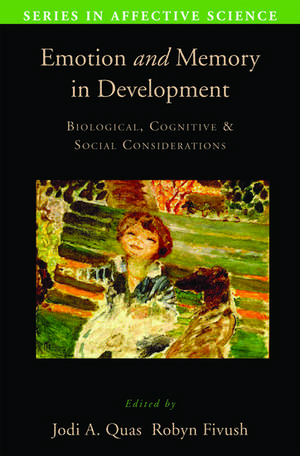
Emotion in Memory and Development: Biological, Cognitive, and Social Considerations: Series in Affective Science
Editat de Jodi Quas, Robyn Fivushen Limba Engleză Hardback – 30 apr 2009
Din seria Series in Affective Science
- 28%
 Preț: 521.37 lei
 - 27%
 Preț: 557.63 lei
 - 30%
 Preț: 724.33 lei
 - 30%
 Preț: 620.95 lei
 - 28%
 Preț: 506.59 lei
 - 30%
 Preț: 708.20 lei
 - 28%
 Preț: 399.99 lei
 - 28%
 Preț: 461.65 lei
 - 29%
 Preț: 650.99 lei
 - 30%
 Preț: 594.72 lei
 - 30%
 Preț: 567.71 lei
 - 31%
 Preț: 962.76 lei
 - 30%
 Preț: 567.71 lei
 - 30%
 Preț: 544.39 lei
 - 30%
 Preț: 612.50 lei
 - 31%
 Preț: 555.09 lei
 - 27%
 Preț: 510.11 lei
 - 30%
 Preț: 620.83 lei
 - 26%
 Preț: 892.05 lei
 - 20%
 Preț: 358.59 lei
 - 29%
 Preț: 562.64 lei
 - 32%
 Preț: 627.89 lei
 - 31%
 Preț: 576.05 lei
 - 28%
 Preț: 536.09 lei
 - 31%
 Preț: 857.75 lei
 - 33%
 Preț: 921.63 lei
 - 33%
 Preț: 683.67 lei
 - 30%
 Preț: 841.12 lei
 - 30%
 Preț: 819.30 lei
 - 30%
 Preț: 579.49 lei
 - 29%
 Preț: 719.48 lei
 - 26%
 Preț: 486.60 lei
 - 32%
 Preț: 722.73 lei
Preț: 480.81 lei
Preț vechi: 679.92 lei
-29%
Puncte Express: 721
Carte tipărită la comandă
Livrare economică 04-15 decembrie
Livrare prin curier în România Termenul estimat este afișat lângă disponibilitate.
Transport gratuit pentru acest produs Plată online sau ramburs, în funcție de opțiunile comenzii.
Retur gratuit în 14 zile Comandă securizată și suport în română.
Specificații
ISBN-13: 9780195326932
ISBN-10: 0195326938
Pagini: 448
Dimensiuni: 236 x 163 x 41 mm
Greutate: 0.92 kg
Editura: Oxford University Press
Colecția OUP USA
Seria Series in Affective Science
Locul publicării:New York, United States
ISBN-10: 0195326938
Pagini: 448
Dimensiuni: 236 x 163 x 41 mm
Greutate: 0.92 kg
Editura: Oxford University Press
Colecția OUP USA
Seria Series in Affective Science
Locul publicării:New York, United States
V-ar putea interesa
-
 The Making Of MemorySteven RosePreț: 124.38 lei
 -
 Memory: A Very Short IntroductionJonathan K. FosterPreț: 70.32 lei
 -
 Episodic Memory: New Directions in ResearchAlan Baddeley-31%Preț: 506.73 lei733.45 lei
 -
 -28%Preț: 519.97 lei725.50 lei
 -
 Working Memory, Thought, and ActionAlan Baddeley-28%Preț: 508.06 lei710.27 lei
 -
 The Mnemonic ImaginationE. Keightley-18%Preț: 811.62 lei989.78 lei
 -
 Memory in CultureA. ErllPreț: 218.06 lei
 -
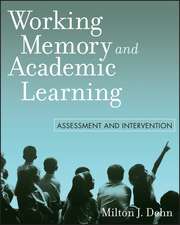 Working Memory and Academic LearningMilton J Dehn-8%Preț: 435.32 lei473.17 lei
 -
 Understanding Autobiographical MemoryDorthe BerntsenPreț: 399.86 lei
 -
 The Psychology of Eyewitness IdentificationJames Michael Lampinen-18%Preț: 1155.42 lei1409.05 lei
Cuprins
- I. Stress and Memory, Empirical Evidence
- 1: Remembering Traumatic Childhood Experiences: An Attachment Theory Perspective Yoojin Chae, Christin M. Ogle, and Gail S. Goodman
- 2: Children's Understanding and Remembering of Stressful Experiences Lynne Baker-Ward, Peter A. Ornstein, and Lauren P. Starnes
- 3: Injuries, Emergency Rooms, and Children's Memory: Factors Contributing to Individual Differences Carole Peterson and Kelly L. Warren
- 4: Stress and Autobiographical Memory Functioning Andrea Follmer Greenhoot, Rebecca J. Johnson, John-Paul Legerski, and Laura A. McCloskey
- II. Stress, Coping, and Parent-Child Narratives
- 5: Coping and Memory: Automatic and Controlled Processes in Adaptation to Stress Bruce E. Compas, Laura K. Campbell, Kristen E. Robinson, and Erin M. Rodriguez
- 6: Mother-child Emotion Dialogues: A Window into the Psychological Secure Base David Oppenheim and Nina Koren-Karie
- 7: Mother-child Reminiscing in the Context of Secure Attachment Relationships: Lessons in Understanding and Coping with Negative Emotions Deborah Laible and Tia Panfile
- 8: Creating a Context for Children's Memory: The Importance of Parental Attachment Status, Coping, and Narrative Skill for Co-Constructing Meaning Following Stressful Experiences Jessica McDermott Sales
- III. Stress, Physiology, and Neurobiology
- 9: An Integrated Model of Emotional Memory: Dynamic Transactions in Development Kristen Weede Alexander and Karen Davis O'Hara
- 10: Development and Social Regulation of Stress Neurobiology in Human Development: Implications for the Study of Traumatic Memories Kristen L. Wiik and Megan R. Gunnar
- 11: Stress Effects on the Brain System Underlying Explicit Memory Leslie J. Carver and Annette Cluver
- 12: Physiological Stress Responses and Children's Event Memory Allison R. Wallin, Jodi A. Quas, and Ilona S. Yim
- IV. Integration and New Directions
- 13: Co-constructing Memories and Meaning over Time Robyn Fivush
- 14: Relationships, Stress, and Memory Ross A. Thompson
- 15: Complications Abound, and Why that's a Good Thing Patricia J. Bauer
- 16: Emotion and Memory in Development: Clinical and Forensic Implications Karen Salmon and Rowena Conroy