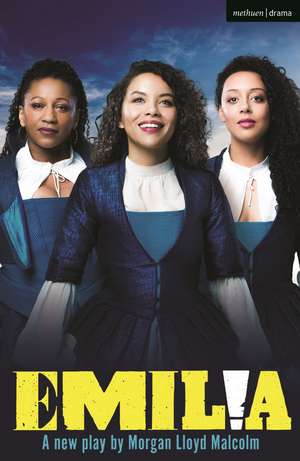
Emilia: Modern Plays
Autor Morgan Lloyd Malcolmen Limba Engleză Paperback – 7 oct 2021
In 1611 Emilia Bassano wrote a volume of radical, feminist and subversive poetry. It was one of the first published collections of poetry written by a woman in England. The little we know of Emilia Bassano is restricted to the possibility that she may have been the 'Dark Lady' of Shakespeare's Sonnets - and the rest of HerStory has been erased by History.
Morgan has taken what we know of Bassano, and her poetry, to create this lively, witty play.
| Toate formatele și edițiile | Preț | Express |
|---|---|---|
| Paperback (2) | 81.40 lei 22-36 zile | +20.07 lei 5-11 zile |
| Bloomsbury Publishing – 7 oct 2021 | 81.40 lei 22-36 zile | +20.07 lei 5-11 zile |
| Bloomsbury Publishing – 24 aug 2023 | 88.13 lei 22-36 zile | +32.88 lei 5-11 zile |
Din seria Modern Plays
- 20%
 Preț: 66.20 lei
 - 28%
 Preț: 80.52 lei
 - 19%
 Preț: 81.03 lei
 - 19%
 Preț: 81.20 lei
 - 21%
 Preț: 81.60 lei
 - 19%
 Preț: 80.53 lei
 - 23%
 Preț: 80.50 lei
 - 20%
 Preț: 79.59 lei
 - 19%
 Preț: 67.92 lei
 - 20%
 Preț: 79.59 lei
 - 20%
 Preț: 79.59 lei
 - 24%
 Preț: 79.83 lei
 - 19%
 Preț: 80.60 lei
 - 19%
 Preț: 80.00 lei
 - 19%
 Preț: 80.40 lei
 - 15%
 Preț: 80.13 lei
 - 19%
 Preț: 80.00 lei
 - 19%
 Preț: 80.39 lei
 -
 Preț: 14.31 lei
 - 19%
 Preț: 80.40 lei
 - 19%
 Preț: 81.60 lei
 - 15%
 Preț: 80.39 lei
 - 15%
 Preț: 80.66 lei
 - 19%
 Preț: 67.72 lei
 - 23%
 Preț: 80.60 lei
 - 19%
 Preț: 67.72 lei
 - 23%
 Preț: 81.35 lei
 - 19%
 Preț: 81.20 lei
 - 19%
 Preț: 80.40 lei
 - 19%
 Preț: 80.86 lei
 - 19%
 Preț: 80.40 lei
 - 19%
 Preț: 80.60 lei
 - 15%
 Preț: 80.66 lei
 - 19%
 Preț: 80.00 lei
 - 19%
 Preț: 80.30 lei
 - 19%
 Preț: 80.39 lei
 - 24%
 Preț: 80.06 lei
 - 19%
 Preț: 80.80 lei
 - 19%
 Preț: 79.75 lei
 - 18%
 Preț: 67.32 lei
 - 19%
 Preț: 80.19 lei
 - 19%
 Preț: 81.20 lei
 - 24%
 Preț: 80.00 lei
 - 19%
 Preț: 80.40 lei
 - 19%
 Preț: 80.00 lei
 - 19%
 Preț: 80.00 lei
 - 14%
 Preț: 82.00 lei
 - 27%
 Preț: 67.50 lei
 - 15%
 Preț: 79.83 lei
 - 18%
 Preț: 82.00 lei
Preț: 81.40 lei
Preț vechi: 94.78 lei
-14%
Puncte Express: 122
Preț estimativ în valută:
14.41€ • 16.78$ • 12.52£
14.41€ • 16.78$ • 12.52£
Carte disponibilă
Livrare economică 02-16 februarie
Livrare express 16-22 ianuarie pentru 30.06 lei
Preluare comenzi: 021 569.72.76
Specificații
ISBN-13: 9781350279247
ISBN-10: 1350279242
Pagini: 160
Dimensiuni: 128 x 196 x 12 mm
Greutate: 0.15 kg
Editura: Bloomsbury Publishing
Colecția Methuen Drama
Seria Modern Plays
Locul publicării:London, United Kingdom
ISBN-10: 1350279242
Pagini: 160
Dimensiuni: 128 x 196 x 12 mm
Greutate: 0.15 kg
Editura: Bloomsbury Publishing
Colecția Methuen Drama
Seria Modern Plays
Locul publicării:London, United Kingdom
Cuprins
Chronology
COMMENTARY
CHARACTERS - Historical versus fictional / Emilia Lanier Bassano (1560-1645)
NARRATIVE
PUBLIC HISTORY - Comparative works as diverse as Upstart Crow, Horrible Histories, Downton Abbey, Hamilton and Six in terms of dramatically subverting traditional histories
FEMINISM
AUDIENCE DEMOGRAPHIC
DRAMATIC DEVICES - the 3 Emilias, Brecht, epic theatre, feminist theatre, Shakespeare's history plays, all-female cast
SHAKESPEARE'S GLOBE
INTERVIEW WITH PLAYWRIGHT
PLAY TEXT
FURTHER READING
COMMENTARY
CHARACTERS - Historical versus fictional / Emilia Lanier Bassano (1560-1645)
NARRATIVE
PUBLIC HISTORY - Comparative works as diverse as Upstart Crow, Horrible Histories, Downton Abbey, Hamilton and Six in terms of dramatically subverting traditional histories
FEMINISM
AUDIENCE DEMOGRAPHIC
DRAMATIC DEVICES - the 3 Emilias, Brecht, epic theatre, feminist theatre, Shakespeare's history plays, all-female cast
SHAKESPEARE'S GLOBE
INTERVIEW WITH PLAYWRIGHT
PLAY TEXT
FURTHER READING
Recenzii
It is incredibly heartening to hear unabashed feminist rhetoric, spoken by a diverse all-female cast, in a commercial theatre space. [Emilia Bassano] provides a clear way in for discussing the centuries-long silencing of women, the oppression they have faced - and still face today. And you're never far from a totally topical line, the mix of past and present underlined by Lloyd Malcolm's use of cheerfully anachronistic slangy contemporary phrases. It can be really fun; this is a gently meta-theatrical and very jolly historical romp of a show, in the mould of 'Nell Gwyn' or 'Shakespeare in Love'. The winkingly modern perspective on the nonsense men spouted and women were expected to put up with is frequently amusing.
If Shakespeare's Globe had a roof, it would have been blasted off by the thunderous ovations and cheers ... greeting [this] extraordinarily rousing ... play ... In many honourable ways, this feels like a therapeutic blast in the #metoo era and it ends with an appropriately spine-tingling call to arms. "If they try to burn you, may your fire be stronger than theirs, so you can burn the whole f***ing house down". In the weight of her anger, [Emilia] convinces you that she holds "a muscle memory of every woman who came before me". ... [This] is a landmark moment in the history of Shakespeare Globe.
History is written by the victor, and as Malcolm's ... piece shows, the victor in the sixteenth century (and indeed, most of the time now) was male, white, privileged and uncompromising. The elder Emilia notes at one point, "We read what is recorded and see what is missing". That's what Emilia, the play, does so brilliantly; it fills in the gaps ... Malcolm writes eloquently, at times beautifully, showing Emilia's suffering and brilliance in equal measure. She also uses the context of the Globe masterfully - shattering the fourth wall with direct address to bring the audience into the story. There are romantic squabbles, fun capers ... the piece has a near-constant humour ... An outright feminist triumph and a brilliant call-to-arms.
A spicy work of biographical conjecture ... It's also a rousing reminder of the countless creative women who have been written out of history or have had to fight relentlessly to make themselves heard.
The great virtue of Lloyd Malcolm's speculative history lies in its passion and anger: it ends with a blazing address to the audience that is virtually a call to arms. It is throughout, however, a highly theatrical piece ... In rescuing Emilia from the shades, [the play] gives her dramatic life and polemical potency.
If Shakespeare's Globe had a roof, it would have been blasted off by the thunderous ovations and cheers ... greeting [this] extraordinarily rousing ... play ... In many honourable ways, this feels like a therapeutic blast in the #metoo era and it ends with an appropriately spine-tingling call to arms. "If they try to burn you, may your fire be stronger than theirs, so you can burn the whole f***ing house down". In the weight of her anger, [Emilia] convinces you that she holds "a muscle memory of every woman who came before me". ... [This] is a landmark moment in the history of Shakespeare Globe.
History is written by the victor, and as Malcolm's ... piece shows, the victor in the sixteenth century (and indeed, most of the time now) was male, white, privileged and uncompromising. The elder Emilia notes at one point, "We read what is recorded and see what is missing". That's what Emilia, the play, does so brilliantly; it fills in the gaps ... Malcolm writes eloquently, at times beautifully, showing Emilia's suffering and brilliance in equal measure. She also uses the context of the Globe masterfully - shattering the fourth wall with direct address to bring the audience into the story. There are romantic squabbles, fun capers ... the piece has a near-constant humour ... An outright feminist triumph and a brilliant call-to-arms.
A spicy work of biographical conjecture ... It's also a rousing reminder of the countless creative women who have been written out of history or have had to fight relentlessly to make themselves heard.
The great virtue of Lloyd Malcolm's speculative history lies in its passion and anger: it ends with a blazing address to the audience that is virtually a call to arms. It is throughout, however, a highly theatrical piece ... In rescuing Emilia from the shades, [the play] gives her dramatic life and polemical potency.