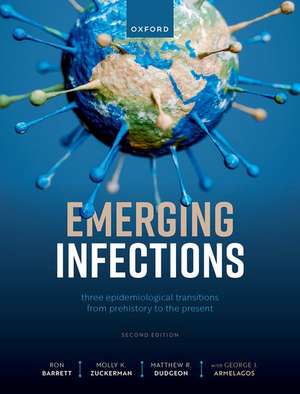
Emerging Infections: Three Epidemiological Transitions from Prehistory to the Present
Autor Ron Barrett, Molly Zuckerman, Matthew Ryan Dudgeon, George J. Armelagosen Limba Engleză Paperback – 28 mar 2024
Preț: 295.77 lei
Preț vechi: 338.74 lei
-13%
Puncte Express: 444
Carte disponibilă
Livrare economică 06-17 noiembrie
Livrare express 23-29 octombrie pentru 76.54 lei
Livrare prin curier în România Termenul estimat este afișat lângă disponibilitate.
Transport gratuit de la 400.00 lei Plată online sau ramburs, în funcție de opțiunile comenzii.
Retur gratuit în 14 zile Comandă securizată și suport în română.
Specificații
ISBN-13: 9780192843142
ISBN-10: 0192843141
Pagini: 192
Dimensiuni: 190 x 246 x 12 mm
Greutate: 0.42 kg
Ediția:2 Revised edition
Editura: OUP OXFORD
Colecția OUP Oxford
Locul publicării:Oxford, United Kingdom
ISBN-10: 0192843141
Pagini: 192
Dimensiuni: 190 x 246 x 12 mm
Greutate: 0.42 kg
Ediția:2 Revised edition
Editura: OUP OXFORD
Colecția OUP Oxford
Locul publicării:Oxford, United Kingdom
V-ar putea interesa
-
 Infectious Disease: A Very Short IntroductionMarta Wayne-24%Preț: 57.91 lei75.86 lei
 -
 Viruses: A Very Short IntroductionDorothy H. Crawford-20%Preț: 56.92 lei71.00 lei
 -
 -17%Preț: 315.01 lei378.89 lei
 -
 Pandemics: A Very Short IntroductionChristian W. McMillen-23%Preț: 58.42 lei76.17 lei
 -
 Deadly Companions: How Microbes Shaped our HistoryDorothy H. Crawford-19%Preț: 74.95 lei92.97 lei
 -
 Epidemics and Society: From the Black Death to the PresentFrank M. Snowden-5%Preț: 137.36 lei144.59 lei
 -
 Apollo's Arrow: The Profound and Enduring Impact of Coronavirus on the Way We LiveNicholas A. Christakis MD, PhD-25%Preț: 85.41 lei114.46 lei
 -
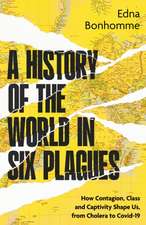 -25%Preț: 91.95 lei123.29 lei
 -
 Plagues Upon the EarthKyle Harper-5%Preț: 187.73 lei197.61 lei
 -
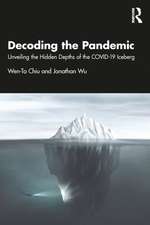 -5%Preț: 459.40 lei483.57 lei
 -
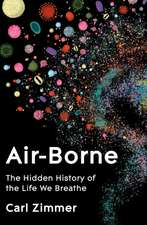 Air-BorneCarl Zimmer-34%Preț: 82.42 lei125.70 lei
 -
 How to Survive a PandemicMichael Greger-43%Preț: 84.84 lei148.03 lei
 -
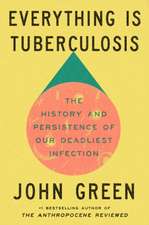 Everything Is TuberculosisJohn Green-19%Preț: 127.66 lei157.70 leiRecomandat
 -
 Outbreaks and EpidemicsMeera Senthilingam-5%Preț: 74.97 lei78.92 lei
 -
 Duel Without EndStig S Frøland-11%Preț: 230.86 lei259.21 lei
 -
 So Very SmallThomas Levenson-36%Preț: 74.04 lei115.88 lei
 -
 PathogenesisJonathan Kennedy-28%Preț: 62.57 lei86.95 lei
Recenzii
Review from previous edition Its core ideas are important and need to be widely disseminated, to help medical professionals and biomedical researchers look beyond the borders of their disciplines, but also to improve popular understanding and inform social policy.
By taking an historical perspective, the authors of this book are able to weave together a more complex and interesting account of how social, economic, environmental and technological factors have created todays global disease ecology
This book makes a compelling case for a renewed analysis of the long-term history of epidemics. It is the result of a life-long reflection on the development of both humankind and pathogens, as well as their interaction and equilibrium, or lack thereof. It is a thought-provoking theoretical investigation that will prove a potent heuristic tool for years to come.
By taking an historical perspective, the authors of this book are able to weave together a more complex and interesting account of how social, economic, environmental and technological factors have created todays global disease ecology
This book makes a compelling case for a renewed analysis of the long-term history of epidemics. It is the result of a life-long reflection on the development of both humankind and pathogens, as well as their interaction and equilibrium, or lack thereof. It is a thought-provoking theoretical investigation that will prove a potent heuristic tool for years to come.
Notă biografică
Ron Barrett is an Assistant Professor of Medical Anthropology at Macalester College. His research concerns the social aspects of infectious diseases, with an ethnographic focus on northern and western India. His work on the biosocial aspects of leprosy and other socially stigmatized diseases can be found in, Aghor Medicine: Pollution, Death, ad Healing in Northern India (University of California Press), which was recently awarded the Wellcome Medal for Medical Anthropology by the Royal Anthropological Institute. His currently the primary investigator for an NSF-sponsored research on the relationship between social support networks and health-seeking for influenza-like illnesses in a western Indian slum community. Professor Barrett is co-editor of a textbook reader, Understanding and Applying Medical Anthropology (McGraw Hill). He is also a registered nurse with clinical experience in hospice, neuro-intensive care, and brain injury rehabilitation.Molly Zuckerman is a Professor in the Department of Anthropology and Middle Eastern Cultures (AMEC) at Mississippi State University. Her research interests include Bioarchaeology, Paleopathology, Paleoepidemiology, and Biocultural Anthropology. Within these domains, she is broadly interested in the biosocial determinants of health inequalities and disease experiences within past populations. She is a Senior Editor of the Oxford Research Encyclopedia of Anthropology, published by Oxford University Press.Matt Dudgeon is an Assistant Professor of Medicine in the Emory School of Medicine and Associated Assistant Professor in the Department of Anthropology at Emory University. His research has focused on the intersection of health and culture. He currently participates in research on determinants of antiretroviral failure in South Africa, a cross-national comparison of determinants of vaccine acceptance, internal medicine resident simulation training, and hospital-based ethnography of healthcare provider experiences during the COVID-19 pandemic.The late George J. Armelagos was Goodrich C. White Professor of Anthropology at Emory University. His research interests concerned the paleopathology and evolution of diet and disease in prehistoric human populations. His research has involved the osteological and pathological analysis of mummified and skeletal populations from North Africa and North America, tracing health changes associated with the Neolithic transition to sedentism and agriculture. He has also published osteopathic and phylogenetic evidence in support of the New World origin of syphilis. Professor Armelagos is the former president of the American Association of Physical Anthropologists (AAPA). He is a recipient of the Franz Boas Award (American Anthropological Association), the Charles Darwin Award (AAPA), and the Viking Medal (Wenner Gren Foundation).
Cuprins
- 1: Introduction
- The First Transition
- 2: The Paleolithic Baseline
- 3: Agriculture and the First Emerging Infections
- The Second Transition
- 4: When Germ Theory Didn't Matter
- 5: The Worst of Both Worlds
- The Third Transition
- 6: Converging Infections
- 7: Inevitable Resistance
- 8: Conclusion