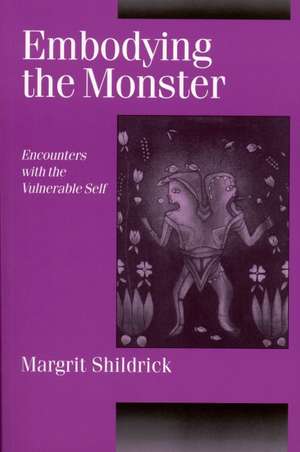
Embodying the Monster: Published in association with Theory, Culture & Society
Autor Margrit Shildricken Limba Engleză Paperback – noi 2001
În Embodying the Monster, Margrit Shildrick propune o analiză riguroasă a vocabularului tematic ce gravitează în jurul conceptelor de vulnerabilitate, alteritate și perfecțiune corporală. Reținem că această lucrare nu tratează monstrul ca pe o entitate biologică aberantă, ci ca pe o categorie discursivă care ne forțează să regândim limitele propriului sine. Merită menționat că textul acoperă un spectru larg de termeni din sfera bioeticii și a fenomenologiei, investigând de ce anumite corpuri sunt etichetate drept „monstruoase” în timp ce altele definesc norma.
Ca și Bodies, Boundaries and Vulnerabilities de Lisa Folkmarson Käll, volumul de față explorează interdependența dintre granițele corporale și subiectivitate, însă Margrit Shildrick adoptă o metodologie poststructuralistă mai accentuată, punând sub semnul întrebării însăși posibilitatea unui sine invulnerabil. Structura cărții reflectă o progresie teoretică complexă: de la analiza istorică a „minunilor” și „monștrilor”, la capitole dedicate „monstrizării” figurii materne și, în final, către o etică a ospitalității față de celălalt. Această abordare continuă temele explorate în lucrările sale anterioare, precum Leaky Bodies and Boundaries, unde autoarea investiga modul în care discursul occidental marginalizează corpul feminin.
Recomandăm acest titlu pentru rigoarea cu care deconstruiește idealul corpului „curat și propriu”. Tonul este unul academic, dens, specific seriei Published in association with Theory, Culture & Society, oferind o perspectivă critică asupra modului în care medicina și cultura organizează viața pentru a exclude anomalia. Este o lectură care invită la o revizuire a fenomenologiei atingerii și a relațiilor dintre corpurile întrupate.
Din seria Published in association with Theory, Culture & Society
- 8%
 Preț: 481.51 lei
 - 18%
 Preț: 816.03 lei
 - 18%
 Preț: 750.37 lei
 - 18%
 Preț: 830.92 lei
 - 18%
 Preț: 826.81 lei
 - 18%
 Preț: 1357.92 lei
 - 18%
 Preț: 695.13 lei
 - 18%
 Preț: 778.70 lei
 - 18%
 Preț: 826.33 lei
 -
 Preț: 442.05 lei
 - 18%
 Preț: 813.20 lei
 - 18%
 Preț: 826.01 lei
 - 18%
 Preț: 1239.19 lei
 - 18%
 Preț: 697.02 lei
 - 18%
 Preț: 1548.84 lei
 - 18%
 Preț: 826.33 lei
 - 18%
 Preț: 693.53 lei
 - 18%
 Preț: 812.53 lei
 - 18%
 Preț: 779.33 lei
 - 18%
 Preț: 1038.43 lei
 - 8%
 Preț: 482.43 lei
 - 18%
 Preț: 814.46 lei
 - 18%
 Preț: 1764.61 lei
 -
 Preț: 389.42 lei
 - 18%
 Preț: 1357.92 lei
 - 18%
 Preț: 1643.44 lei
 -
 Preț: 476.11 lei
 - 15%
 Preț: 457.55 lei
 - 18%
 Preț: 1300.54 lei
 - 8%
 Preț: 574.26 lei
 - 18%
 Preț: 1219.39 lei
 - 18%
 Preț: 813.52 lei
 - 18%
 Preț: 1548.18 lei
 - 18%
 Preț: 779.15 lei
 - 9%
 Preț: 1297.77 lei
 - 18%
 Preț: 729.29 lei
 - 18%
 Preț: 1643.28 lei
 - 18%
 Preț: 976.76 lei
 - 18%
 Preț: 1326.74 lei
 - 15%
 Preț: 547.79 lei
 - 18%
 Preț: 1456.52 lei
 - 18%
 Preț: 1560.34 lei
 - 8%
 Preț: 549.44 lei
 - 18%
 Preț: 1379.75 lei
 - 18%
 Preț: 809.71 lei
 - 18%
 Preț: 826.01 lei
 - 18%
 Preț: 804.97 lei
 - 18%
 Preț: 748.42 lei
 - 18%
 Preț: 1456.99 lei
 - 18%
 Preț: 814.61 lei
Preț: 734.71 lei
Preț vechi: 895.98 lei
-18%
Carte tipărită la comandă
Livrare economică 19 noiembrie-03 decembrie
Specificații
ISBN-10: 0761970142
Pagini: 162
Dimensiuni: 178 x 254 x 11 mm
Greutate: 0.27 kg
Ediția:1. Auflage
Editura: SAGE Publications Ltd
Colecția Published in association with Theory, Culture & Society
Seria Published in association with Theory, Culture & Society
Locul publicării:London, United Kingdom
V-ar putea interesa
-
 Museums, Media and Cultural TheoryMichelle Henning-27%Preț: 194.46 lei266.16 lei
 -
 Preț: 349.42 lei
 -
 Bobos in ParadiseDavid BrooksPreț: 105.86 lei
 -
 Understanding Material CultureIan Woodward-8%Preț: 418.80 lei455.22 lei
 -
 Power and OrganizationsStewart R. Clegg-18%Preț: 956.25 lei1166.17 lei
 -
 Cultural EconomyWorkshop on Cultural Economy-18%Preț: 826.33 lei1007.71 lei
 -
 The SAGE Dictionary of Cultural StudiesChris BarkerPreț: 439.28 lei
 -
 MegawordsRichard Osborne-15%Preț: 634.75 lei746.76 lei
 -
 Questions of Cultural IdentityStuart Hall-8%Preț: 457.26 lei497.02 lei
 -
 Death ScenesKatherine DunnPreț: 144.59 lei
 -
 Cultural StudiesJeff Lewis-23%Preț: 690.74 lei897.07 lei
 -
 Red Light Zones: The World's Most Unsavoury NightspotsDavid KerekesPreț: 76.17 lei
 -
 Prisoner Of X: 20 Years in the Hole at Hustler MagazineAllan MacDonell-29%Preț: 93.53 lei131.49 lei
 -
 Preț: 486.36 lei
De ce să citești această carte
Recomandăm această carte studenților și specialiștilor din domeniile studiilor de gen, sociologiei corpului și bioeticii care doresc să înțeleagă rădăcinile culturale ale fricii de anomalie. Cititorul va câștiga o perspectivă critică asupra modului în care societatea definește normalitatea, învățând să privească vulnerabilitatea nu ca pe un defect, ci ca pe o condiție esențială a existenței umane. Este o resursă fundamentală pentru oricine analizează intersecția dintre putere, medicină și identitate.
Despre autor
Margrit Shildrick este o cercetătoare distinsă ale cărei interese se concentrează pe corpul anomal, explorând teme precum dizabilitatea, îmbătrânirea și conceptele de sex și gen. Abordarea sa este profund marcată de postmodernism și poststructuralism, fiind influențată de teoria feministă contemporană și bioetica postconvențională. Pe lângă Embodying the Monster, opera sa include titluri de referință precum Leaky Bodies and Boundaries și Feminist Theory and the Body. În prezent, activitatea sa academică se extinde spre cercetări internaționale privind fenomenologia beneficiarilor de transplant cardiac și studii critice despre dizabilitate.
Descriere scurtă
Recenzii
"Excellent text; informative endnotes. Recommended for upper-division undergraduates through professionals."
Cuprins
Monsters, Marvels and Meanings
Monstering the (M)Other
The Self's Clean and Proper Body
Contagious Encounters and the Ethics of Risk
Levinas and Vulnerable Becoming
The Relational Economy of Touch
Welcoming the Monstrous <i>Arrivant