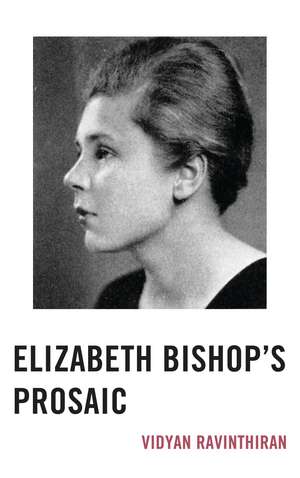
Elizabeth Bishop's Prosaic: Bucknell University Press
Autor Vidyan Ravinthiranen Limba Engleză Paperback – aug 2017
Din seria Bucknell University Press
- 33%
 Preț: 708.22 lei
 - 29%
 Preț: 176.32 lei
 - 26%
 Preț: 358.19 lei
 - 29%
 Preț: 339.05 lei
 - 36%
 Preț: 523.76 lei
 - 36%
 Preț: 525.10 lei
 - 29%
 Preț: 341.60 lei
 - 29%
 Preț: 341.60 lei
 - 33%
 Preț: 640.95 lei
 - 23%
 Preț: 330.50 lei
 - 22%
 Preț: 330.72 lei
 - 18%
 Preț: 262.53 lei
 - 23%
 Preț: 327.44 lei
 - 23%
 Preț: 328.48 lei
 - 37%
 Preț: 661.74 lei
 - 34%
 Preț: 383.68 lei
 - 18%
 Preț: 286.06 lei
 - 13%
 Preț: 323.37 lei
Preț: 329.49 lei
Preț vechi: 426.44 lei
-23%
Puncte Express: 494
Carte tipărită la comandă
Livrare economică 05-19 decembrie
Livrare prin curier în România Termenul estimat este afișat lângă disponibilitate.
Transport gratuit de la 400.00 lei Plată online sau ramburs, în funcție de opțiunile comenzii.
Retur gratuit în 14 zile Comandă securizată și suport în română.
Specificații
ISBN-13: 9781611486834
ISBN-10: 1611486831
Pagini: 278
Dimensiuni: 150 x 228 x 20 mm
Greutate: 0.36 kg
Editura: Bloomsbury Publishing
Colecția Bucknell University Press
Seria Bucknell University Press
Locul publicării:New York, United States
ISBN-10: 1611486831
Pagini: 278
Dimensiuni: 150 x 228 x 20 mm
Greutate: 0.36 kg
Editura: Bloomsbury Publishing
Colecția Bucknell University Press
Seria Bucknell University Press
Locul publicării:New York, United States
V-ar putea interesa
-
 -34%Preț: 537.00 lei815.43 lei
 -
 Return to Good and Evil: Flannery O'Connor's Response to NihilismHenry T. Edmondson, III-23%Preț: 321.74 lei416.77 lei
 -
 -35%Preț: 377.69 lei581.50 lei
 -
 -27%Preț: 282.48 lei387.00 lei
 -
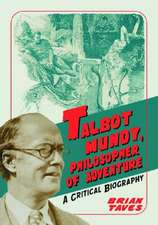 Talbot Mundy, Philosopher of AdventureBrian TavesPreț: 331.71 lei
 -
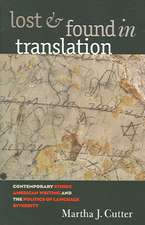 Lost and Found in TranslationMartha J. CutterPreț: 319.34 lei
 -
 Preț: 293.62 lei
 -
 -34%Preț: 410.59 lei625.23 lei
 -
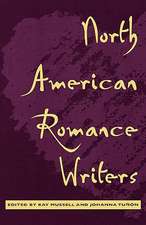 North American Romance WritersKay Mussell-33%Preț: 547.34 lei818.46 lei
 -
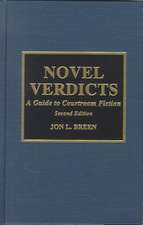 Novel Verdicts: A Guide to Courtroom FictionJon L. Breen-38%Preț: 715.98 lei1150.32 lei
 -
 Hard-Boiled ExplicatorRobert E. Skinner-15%Preț: 458.46 lei539.37 lei
 -
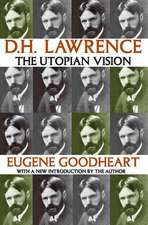 D.H. Lawrence: The Utopian VisionEugene GoodheartPreț: 466.11 lei
 -
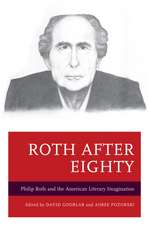 Roth after EightyDavid Gooblar-15%Preț: 606.10 lei713.06 lei
 -
 Climate EngineeringDaniel Edward Callies-15%Preț: 648.31 lei762.71 lei
 -
 How Do Fairies Have Fun in the Sun?Liza Gardner WalshPreț: 57.94 lei
 -
 Arvind Krishna MehrotraVidyan RavinthiranPreț: 90.60 lei
 -
 Grun-Tu-MolaniVidyan Ravinthiran-18%Preț: 58.73 lei71.71 lei
 -
 The Million-petalled Flower of Being HereVidyan RavinthiranPreț: 80.92 lei
Descriere
Elizabeth Bishop is now recognized as one of the greatest poets of the twentieth century-a uniquely cosmopolitan writer with connections to the US, Canada, Brazil, and also the UK, given her neglected borrowings from many English authors, and her strong influence on modern British verse. Yet the dominant biographical/psychoanalytical approach leaves her style relatively untouched-and it is vital that an increasing focus on archival material does not replace our attention to the writing itself. Bishop's verse is often compared with prose (sometimes insultingly); writing fiction, she worried she was really writing poems. But what truly is the difference between poetry and prose-structurally, conceptually, historically speaking? Is prose simply formalized speech, or does it have rhythms of its own? Ravinthiran seeks an answer to this question through close analysis of Bishop's prose-like verse, her literary prose, her prose poems, and her letter prose. This title is a provocation. It demands that we reconsider the pejorative quality of the word prosaic; playing on mosaic, Ravinthiran uses Bishop's thinking about prose to approach-for the first time-her work in multiple genres as a stylistic whole.
Elizabeth Bishop's Prosaic is concerned not only with her inimitable style, but also larger questions to do with the Anglo-American shift from closed to open forms in the twentieth century. This study identifies not just borrowings from, but rich intertextual relationships with, writers as diverse as-among others-Gerard Manley Hopkins, W.H. Auden, Virginia Woolf, Flannery O'Connor, and Dorothy Richardson. (Though Bishop criticized Woolf, she in particular is treated as a central and thus far neglected precursor, crucial to our understanding of Bishop as a feminist poet.) Finally, the sustained discussion of how the history of prose frames effects of rhythm, syntax, and acoustic texture-in both Bishop's prose proper and her prosaic verse-extends a body of research which seeks now to treat literature as a form of cognition. Technique and thought are finely wedded in Bishop's work-her literary forms evince a historical intelligence attuned to questions of power, nationality, tradition (both literary and otherwise), race, and gender.
Elizabeth Bishop's Prosaic is concerned not only with her inimitable style, but also larger questions to do with the Anglo-American shift from closed to open forms in the twentieth century. This study identifies not just borrowings from, but rich intertextual relationships with, writers as diverse as-among others-Gerard Manley Hopkins, W.H. Auden, Virginia Woolf, Flannery O'Connor, and Dorothy Richardson. (Though Bishop criticized Woolf, she in particular is treated as a central and thus far neglected precursor, crucial to our understanding of Bishop as a feminist poet.) Finally, the sustained discussion of how the history of prose frames effects of rhythm, syntax, and acoustic texture-in both Bishop's prose proper and her prosaic verse-extends a body of research which seeks now to treat literature as a form of cognition. Technique and thought are finely wedded in Bishop's work-her literary forms evince a historical intelligence attuned to questions of power, nationality, tradition (both literary and otherwise), race, and gender.
Cuprins
Acknowledgments
Introduction
Chapter One: Poetry and Prose-Rhythm
Chapter Two: Bishop's Description
Chapter Three: Bishop's Letters
Chapter Four: Bishop's Literary Prose
Chapter Five: "Rainy Season; Sub-Tropics": Hybrid Rhythm
Chapter Six: "Santarém" and the Aesthetic Claim
Chapter Seven: Postscript: "One Art" and its Drafts
Bibliography
Index
About the Author
Introduction
Chapter One: Poetry and Prose-Rhythm
Chapter Two: Bishop's Description
Chapter Three: Bishop's Letters
Chapter Four: Bishop's Literary Prose
Chapter Five: "Rainy Season; Sub-Tropics": Hybrid Rhythm
Chapter Six: "Santarém" and the Aesthetic Claim
Chapter Seven: Postscript: "One Art" and its Drafts
Bibliography
Index
About the Author
Recenzii
Elizabeth Bishop's Prosaic represents a compelling and fundamental breakthrough in Elizabeth Bishop scholarship as well as in the study of literary genre. . . .In other words, this book is highly ambitious in its rendering of Bishop's nuanced poetics and prosaic style. The book is beautifully written, informed not just by Bishop critics but also by important (and neglected) poetry critics of at least the last 100 years. . . .The book will be a building block for further studies of Bishop's prose rhythms, and her innovative poetics in the ongoing evolution of poetry. Scholars and poets will delight on hundreds of pithy observations, fresh readings and analyses made here. . . .We have no doubt that this is a book that will both change Bishop scholarship at the same time as refining our understanding of twentieth-century poetic history.