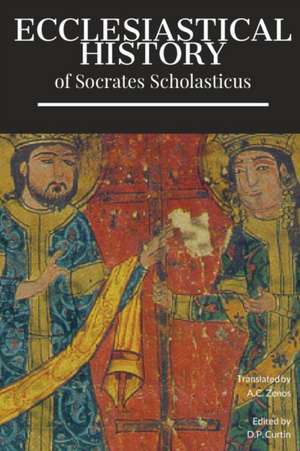
Ecclesiastical History
Autor Socrates Scholasticusen Limba Engleză Paperback – mai 2023
Preț: 76.63 lei
Carte disponibilă
Livrare economică 14-28 noiembrie
Specificații
ISBN-10: 1088124828
Pagini: 296
Dimensiuni: 152 x 229 x 16 mm
Greutate: 0.4 kg
Editura: Dalcassian Publishing Company
V-ar putea interesa
-
 Explaining the Cosmos: Creation and Cultural Interaction in Late-Antique GazaMichael W. Champion-30%Preț: 683.58 lei977.30 lei
 -
 Rome, Polybius, and the EastThe late Peter Derow-31%Preț: 678.20 lei984.13 lei
 -
 Choruses, Ancient and ModernJoshua Billings-31%Preț: 856.83 lei1241.81 lei
 -
 Niketas Choniates: A Historiographical StudyAlicia Simpson-31%Preț: 729.76 lei1056.15 lei
 -
 Poetic Autonomy in Ancient RomeLuke Roman-31%Preț: 777.12 lei1125.57 lei
 -
 -31%Preț: 905.24 lei1311.86 lei
 -
 Laughter in Ancient RomeMary BeardPreț: 214.56 lei
 -
 Preț: 227.35 lei
 -
 A Companion to LivyBernard Mineo-9%Preț: 1275.96 lei1402.15 lei
 -
 Classical World: All That MattersAlastair Blanshard-27%Preț: 52.21 lei71.42 lei
 -
 -9%Preț: 1331.76 lei1463.47 lei
 -
 Alexander's Heirs CEdward M Anson-8%Preț: 681.51 lei740.77 lei
 -
 Memory and Urban Religion in the Ancient WorldDr Martin BommasPreț: 280.05 lei
 -
 -27%Preț: 67.24 lei91.95 lei
 -
 Confronting the Classics: Traditions, Adventures and InnovationsProfessor Mary Beard-18%Preț: 70.64 lei86.56 lei
 -
 Alesia 52 BC: The final struggle for GaulNic Fields-26%Preț: 90.01 lei122.32 lei
Descriere
This particular doctrinal history begins with Constantine and his conversion to Christianity. The transmutation of his beliefs begins in the first chapter as he relates the sight of the words "By This Conquer" beside a figure of a cross fashioned from a pillar of light in the sky. Constantine asks others in his company if they noticed anything, and they made a declaration of the same vision. Later the next night Constantine heard Jesus speak to him of the furtherance of Christian principle and divine purpose. Scholasticus' history proceeds with the ancestral line of kings, priests, bishops, and popes. Their doctrinal and political influence is recorded throught the ages and balanced against a more religiously primitive populace. What takes place in the church from this time on is dynamic and forceful. The spectacular events recounted from personal documents are startlingly pervasive as the history continues to Scholasticus' present day.