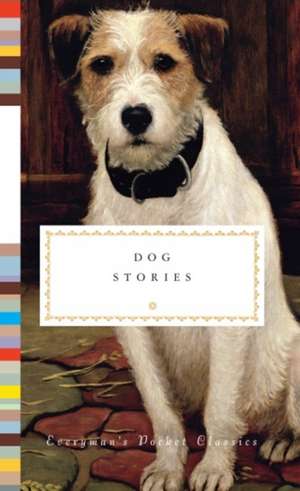
Dog Stories: Everyman's Library POCKET CLASSICS
Editat de Diana Secker Tesdellen Limba Engleză Hardback – 29 oct 2010
Pășind în universul antologiei Dog Stories, cititorul este întâmpinat de o atmosferă caldă și polifonică, ce transcende simpla admirație pentru animalele de companie. Observăm aici o explorare profundă a legăturii interspecifice, unde câinele nu este doar un personaj secundar, ci o oglindă a condiției umane. De la melancolia demnă a unui văduv care își împarte durerea cu patrupedul lăsat în urmă, până la viziunea plină de haz a unui câine de pază mult prea binevoitor, volumul reușește să evite sentimentalismul facil în favoarea unei empatii autentice. Structura cărții este echilibrată, alternând perspective narative surprinzătoare. Găsim aici „memoriile” unui câine galben scrise de O. Henry, dar și realismul psihologic al lui Anton Chekhov sau tensiunea subtilă caracteristică Patriciei Highsmith. Ca și Great American Dog Stories de Nancy Butler, această antologie celebrează loialitatea canină, dar se diferențiază prin diversitatea geografică și stilistică a autorilor selectați, oferind o perspectivă globală și istorică asupra temei. Dacă volumul lui Butler se concentrează pe spațiul american, Dog Stories ne poartă din apartamentele moderne ale lui Jonathan Lethem până în peisajele rurale ale lui Rudyard Kipling. În contextul operei editoriale a Dianei Secker Tesdell, acest titlu completează firesc seria începută cu Cat Stories și Horse Stories. Observăm aceeași rigoare în selecție și aceeași atenție pentru detaliul literar care transformă o antologie tematică într-o piesă de colecție. Formatul Pocket Classics de la EVERYMAN adaugă o notă de eleganță tactilă, transformând lectura acestor 20 de povestiri într-o experiență contemplativă, ideală pentru momentele de liniște.
Din seria Everyman's Library POCKET CLASSICS
- 28%
 Preț: 77.68 lei
 - 17%
 Preț: 66.03 lei
 - 19%
 Preț: 63.80 lei
 - 38%
 Preț: 67.24 lei
 - 16%
 Preț: 67.30 lei
 - 17%
 Preț: 90.92 lei
 - 37%
 Preț: 68.79 lei
 - 18%
 Preț: 90.12 lei
 - 18%
 Preț: 90.21 lei
 - 28%
 Preț: 77.79 lei
 - 16%
 Preț: 81.40 lei
 - 27%
 Preț: 78.95 lei
 - 28%
 Preț: 79.28 lei
 - 18%
 Preț: 90.29 lei
 - 28%
 Preț: 78.49 lei
 - 17%
 Preț: 79.63 lei
 - 18%
 Preț: 89.55 lei
 - 18%
 Preț: 88.17 lei
 - 18%
 Preț: 88.69 lei
 - 18%
 Preț: 87.47 lei
 - 17%
 Preț: 91.09 lei
 - 18%
 Preț: 89.39 lei
 - 18%
 Preț: 87.20 lei
 - 17%
 Preț: 89.63 lei
 -
 Preț: 108.94 lei
 -
 Preț: 107.47 lei
 -
 Preț: 107.87 lei
 -
 Preț: 109.10 lei
Preț: 89.30 lei
Preț vechi: 109.09 lei
-18%
Carte disponibilă
Livrare economică 05-11 noiembrie
Livrare express 16-22 octombrie pentru 48.37 lei
Specificații
ISBN-10: 184159606X
Pagini: 384
Dimensiuni: 118 x 190 x 32 mm
Greutate: 0.4 kg
Editura: EVERYMAN
Colecția Everyman's Library POCKET CLASSICS
Seria Everyman's Library POCKET CLASSICS
V-ar putea interesa
-
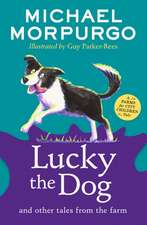 Lucky the Dog and Other Tales from the FarmMichael MorpurgoPreț: 39.36 lei
 -
 My DogOlivia WakefordPreț: 57.93 lei
 -
 Good DogEditors Of Garden And GunPreț: 170.80 lei
 -
 A Dog Called HeroKaty BirchallPreț: 58.20 lei
 -
 Classic Love StoriesBecky BrownPreț: 77.87 lei
 -
 Three Wild Dogs (and the truth)Markus Zusak-35%Preț: 70.32 lei107.36 lei
 -
 The Detective Dog 10th Anniversary EditionJulia DonaldsonPreț: 58.02 lei
 -
 Dogs: Stories and PoemsDr Mark Bryant-25%Preț: 92.51 lei123.24 lei
 -
 -25%Preț: 54.07 lei72.52 lei
 -
 Classic Dog StoriesNed Halley-35%Preț: 50.93 lei77.83 lei
 -
 James Herriot''s Dog StoriesJames Herriot-41%Preț: 55.76 lei95.08 lei
 -
 A PawtobiographyTed the DogPreț: 150.29 lei
 -
 Pup FictionTed The DogPreț: 119.79 lei
 -
 The Call of the WildJack LondonPreț: 34.41 lei
 -
 Animal PersonAlexander MacLeod-20%Preț: 93.17 lei116.81 lei
 -
 The Dog is Full of LoveLou PeacockPreț: 61.05 lei
 -
 Horse StoriesDiana Secker TesdellPreț: 108.94 lei
 -
 River StoriesHenry HughesPreț: 108.90 lei
 -
 Dog Stories: Annotated EditionRudyard Kipling-6%Preț: 62.32 lei65.97 lei
 -
 Bookshop DogsRuth Shaw-16%Preț: 106.87 lei126.70 lei
De ce să citești această carte
Recomandăm această antologie oricărui iubitor de literatură care caută să înțeleagă complexitatea atașamentului. Dincolo de poveștile cu animale, Dog Stories oferă lecții despre loialitate, doliu și bucurie pură, semnate de unii dintre cei mai mari maeștri ai prozei scurte. Este un volum esențial pentru biblioteca personală, oferind un refugiu emoțional și o perspectivă literară elevată asupra celui mai devotat companion al omului.
Despre autor
Diana Secker Tesdell este un editor cu o experiență vastă în cadrul prestigioasei serii Everyman's Library POCKET CLASSICS. Specializată în curatorierea antologiilor tematice, ea a demonstrat un talent deosebit în a aduce împreună voci literare disparate sub o umbrelă conceptuală comună. Printre lucrările sale anterioare se numără volume apreciate precum Lullabies and Poems for Children, Wedding Stories și Stories from the Kitchen. Prin munca sa, Tesdell reușește să revitalizeze texte clasice și să le așeze într-un dialog fertil cu literatura contemporană, oferind cititorilor colecții echilibrate și rafinate.
Notă biografică
Descriere
Extras
A Dog's Tale
I
My father was a St Bernard, my mother was a collie, but I am a Presbyterian. This is what my mother told me; I do not know these nice distinctions to myself. To me they are only fine large words meaning nothing. My mother had a fondness for such; she liked to say them, and see other dogs look surprised and envious, as wondering how she got so much education. But, indeed, it was not real education; it was only show: she got words by listening in the dining-room and drawing-room when there was company, and by going with the children to Sunday-school and listening there; and whenever she heard a large word she said it over to herself many times, and so was able to keep it until there was a dogmatic gathering in the neighborhood, then she would get it off, and surprise and distress them all, from pocket-pup to mastiff, which rewarded her for her trouble. If there was a stranger he was nearly sure to be suspicious, and when he got his breath again he would ask her what it meant. And she always told him. He was never expecting this, but thought he would catch her; so when she told him, he was the one that looked ashamed, whereas he had thought it was going to be she. The others were always waiting for this, and glad of it and proud of her, for they knew what was going to happen, because they all had experience. When she told the meaning of a big word they were all so taken up with admiration that it never occurred to any dog to doubt if it was the right one; and that was natural, because, for one thing, she answered up so promptly that it seemed like a dictionary speaking, and for another thing, where could they find out whether it was right or not? for she was the only cultivated dog there was. By and by, when I was older, she brought me home the word Unintellectual, one time, and worked it pretty hard all the week at different gatherings, making much unhappiness and despondency; and it was at this time that I noticed that during that week she was asked for the meaning at eight different assemblages, and flashed out a fresh definition every time, which showed me that she had more presence of mind than culture, though I said nothing, of course. She had one word which she always kept on hand, and ready, like a life-preserver, a kind of emergency word to strap on when she was likely to get washed overboard in a sudden way — that was the word Synonymous. When she happened to fetch out a long word which had had its day weeks before and its prepared meanings gone to her dump-pile, if there was stranger there of course it knocked him groggy for a couple of minutes, then he would come to, and by that time she would be away down the wind on another tack, and not expecting anything; so when he'd hail and ask her to cash in, I (the only dog on the inside of her game) could see her canvas flicker a moment — but only just a moment — then it would belly out taut and full, and she would say, as calm as a summer's day, 'It's synonymous with supererogation,' or some godless long reptile of a word like that, and go placidly about and skim away on the next tack, perfectly comfortable, you know, and leave that stranger looking profane and embarrassed, and the initiated slatting the floor with their tails in unison and their faces transfigured with a holy joy.
And it was the same with phrases. She would drag home a whole phrase, if it had a grand sound, and play it six nights and two matinées, and explain it a new way every time — which she had to, for all she cared for was the phrase; she wasn't interested in what it meant, and knew those dogs hadn't wit enought to catch her, anyway. Yes, she was a daisy! She got so she wasn't afraid of anything, she had such confidence in the ignorance of those creatures. She even brought anecdotes that she had heard the family and the dinner-guests laugh and shout over; and as a s rule she got the nub of one chestnut hitched to another chestnut, where, of course, it didn't fit and hadn't any point; and when she delivered the nub she fell over and rolled on the floor and laughed and barked in the most insane way, while I could see that she was wondering to herself why it didn't seem as funny as it did when she first heard it. But no harm was done; the others rolled and barked too, privately ashamed of themselves for not seeing the point, and never suspecting that the fault was not with them and there wasn't any to see.
You can see by these things that she was of a rather vain and frivolous character; still, she had virtues, and enough to make up, I think. She had a kind hear and gentle ways, and never harbored resentments for injuries done her, but put them easily out of her mind and forgot them; and she taught her children her kindly way, and from her we learned also to be brave and prompt in time of danger, and not to run away, but face the peril that threatened friend or stranger, and help him the best we could without stopping to think what the cost might be to us. And she taught us not by words only, but by example, and that is the best way and the surest and the most lasting. Why, the brave things she did, the splendid things! she was just a soldier; and so modest about it — well, you couldn't help admiring her, and you couldn't help imitating her, not even a King Charles spaniel could remain entirely despicable in her society. So, as you see, there was more to her than her education.
Recenzii
“An entertaining pack of canine-themed short stories ranging from the 19th century to the present day. . . . Editor Tesdell takes pains to avoid the hoariest doggie clichés. . . . A charming assortment of stories that give the species the respect it deserves.” ߝKirkus Reviews
"Enjoyable. . . . With some exceptions, the dogs in these stories show human beings to disadvantage." --Boston Globe
Cuprins
Jonathan Lethem, “Ava’s Apartment”
Rudyard Kipling, “Garm—A Hostage”
Ray Bradbury, “The Emissary”
P. G. Wodehouse, “The Mixer”
Patricia Highsmith, “There I Was, Stuck with Bubsy”
Mark Twain, “A Dog’s Tale”
James Thurber, “Josephine Has Her Day”
Anton Chekhov, “Kashtanka”
G. K. Chesterton, “The Oracle of a Dog”
Brad Watson, “Seeing Eye”
Tobias Wolff, “Her Dog”
Lydia Millet, “Sir Henry”
Madison Smartt Bell, “Barking Man”
Bret Harte, “A Yellow Dog”
Doris Lessing, “The Story of Two Dogs”
Rick Bass, “The Hermit’s Story”
Thomas McGuane, “Flight”
James Salter, “My Lord You”
Penelope Lively, “Black Dog”