
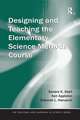
Designing and Teaching the Elementary Science Methods Course: Teaching and Learning in Science Series
Autor Sandra Abell, Ken Appleton, Deborah Hanuscinen Limba Engleză Hardback – 12 feb 2010
| Toate formatele și edițiile | Preț | Express |
|---|---|---|
| Paperback (1) | 450.54 lei 6-8 săpt. | |
| Taylor & Francis – 12 feb 2010 | 450.54 lei 6-8 săpt. | |
| Hardback (1) | 1280.88 lei 6-8 săpt. | |
| Routledge – 12 feb 2010 | 1280.88 lei 6-8 săpt. |
Din seria Teaching and Learning in Science Series
-
 Preț: 352.85 lei
 -
 Preț: 360.10 lei
 - 15%
 Preț: 410.08 lei
 -
 Preț: 398.46 lei
 -
 Preț: 372.03 lei
 -
 Preț: 434.07 lei
 - 15%
 Preț: 404.86 lei
 -
 Preț: 448.48 lei
 -
 Preț: 325.32 lei
 -
 Preț: 401.27 lei
 -
 Preț: 448.71 lei
 -
 Preț: 400.49 lei
 -
 Preț: 375.34 lei
 -
 Preț: 376.85 lei
 -
 Preț: 379.41 lei
 -
 Preț: 368.43 lei
 - 28%
 Preț: 723.42 lei
 -
 Preț: 365.45 lei
 -
 Preț: 381.29 lei
 -
 Preț: 450.54 lei
 -
 Preț: 475.22 lei
Preț: 1280.88 lei
Preț vechi: 1562.05 lei
-18% Nou
Puncte Express: 1921
Preț estimativ în valută:
226.66€ • 265.78$ • 199.05£
226.66€ • 265.78$ • 199.05£
Carte tipărită la comandă
Livrare economică 07-21 februarie 26
Preluare comenzi: 021 569.72.76
Specificații
ISBN-13: 9780805863390
ISBN-10: 0805863397
Pagini: 322
Ilustrații: 11 Tables, black and white
Dimensiuni: 157 x 235 x 22 mm
Greutate: 0.62 kg
Ediția:1
Editura: Routledge
Seria Teaching and Learning in Science Series
ISBN-10: 0805863397
Pagini: 322
Ilustrații: 11 Tables, black and white
Dimensiuni: 157 x 235 x 22 mm
Greutate: 0.62 kg
Ediția:1
Editura: Routledge
Seria Teaching and Learning in Science Series
V-ar putea interesa
-
 -24%Preț: 355.24 lei466.20 lei
 -
 Language and GenderAngela GoddardPreț: 202.41 lei
 -
 -15%Preț: 407.70 lei479.65 lei
 -
 Preț: 337.46 lei
 -
 Preț: 226.12 lei
 -
 Preț: 305.56 lei
 -
 Outside in the Teaching MachineGayatri Chakravorty SpivakPreț: 175.86 lei
 -
 Solving Problems: Year 1: Activities for the Daily Maths LessonChristine Moorcroft-43%Preț: 95.08 lei166.42 lei
 -
 The Practice RevolutionPhilip JohnstonPreț: 192.72 lei
 -
 Making the Most of Small Groups: Differentiation for AllDebbie DillerPreț: 242.98 lei
 -
 Fizz BuzzJanet ReesPreț: 56.95 lei
 -
 Making WavesHelen SonnetPreț: 62.15 lei
 -
 Jolly Grammar Big Book 1Sue LloydPreț: 201.22 lei
 -
 Jolly Grammar Big Book 2Sara WernhamPreț: 201.43 lei
 -
 My Book of Alphabet Games: 4-6 aniKumon PublishingPreț: 58.23 lei
Cuprins
Contents
Preface
Acknowledgement
Introduction
Part I: Theoretical, Contextual, and Pedagogical Foundations for the Elementary Science Methods Course
1. Perspectives of Teacher Learning
Views about Learning and Teaching
Ideas about Knowledge
Learning Theories
A View of Learning
An Example Application to a Science Methods Course
Conclusion
More to Explore
References
2. The Context for Elementary Science Teacher Preparation
Who is Responsible for Educating Elementary Science Teachers?
The Policy Context: Goals and Standards for Elementary Science Teacher Education
The Program Context: Elementary Teacher Education
The Program Context: Science Courses
The Program Context: Field Experience and Partnerships with Local Schools
Conclusion
More to Explore
References
3. Orientations to Teaching Science Teachers
Introduction
What are Orientations to Teaching Teachers?
Some Orientations to Teaching Science Teachers
The Reflection Orientation and the Science Methods Course
Conclusion
Tools for Teaching Elementary Science Methods
References
4. Understanding the Elementary Science Methods Student
Introduction
Prospective Teachers as Learners
Prospective Teachers’ Knowledge for Science Teaching
Understanding Your Methods Students
Conclusion
More to Explore
References
5. Curriculum and Resources for Elementary Science Teacher Education
Aims and Goals for the Science Methods Course
The Methods Course Curriculum—What to Include?
Selecting Resources and Materials
Facilities and Equipment
Communicating Your Expectations to Students: The Course Syllabus
Conclusion
Tools for Teaching the Elementary Science Methods Course
More to Explore
References
6. Instructional Strategies for the Elementary Science Methods Course
Aspects of PCK Pertinent to this Chapter
Your Orientation to Learning and Teaching
Environment
General Pedagogy
Teaching Models
Teaching How to Plan
Conclusion
More to Explore
References
7: Assessment Strategies for the Elementary Methods Course
Purposes and Examples of Assessment in the Elementary Science Methods Course
Principles of Effective Assessment
Scoring and Grading Assignments
Putting it All Together: Designing a Methods Course Assignment
Conclusion
Tools for Teaching Elementary Science Methods
More to Explore
References
8: Field Experiences in Elementary Science Methods
Benefits of Field Experiences
Addressing Challenges to the Science Methods Field Experience
Various Models of Science Methods Field Experiences
Student Reflection on the Field Experience
Conclusion: Design Principles for Science Methods Field Experiences
Tools for Teaching Elementary Science Methods
References
Part II: Activities that Work for the Elementary Science Methods Course
ATW 1: Learning about the 5E Learning Cycle: Magnetism
ATW 2: The Interactive Approach: Floating & Sinking
ATW 3: Inquiring into Guided and Open Inquiry: Insect Study
ATW 4: Eliciting Student Ideas: The Human Body
ATW 5: Using Models and Analogies: Electric Circuits
ATW 6: Learning about Discourse: Light and Shadows
ATW 7: Integrating Language Arts and Science: The Water Cycle
ATW 8: Seamless Assessment: The Moon Investigation
About the Authors
Index
Preface
Acknowledgement
Introduction
Part I: Theoretical, Contextual, and Pedagogical Foundations for the Elementary Science Methods Course
1. Perspectives of Teacher Learning
Views about Learning and Teaching
Ideas about Knowledge
Learning Theories
A View of Learning
An Example Application to a Science Methods Course
Conclusion
More to Explore
References
2. The Context for Elementary Science Teacher Preparation
Who is Responsible for Educating Elementary Science Teachers?
The Policy Context: Goals and Standards for Elementary Science Teacher Education
The Program Context: Elementary Teacher Education
The Program Context: Science Courses
The Program Context: Field Experience and Partnerships with Local Schools
Conclusion
More to Explore
References
3. Orientations to Teaching Science Teachers
Introduction
What are Orientations to Teaching Teachers?
Some Orientations to Teaching Science Teachers
The Reflection Orientation and the Science Methods Course
Conclusion
Tools for Teaching Elementary Science Methods
References
4. Understanding the Elementary Science Methods Student
Introduction
Prospective Teachers as Learners
Prospective Teachers’ Knowledge for Science Teaching
Understanding Your Methods Students
Conclusion
More to Explore
References
5. Curriculum and Resources for Elementary Science Teacher Education
Aims and Goals for the Science Methods Course
The Methods Course Curriculum—What to Include?
Selecting Resources and Materials
Facilities and Equipment
Communicating Your Expectations to Students: The Course Syllabus
Conclusion
Tools for Teaching the Elementary Science Methods Course
More to Explore
References
6. Instructional Strategies for the Elementary Science Methods Course
Aspects of PCK Pertinent to this Chapter
Your Orientation to Learning and Teaching
Environment
General Pedagogy
Teaching Models
Teaching How to Plan
Conclusion
More to Explore
References
7: Assessment Strategies for the Elementary Methods Course
Purposes and Examples of Assessment in the Elementary Science Methods Course
Principles of Effective Assessment
Scoring and Grading Assignments
Putting it All Together: Designing a Methods Course Assignment
Conclusion
Tools for Teaching Elementary Science Methods
More to Explore
References
8: Field Experiences in Elementary Science Methods
Benefits of Field Experiences
Addressing Challenges to the Science Methods Field Experience
Various Models of Science Methods Field Experiences
Student Reflection on the Field Experience
Conclusion: Design Principles for Science Methods Field Experiences
Tools for Teaching Elementary Science Methods
References
Part II: Activities that Work for the Elementary Science Methods Course
ATW 1: Learning about the 5E Learning Cycle: Magnetism
ATW 2: The Interactive Approach: Floating & Sinking
ATW 3: Inquiring into Guided and Open Inquiry: Insect Study
ATW 4: Eliciting Student Ideas: The Human Body
ATW 5: Using Models and Analogies: Electric Circuits
ATW 6: Learning about Discourse: Light and Shadows
ATW 7: Integrating Language Arts and Science: The Water Cycle
ATW 8: Seamless Assessment: The Moon Investigation
About the Authors
Index
Notă biografică
Sandra K. Abell is Curators’ Professor of Science Education at the University of Missouri, US, where she directs the university’s Science Education Center.
Ken Appleton is semi-retired as an Adjunct Associate Professor at Central Queensland University, Australia.
Deborah L. Hanuscin is Assistant Professor of Elementary Education at the University of Missouri, US, where she holds a joint appointment in the Department of Physics & Astronomy and Department of Learning, Teaching, & Curriculum.
Ken Appleton is semi-retired as an Adjunct Associate Professor at Central Queensland University, Australia.
Deborah L. Hanuscin is Assistant Professor of Elementary Education at the University of Missouri, US, where she holds a joint appointment in the Department of Physics & Astronomy and Department of Learning, Teaching, & Curriculum.