
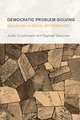
Democratic Problem-Solving: Dialogues in Social Epistemology: Collective Studies in Knowledge and Society
Autor Justin Cruickshank, Raphael Sassoweren Limba Engleză Hardback – 12 apr 2017
This timely volume explores these pressing questions, in a dialogue based on developing and applying the recovery of the 'critical Popper', which highlights his contemporary relevance to the critique of neoliberal political economy in the age of technocapitalism.
This book will be discussed in an online roundtable on the Social Epistemology Review and Reply Collective. Information about the SERRC can be found here: https://social-epistemology.com/
Din seria Collective Studies in Knowledge and Society
- 29%
 Preț: 346.24 lei
 - 27%
 Preț: 284.39 lei
 - 16%
 Preț: 344.18 lei
 - 27%
 Preț: 276.43 lei
 - 22%
 Preț: 331.75 lei
 - 27%
 Preț: 256.31 lei
 - 25%
 Preț: 258.39 lei
 - 23%
 Preț: 288.14 lei
 - 34%
 Preț: 725.29 lei
 - 23%
 Preț: 259.57 lei
 - 30%
 Preț: 700.95 lei
 - 23%
 Preț: 265.19 lei
 - 28%
 Preț: 220.96 lei
 - 33%
 Preț: 516.17 lei
 - 32%
 Preț: 536.51 lei
 - 35%
 Preț: 683.67 lei
 -
 Preț: 220.15 lei
 - 25%
 Preț: 211.85 lei
 - 32%
 Preț: 525.97 lei
 - 30%
 Preț: 502.31 lei
 - 30%
 Preț: 538.61 lei
 - 32%
 Preț: 563.88 lei
 - 32%
 Preț: 551.54 lei
Preț: 819.08 lei
Preț vechi: 1244.18 lei
-34%
Puncte Express: 1229
Carte tipărită la comandă
Livrare economică 26 noiembrie-10 decembrie
Livrare prin curier în România Termenul estimat este afișat lângă disponibilitate.
Transport gratuit pentru acest produs Plată online sau ramburs, în funcție de opțiunile comenzii.
Retur gratuit în 14 zile Comandă securizată și suport în română.
Specificații
ISBN-13: 9781786600905
ISBN-10: 1786600900
Pagini: 240
Dimensiuni: 158 x 239 x 26 mm
Greutate: 0.64 kg
Editura: Bloomsbury Publishing
Colecția Rowman & Littlefield
Seria Collective Studies in Knowledge and Society
Locul publicării:New York, United States
ISBN-10: 1786600900
Pagini: 240
Dimensiuni: 158 x 239 x 26 mm
Greutate: 0.64 kg
Editura: Bloomsbury Publishing
Colecția Rowman & Littlefield
Seria Collective Studies in Knowledge and Society
Locul publicării:New York, United States
Cuprins
Acknowledgements / Introduction / PART 1: LINKING PHILOSOPHY AND POLITICS /1.Anti-Authority: Comparing Popper and Rorty on the Dialogic Development of Beliefs and Practices Justin Cruickshank / 2. A Bridge over Turbulent Waters Raphael Sassower / 3.Context and Contestation Justin Cruickshank / 4. Problem-Solving: Critical Contingencies Raphael Sassower / 5. There Are No Dangerous Ideas Joseph Agassi / PART 2: SCIENCE, PROBLEM-SOLVING AND SOCIOLOGY / 6. Science, Democracy and the Sociology of Power
Isaac Ariail Reed / 7. Criticism versus Dogmatism Justin Cruickshank / 8.The Problem of Demarcation Isn't Going Away Raphael Sassower and Seif Jensen / PART 3: DEMOCRACY, EDUCATION AND THE ROLE OFINTELLECTUALS IN PUBLIC LIFE/ 9.Democracy, Criticism and the Problems Facing Dialogue Justin Cruickshank / 10.Beyond Lamentations: Overcoming Neoliberalism? Raphael Sassower / 11.The Politics of Definitions and Neoliberal Interventionism Justin Cruickshank and Ioana Cerasella Chis / 12.Appealing to Academics to Become Public Intellectuals Raphael Sassower / 13.The Cost of Public Intellectuals Ioana Cerasella Chis and Justin Cruickshank / 14. Radical Public Intellectuals
Raphael Sassower /PART 4: FROM PUBLIC INTELLECTUALS TO POLITICAL
ECONOMY AND TECHNOLOGY /15.Public Intellectuals and the Political Economy of Food
Justin Cruickshank and Ioana Cerasella Chis / 16. Desiderata of the Future of Political Economy Raphael Sassower /17.The Neoliberal Political Economy of Science and
Higher Education Justin Cruickshank / 18.The Problem of Technocapitalism
Ioana Cerasella Chis and Justin Cruickshank PART 5: DEMOCRACY, DIALOGUE, EXPERTS
AND ELITES / 19.Envisioning Peaceful Democratic DialoguesRaphael Sassower / 20.Democracy, Experts and Elites: The Case of BrexitJustin Cruickshank with Ioana Cerasella Chis/Conclusion/Bibliography/ Index/About the Authors
Isaac Ariail Reed / 7. Criticism versus Dogmatism Justin Cruickshank / 8.The Problem of Demarcation Isn't Going Away Raphael Sassower and Seif Jensen / PART 3: DEMOCRACY, EDUCATION AND THE ROLE OFINTELLECTUALS IN PUBLIC LIFE/ 9.Democracy, Criticism and the Problems Facing Dialogue Justin Cruickshank / 10.Beyond Lamentations: Overcoming Neoliberalism? Raphael Sassower / 11.The Politics of Definitions and Neoliberal Interventionism Justin Cruickshank and Ioana Cerasella Chis / 12.Appealing to Academics to Become Public Intellectuals Raphael Sassower / 13.The Cost of Public Intellectuals Ioana Cerasella Chis and Justin Cruickshank / 14. Radical Public Intellectuals
Raphael Sassower /PART 4: FROM PUBLIC INTELLECTUALS TO POLITICAL
ECONOMY AND TECHNOLOGY /15.Public Intellectuals and the Political Economy of Food
Justin Cruickshank and Ioana Cerasella Chis / 16. Desiderata of the Future of Political Economy Raphael Sassower /17.The Neoliberal Political Economy of Science and
Higher Education Justin Cruickshank / 18.The Problem of Technocapitalism
Ioana Cerasella Chis and Justin Cruickshank PART 5: DEMOCRACY, DIALOGUE, EXPERTS
AND ELITES / 19.Envisioning Peaceful Democratic DialoguesRaphael Sassower / 20.Democracy, Experts and Elites: The Case of BrexitJustin Cruickshank with Ioana Cerasella Chis/Conclusion/Bibliography/ Index/About the Authors
Recenzii
"This is a superb book. It is both a philosophical examination of the idea of plural epistemological communities and a practical exemplification of the virtue of understanding democracy as an open conversation. Written in the context of a rise in populism, it shows that a hopeful and temperate approach to issues that divide our political communities is possible."
This extremely impressive book spins off from a judicious re-evaluation of surprising parallels between Popper and Rorty to a wide-ranging discussion of the politics of knowledge, and politics more generally, in modern societies. This transatlantic exchange is inevitably what Cruickshank calls a 'slow dialogue', but it is a very worthwhile one, as the UK and US slide towards their respective catastrophes.
Justin Cruickshank, Raphael Sassower, and their other interlocutors probe incisively the dialogic bases of beliefs and their relation to political practice. They debate Popper, Rorty, other important theorists and epistemology more broadly via discussion of pressing political and policy issues that illuminate the mounting crises of neoliberalism and need to rethink capitalism and democracy, as we currently know them.
This book is composed as an experiment on the function of intellectuals in a testing time, the crisis of neo-liberal democracies. Established scholars have teamed up with rising stars in a series of exchanges designed to determine whether the critical spirit of intellectual life is better served by a singular individual who represents diversity in his or her person or by a self-organizing collective forging its way toward some normative ideal. As Cruickshank, Sassower and their collaborators admit, both options may be needed to swim against the ever changing currents of capitalism.
This extremely impressive book spins off from a judicious re-evaluation of surprising parallels between Popper and Rorty to a wide-ranging discussion of the politics of knowledge, and politics more generally, in modern societies. This transatlantic exchange is inevitably what Cruickshank calls a 'slow dialogue', but it is a very worthwhile one, as the UK and US slide towards their respective catastrophes.
Justin Cruickshank, Raphael Sassower, and their other interlocutors probe incisively the dialogic bases of beliefs and their relation to political practice. They debate Popper, Rorty, other important theorists and epistemology more broadly via discussion of pressing political and policy issues that illuminate the mounting crises of neoliberalism and need to rethink capitalism and democracy, as we currently know them.
This book is composed as an experiment on the function of intellectuals in a testing time, the crisis of neo-liberal democracies. Established scholars have teamed up with rising stars in a series of exchanges designed to determine whether the critical spirit of intellectual life is better served by a singular individual who represents diversity in his or her person or by a self-organizing collective forging its way toward some normative ideal. As Cruickshank, Sassower and their collaborators admit, both options may be needed to swim against the ever changing currents of capitalism.
Notă biografică
Justin Cruickshank is Senior Lecturer in Sociology at the University of Birmingham. He is the author of Realism and Sociology (2002) and editor of Critical Realism: The Difference it Makes (2003).