
Deep Time Analysis: Springer Geology
Autor Mark A. S. Mcmenaminen Limba Engleză Hardback – 27 mar 2018
Din seria Springer Geology
- 15%
 Preț: 675.30 lei
- 15%
 Preț: 678.03 lei
- 18%
 Preț: 1178.35 lei
- 18%
 Preț: 818.79 lei
- 18%
 Preț: 980.86 lei
- 18%
 Preț: 2427.49 lei
- 18%
 Preț: 1293.71 lei
- 18%
 Preț: 947.45 lei
- 18%
 Preț: 941.50 lei
- 18%
 Preț: 989.88 lei
- 18%
 Preț: 995.12 lei
- 18%
 Preț: 1050.87 lei
- 15%
 Preț: 710.52 lei
- 18%
 Preț: 1455.99 lei
- 18%
 Preț: 997.02 lei
- 18%
 Preț: 818.18 lei
- 18%
 Preț: 983.18 lei
- 18%
 Preț: 1169.12 lei
- 18%
 Preț: 1297.16 lei
- 18%
 Preț: 985.05 lei
- 24%
 Preț: 1250.03 lei
- 15%
 Preț: 646.82 lei
- 18%
 Preț: 1009.38 lei
- 18%
 Preț: 996.06 lei
- 18%
 Preț: 748.98 lei
- 15%
 Preț: 660.83 lei
- 15%
 Preț: 684.06 lei
-
 Preț: 403.03 lei
- 15%
 Preț: 680.99 lei
- 20%
 Preț: 459.57 lei
- 23%
 Preț: 984.15 lei
- 18%
 Preț: 1282.73 lei
- 24%
 Preț: 1104.89 lei
- 18%
 Preț: 929.24 lei
- 18%
 Preț: 927.31 lei
- 18%
 Preț: 929.19 lei
- 15%
 Preț: 662.36 lei
- 18%
 Preț: 990.13 lei
- 18%
 Preț: 1047.87 lei
- 20%
 Preț: 638.19 lei
- 18%
 Preț: 987.18 lei
- 18%
 Preț: 1168.29 lei
- 24%
 Preț: 955.50 lei
- 18%
 Preț: 950.22 lei
Preț: 815.62 lei
Preț vechi: 994.65 lei
-18%
Puncte Express: 1223
Carte tipărită la comandă
Livrare economică 08-22 decembrie
Livrare prin curier în România Termenul estimat este afișat lângă disponibilitate.
Transport gratuit pentru acest produs Plată online sau ramburs, în funcție de opțiunile comenzii.
Retur gratuit în 14 zile Comandă securizată și suport în română.
Specificații
ISBN-13: 9783319742557
ISBN-10: 3319742558
Pagini: 300
Ilustrații: XII, 288 p. 215 illus., 129 illus. in color.
Dimensiuni: 160 x 241 x 22 mm
Greutate: 0.57 kg
Ediția:1st ed. 2018
Editura: Springer
Colecția Springer Geology
Seria Springer Geology
Locul publicării:Cham, Switzerland
ISBN-10: 3319742558
Pagini: 300
Ilustrații: XII, 288 p. 215 illus., 129 illus. in color.
Dimensiuni: 160 x 241 x 22 mm
Greutate: 0.57 kg
Ediția:1st ed. 2018
Editura: Springer
Colecția Springer Geology
Seria Springer Geology
Locul publicării:Cham, Switzerland
Cuprins
Chapter 1. Seventh Law.- Chapter 2. Shuram Excursion.- Chapter 3. Clemente Biota.- Chapter 4. Crystal Creature.- Chapter 5. Trace Fossil Geometry.- Chapter 6. Albion’s Ænigma.- Chapter 7. Coelacanth Vestiges.- Chapter 8. Barasaurus Squamation.- Chapter 9. Tetrapteryx.- Chapter 10. Zealanditherians.- Chapter 11. Bifaces to the Ends of the Earth.- Chapter 12. Feldspar Point.
Notă biografică
Mark McMenamin is a Professor of Geology and author or co author of several books and numerous research articles that consider the origin of animals and other forms of complex life, the origin of land plants, and the Snowball Earth glaciation. In 2008, Mark received (as director of the Keck Geology project to study the rocks of the Boston Basin) a teaching award from Southern Utah University for student project excellence (the student in question, Jessica Williams, demonstrated the Snowball Earth glacial origin of the Cambridge Argillite). His 2007 book for the Smithsonian Science Series, Science 101: Geology, has received wide national distribution. In 1988 he received a Presidential Young Investigator Award from the National Science Foundation, and in 1992-1993 he was named a Sigma Xi National Lecturer. He named the supercontinent Rodinia in The Emergence of Animals (Columbia University Press, 1990). His research was featured in 2006 in the National Geographic Channel program Naked Science: Colliding Continents and in the History Channel's 2007 program How the Earth Was Made. In 1994, Mark and Dianna McMenamin introduced Hypersea theory to explain the diversification of life forms on land. The thesis of their book on the subject, Hypersea: Life on Land, was called one of "seven ideas that could change the world" by Discover magazine.
Textul de pe ultima copertă
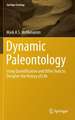
Using a series of case studies, the book demonstrates the power of dynamic analysis as applied to the fossil record. The book considers how we think about certain types of paleontological questions and shows how to answer them. The analytical tools presented here will have wide application to other fields of knowledge; as such the book represents a major contribution to our deployment of modern scientific method as it builds on author's previous book, Dynamic Paleontology. Students and seasoned professionals alike will find this book to be of great utility for refining their approach to their ongoing and future research projects.
Caracteristici
Provides clarification with regard to proper deployment of analytical techniques in the earth sciences The analytical tools presented a have wide application to other fields of knowledge Introduces significant advances in our understanding of earth history