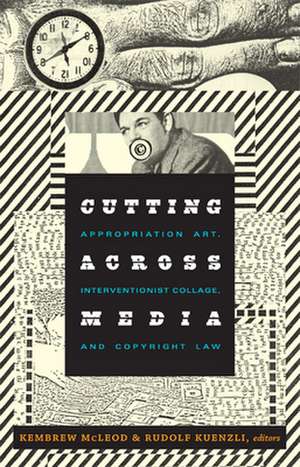
Cutting Across Media
Editat de Kembrew Mcleoden Limba Engleză Paperback – 5 aug 2011
Structurat ca o antologie interdisciplinară, Cutting Across Media investighează mecanismele colajului și ale aproprierii în cultura contemporană, oferind o metodologie de analiză ce pendulează între estetică și jurisprudență. Materialul este organizat pentru a evidenția o continuitate istorică între avangardă și cultura populară, explorând modul în care gestul de a „tăia” și „recombina” fragmente media devine un act politic și cultural transformator. Remarcăm progresia editorială care pornește de la fundamentarea teoretică a „copiilor mutante”, trece prin studii de caz despre plagiat și se încheie cu analize juridice despre impactul sistemelor de proprietate intelectuală asupra muzicii hip-hop. Eseurile cuprinse în volum, editat de Kembrew Mcleod, acoperă o arie tematică similară cu The Routledge Companion to Remix Studies, însă Cutting Across Media adoptă o abordare mai ancorată în experiența directă a creatorilor. În timp ce volumul de la Routledge oferă o perspectivă enciclopedică, lucrarea de față publicată de Duke University Press oferă voce artiștilor care au testat limitele legii, precum colectivul Negativland sau John Oswald. Tonul este unul riguros, dar marcat de o dimensiune critică la adresa regimurilor de copyright, fiind incluse interviuri esențiale cu Chuck D despre transformarea genului hip-hop sub presiunea litigiilor. De asemenea, lucrarea se distinge de Sampling Media prin extinderea analizei dincolo de zona audio-vizuală, incluzând explorări în arta plastică a lui Chris Ofili sau în strategiile de „culture jamming” ale activiștilor media.
Preț: 331.71 lei
Carte tipărită la comandă
Livrare economică 27 noiembrie-11 decembrie
Specificații
ISBN-10: 0822348225
Pagini: 376
Ilustrații: 28 illustrations, incl. 4 in colour
Dimensiuni: 154 x 236 x 27 mm
Greutate: 0.6 kg
Editura: Duke University Press
V-ar putea interesa
-
 Preț: 93.12 lei
 -
 Preț: 167.54 lei
 -
 Art and Artists in ConnecticutH. FrenchPreț: 169.85 lei
 -
 Preț: 122.91 lei
 -
 The Russian School of PaintingAlexandre BenoisPreț: 137.81 lei
 -
 Imagination in Landscape PaintingPhilip Gilbert HamertonPreț: 132.91 lei
 -
 Preț: 92.84 lei
 -
 Preț: 94.14 lei
 -
 Preț: 96.05 lei
 -
 Pranksters – Making Mischief in the Modern WorldKembrew McleodPreț: 287.97 lei
 -
 Owning CultureKembrew McLeodPreț: 266.91 lei
 -
 Creative LicenseKembrew McleodPreț: 198.89 lei
 -
 Photography After PhotographyAbigail Solomon-GodeauPreț: 239.69 lei
 -
 Blondie's Parallel LinesKembrew McLeod-33%Preț: 50.57 lei74.98 lei
 -
 Road to ParnassusDiego Mantoan-8%Preț: 448.12 lei487.09 lei
De ce să citești această carte
Recomandăm această resursă cititorilor interesați de intersecția dintre artă, tehnologie și legislație. Este o lectură esențială pentru studenții de la studii culturale și drept, oferind o perspectivă critică asupra modului în care proprietatea intelectuală limitează sau stimulează inovația. Câștigați o înțelegere profundă a tehnicilor de remix, susținută de exemple concrete din istoria muzicii și a artei vizuale.
Descriere scurtă
Cuprins
Recenzii
"Communication is much like a work of art--it is a process of copying, repeating, and varying what we hear. There is no originator or owner of that which shapes our very being, and Cutting Across Media demonstrates how placing restrictions on creative commentary can stifle our cultural development." - Vicki Bennett, aka People Like Us
"The collection vacillates between well-demonstrated and novel critical positions. Where the most prominent works on the subject tend to dwell on digitals infinite capacity to reproduce and share itself freely and its current kowtowing to corporate rights management, this book begins by situating appropriation art and collage in the earlier recesses of the twentieth century with Walter Benjamin, the Surrealists, and Dada. Along the way, it touches upon zine culture, audiotape collage, street art, and new wave science fiction; it critiques the international outflows of copyright-subject culture and then it critiques the debate itself.... Cutting Across Media is notable in the insight it provides into hip-hop and raps participation in appropriation art and collage culture." - Allie Curry, Rain Taxi
"Prioritising usage over rights lies, ironically, at the heart of capitalism itself- which adds to the current contradictions of perceived digital freedom. McLeod and Kuenzli are more than aware of this, adding that those lamenting the expansion of intellectual property often sound like Libertarian cowboys. On the whole, and to its credit, this volume gives voice to both sides. Participations range from, to name just a few, Craig Baldwins catalogue of billboard liberation activities to McLeodss essays on the KLF (remember the K foundation? Burning £1m and giving Rachel Whiteread the Worst Artist Award at her receipt of the Turner Prize and other anarcho-pop manifestations) to David Schneiderman on the cut-ups of William Burroughs and DJ Danger Mouses Grey Album." - David Ryan, Art Monthly, May 2012
...the book brings together a broad range of contributors, from highfalutin academics to cutting-edge (no pun intended) street-level remixers, who reflect on a plethora of creative practices in all manner of media and genres." - Vince Carducci, PopMatters.com "Communication is much like a work of art--it is a process of copying, repeating, and varying what we hear. There is no originator or owner of that which shapes our very being, and Cutting Across Media demonstrates how placing restrictions on creative commentary can stifle our cultural development." - Vicki Bennett, aka People Like Us "The collection vacillates between well-demonstrated and novel critical positions. Where the most prominent works on the subject tend to dwell on digital's infinite capacity to reproduce and share itself freely and its current kowtowing to corporate rights management, this book begins by situating appropriation art and collage in the earlier recesses of the twentieth century with Walter Benjamin, the Surrealists, and Dada. Along the way, it touches upon zine culture, audiotape collage, street art, and new wave science fiction; it critiques the international outflows of copyright-subject culture and then it critiques the debate itself... Cutting Across Media is notable in the insight it provides into hip-hop and rap's participation in appropriation art and collage culture." - Allie Curry, Rain Taxi "Prioritising usage over rights lies, ironically, at the heart of capitalism itself- which adds to the current contradictions of perceived digital freedom. McLeod and Kuenzli are more than aware of this, adding that those lamenting the expansion of intellectual property often "sound like Libertarian cowboys'. On the whole, and to its credit, this volume gives voice to both sides. Participations range from, to name just a few, Craig Baldwin's catalogue of 'billboard liberation' activities to McLeods's essays on the KLF (remember the K foundation? Burning GBP1m and giving Rachel Whiteread the 'Worst Artist Award' at her receipt of the Turner Prize and other anarcho-pop manifestations) to David Schneiderman on the cut-ups of William Burroughs and DJ Danger Mouse's Grey Album." - David Ryan, Art Monthly, May 2012