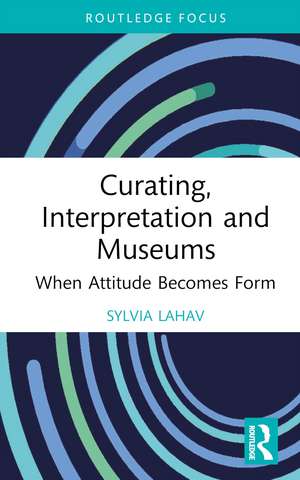
Curating, Interpretation and Museums: When Attitude Becomes Form: Routledge Focus on the Global Creative Economy
Autor Sylvia Lahaven Limba Engleză Hardback – 9 mar 2023
Din seria Routledge Focus on the Global Creative Economy
- 8%
 Preț: 445.48 lei
 - 8%
 Preț: 537.44 lei
 -
 Preț: 201.13 lei
 -
 Preț: 241.95 lei
 -
 Preț: 239.82 lei
 -
 Preț: 186.54 lei
 -
 Preț: 199.86 lei
 -
 Preț: 202.41 lei
 -
 Preț: 198.08 lei
 -
 Preț: 187.50 lei
 -
 Preț: 212.43 lei
 -
 Preț: 189.94 lei
 -
 Preț: 201.56 lei
 -
 Preț: 220.70 lei
 - 17%
 Preț: 180.94 lei
 - 17%
 Preț: 176.69 lei
 - 17%
 Preț: 179.79 lei
 - 15%
 Preț: 440.10 lei
 - 15%
 Preț: 446.11 lei
Preț: 426.58 lei
Preț vechi: 501.86 lei
-15%
Carte tipărită la comandă
Livrare economică 27 noiembrie-11 decembrie
Livrare express 22-28 octombrie pentru 31.65 lei
Specificații
ISBN-10: 1032081414
Pagini: 88
Dimensiuni: 138 x 216 x 6 mm
Greutate: 0.24 kg
Ediția:1
Editura: Taylor & Francis
Colecția Routledge
Seria Routledge Focus on the Global Creative Economy
Locul publicării:Oxford, United Kingdom
Public țintă
Academic and PostgraduateCuprins
1. Collecting, Exhibiting and Curating 2. Interpretation and Text 3. Space and Place 4. The Will to Know. Looking Back ¿ Final Thoughts
Notă biografică
Sylvia Lahav is an associate lecturer at Goldsmiths, University of London, an independent museum consultant, researcher and writer.
Descriere
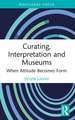
Following a period of strategic and ideological change in museums, this book outlines new attitudes in curating and display, education and learning, text and interpretation, access, inclusion, participation, space, and the issues around the sustainability of the encyclopaedic collection.
Focused on the contemporary period, the author questions the extent to which the museum visitor has become reliant on interpretative text and examines the development of new museum spaces where visitor interaction and engagement is welcomed. Changes of attitude have transformed our museums into modern spaces that reflect current needs and modern expectations and yet our permanent collections remain relatively unchanged, sometimes an uncomfortable reminder of a time when values, ethics, and attitudes were very different. The author will discuss these conflicts of ideology.
Written by a researcher with expertise in museum practice, this shortform book offers a new approach that will be valuable reading for students and scholars of cultural management and policy, as well as providing insights for reflective museum practitioners.