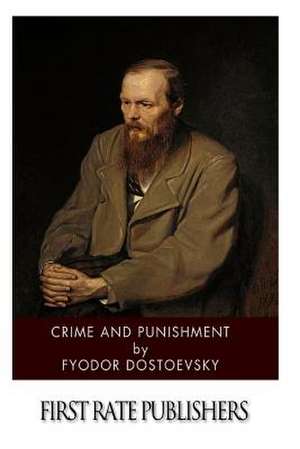
Crime and Punishment
Autor Fyodor Mikhailovich Dostoevskyen Limba Engleză Paperback
Vezi toate premiile Carte premiată
Simțim, încă de la primele pagini, o atmosferă de febrilitate claustrofobică, o tensiune care nu provine din exterior, ci din ungherele cele mai întunecate ale conștiinței umane. În Crime and Punishment, Fyodor Dostoevsky nu ne oferă doar un roman polițist, ci o radiografie a prăbușirii etice. Considerăm că forța acestei lucrări rezidă în tranziția de la raționamentul rece, calculat — prin care Rodion Raskolnikov își justifică crima — la delirul și obsesia care îl cuprind imediat după actul sângeros. Atmosfera te trimite cu gândul la Approaches to Teaching Dostoevsky's Crime and Punishment, deși aici accentul cade pe experiența brută, nemediată a „realismului fantastic”, unde granița dintre realitatea străzilor din Sankt Petersburg și halucinațiile protagonistului devine poroasă. Subliniem modul în care Fyodor Mikhailovich Dostoevsky explorează teme precum nihilismul și mântuirea, elemente pe care le vom regăsi, într-o formă mai amplă și metafizică, în The Brothers Karamazov. Dacă în The Gambler autorul analiza patima jocurilor de noroc prin prisma propriei experiențe, aici el disecă „pariul” periculos al unui individ cu propria moralitate. Stilul este dens, cu un ritm impus de febra protagonistului, oferind o perspectivă unică asupra modului în care o idee radicală poate devora un suflet în contextul unei societăți ruse aflate în plină turbulență spirituală.
Preț: 79.02 lei
Carte disponibilă
Livrare economică 09-23 noiembrie
Specificații
ISBN-10: 1496163362
Pagini: 280
Dimensiuni: 152 x 229 x 15 mm
Greutate: 0.38 kg
Editura: CREATESPACE
V-ar putea interesa
-
 Notes From UndergroundFyodor Dostoevsky-27%Preț: 51.59 lei71.05 lei
 -
 The Brothers KaramazovFyodor Dostoevsky-14%Preț: 72.27 lei83.83 lei
 -
 The Sinner and the SaintKevin Birmingham-29%Preț: 66.78 lei94.46 lei
 -
 Notes from the UndergroundFyodor Dostoyevsky-19%Preț: 23.30 lei28.69 lei
 -
 Crime and PunishmentFyodor DostoyevskyPreț: 56.06 lei
 -
 Notes From UndergroundFyodor Dostoevsky-22%Preț: 40.18 lei51.52 lei
 -
 The Brothers KaramazovFyodor DostoyevskyPreț: 54.07 lei
 -
 The IdiotFyodor DostoyevskyPreț: 49.62 lei
 -
 DostoevskyJoseph FrankPreț: 265.18 lei
 -
 Preț: 70.20 lei
 -
 Crime and Punishment (Vintage Classic Russians Series)Fyodor Dostoevsky-14%Preț: 84.19 lei98.32 lei
 -
 Karamazov BrothersFyodor DostoevskyPreț: 42.81 lei
 -
 Crime and PunishmentFyodor DostoevskyPreț: 39.02 lei
 -
 Crime and Punishment (Collector's Editions)Fyodor DostoevskyPreț: 78.62 lei
 -
 The IdiotFyodor DostoevskyPreț: 40.12 lei
 -
 Crime and PunishmentFyodor DostoyevskyPreț: 56.92 lei
 -
 Preț: 107.34 lei
De ce să citești această carte
Recomandăm această ediție oricărui cititor care dorește să înțeleagă bazele psihologiei moderne în literatură. Crime and Punishment nu este doar o poveste despre o crimă, ci un studiu fascinant despre vinovăție și posibilitatea reabilitării. Veți câștiga o perspectivă profundă asupra dilemelor morale care rămân relevante și astăzi, totul sub semnătura unuia dintre cei mai mari gânditori ai literaturii universale.
Despre autor
Fyodor Mikhailovich Dostoevsky (1821–1881) a fost un romancier, eseist și filosof rus, recunoscut la nivel mondial drept unul dintre cei mai fini psihologi din istoria literaturii. Opera sa explorează condiția umană în contextul social și politic tensionat al Rusiei secolului al XIX-lea. Cu un palmares impresionant de 11 romane și numeroase nuvele, Dostoevsky a reușit să surprindă dualitatea sufletului uman, oscilând între credință și ateism, între rațiune și pasiune autodistructivă. Experiențele sale personale, de la condamnarea la moarte comutată în ultimul moment la lupta cu dependența, au infuzat scrierile sale cu o autenticitate și o profunzime rar egalate.
Descriere scurtă
His most famous work was Crime and Punishment, first published in the literary journal The Russian Messenger in twelve monthly installments during 1866.
Dostoyevsky wrote the great novel after five years of exile in a labor camp in Siberia, forced there by the Tsar. Crime and Punishment focuses on the mental anguish and moral dilemmas of Rodion Romanovich Raskolnikov, an impoverished ex-student in St. Petersburg who theorizes that he can perform good deeds to counterbalance his crime, justifying his actions by referencing Napoleon Bonaparte. The novel is considered one of the greatest novels ever written.
Notă biografică
Premii
- Audies Finalist, 2009