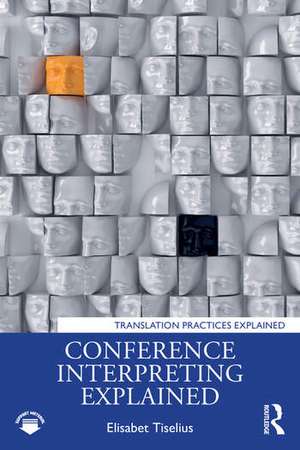
Conference Interpreting Explained: Translation Practices Explained
Autor Elisabet Tiseliusen Limba Engleză Paperback – 30 iul 2025
This guide includes invaluable material on freelancing and professional development. Tiselius integrates remote interpreting and computer-aided interpreting throughout the book. The volume also includes a range of exercises from self-assessment, speech-writing, and note-taking to consecutive and simultaneous. Theoretical concepts are illustrated with anecdotes from Elisabet Tiselius’ personal experience, taking readers behind the scenes of conference interpreter education, and equipping them with the tools to understand how to practise and why different exercises are necessary.
Din seria Translation Practices Explained
-
 Preț: 386.01 lei
 -
 Preț: 388.94 lei
 -
 Preț: 349.79 lei
 -
 Preț: 356.28 lei
 -
 Preț: 364.85 lei
 -
 Preț: 455.04 lei
 -
 Preț: 372.88 lei
 -
 Preț: 353.08 lei
 -
 Preț: 387.76 lei
 -
 Preț: 413.79 lei
 -
 Preț: 466.88 lei
 -
 Preț: 322.07 lei
 -
 Preț: 380.24 lei
 -
 Preț: 407.46 lei
 -
 Preț: 386.00 lei
 -
 Preț: 374.53 lei
 -
 Preț: 354.87 lei
 -
 Preț: 353.10 lei
 - 18%
 Preț: 1246.62 lei
 - 18%
 Preț: 1289.25 lei
 -
 Preț: 444.13 lei
 -
 Preț: 381.25 lei
 -
 Preț: 395.84 lei
 - 15%
 Preț: 437.99 lei
 - 8%
 Preț: 425.85 lei
 - 15%
 Preț: 421.01 lei
 -
 Preț: 428.57 lei
 -
 Preț: 378.60 lei
 -
 Preț: 412.71 lei
Preț: 380.83 lei
Puncte Express: 571
Carte disponibilă
Livrare economică 06-20 noiembrie
Livrare express 22-28 octombrie pentru 33.57 lei
Livrare prin curier în România Termenul estimat este afișat lângă disponibilitate.
Transport gratuit de la 400.00 lei Plată online sau ramburs, în funcție de opțiunile comenzii.
Retur gratuit în 14 zile Comandă securizată și suport în română.
Specificații
ISBN-13: 9781032800387
ISBN-10: 1032800380
Pagini: 228
Ilustrații: 26
Dimensiuni: 156 x 234 x 13 mm
Greutate: 0.42 kg
Ediția:1
Editura: Taylor & Francis
Colecția Routledge
Seria Translation Practices Explained
Locul publicării:Oxford, United Kingdom
ISBN-10: 1032800380
Pagini: 228
Ilustrații: 26
Dimensiuni: 156 x 234 x 13 mm
Greutate: 0.42 kg
Ediția:1
Editura: Taylor & Francis
Colecția Routledge
Seria Translation Practices Explained
Locul publicării:Oxford, United Kingdom
Public țintă
Postgraduate and Professional TrainingCuprins
List of figures
List of boxes
About the author
About the book
Acknowledgements
Introduction to conference interpreting
What is conference interpreting?
What does it take to become a conference interpreter?
Basic conference interpreting terminology
The modes of interpreting
Labelling languages
Tasks
Further reading and watching
References
Chapter 1: The flying bumblebee – foundations of conference interpreting
1.1 A (short) history of conference interpreting
1.2 Cognitive and social processes
1.2.1 Cognitive processes of interpreting
1.2.2 Social processes of interpreting
1.3 Is interpreting a superpower?
1.4 Tasks
1.5 Further reading and watching
References
Chapter 2: Exercising your memory the conference interpreter way
2.1 Different types of memories
2.2 Active listening
2.3 Memory exercises and preparation
2.4 Tasks
2.5 Further reading and watching
References
Chapter 3: Practice – The core of conference interpreting
3.1 How to practice like an expert
3.1.1 How to approach practice
3.2 Continued professional development (CPD)
3.3 Tasks
3.4 Further reading and watching
References
Chapter 4: Assessment, feedback and self-assessment
4.1 Formative and summative assessment
4.2 How to handle feedback
4.4 Self-assessment
4.5 Tasks
4.6 Further reading and watching
References
Chapter 5: Deconstructing speeches and putting them back together again
5.1 Monologues
5.2 Dialogues
5.3 Tasks
5.4 Further reading and watching
References
Chapter 6: Words, meaning, and doodles – why note-taking is good for you
6.1 The many purposes of notes
6.1.1 What to note down
6.1.2 Symbols
6.1.2 The language of note-taking
6.1.3 Memory in note-taking
6.1.4 Notepad, tablet, smart pen, sim-consec
6.2 Short and long consecutive interpreting
6.2.1 Short consecutive interpreting – dialogue interpreting
6.2.2 Long consecutive interpreting
6.3. Sight interpreting
6.4 Tasks
6.5 Further reading and watching
References
Chapter 7: The power of body language, gaze, and intonation in interpreting
7.1 The metalanguage of speaking
7.2 Interpreting and body language
7.3 Interpreting and gaze
7.4 Intonation
7.5 Tasks
7.6 Further reading and watching
References
Chapter 8: Public speaking – the key to long consecutive (and simultaneous, too)
8.1 The basics of public speaking
8.2 Interpreting and public speaking
8.3 Tasks
8.4 Further reading and watching
References
Chapter 9: Simultaneous interpreting: chuchotage, speech to text, and in the booth
9.1 Interpreting strategies in simultaneous interpreting
9.2 Whispered interpreting or chuchotage
9.3 Simultaneous interpreting with portable technical equipment – the bidule
9.4 Simultaneous interpreting in the booth
9.4.1 The booth
9.4.2 Booth manners
9.4.3 Microphone handovers
9.5 Simultaneous with text
9.5 Speech-to-text interpreting
9.6 Tasks
9.7 Further reading and watching
References
Chapter 10: Ethics, positionality, and discretionary power in conference interpreting
10.1 What is ethics?
10.2 Ethics and deontology
10.2.1 Neutrality – the approach to the topic you are interpreting
10.2.2 Impartiality – the approach to the parties for whom you are interpreting
10.3 Positionality
10.4 Discretionary power
10.5 Tasks
10.6 Further reading and watching
References
Chapter 11: Working language combinations, and the question of retour and relay
11.1 Language competence
11.2 Different language combinations
11.2.1 The retour
11.3 Working in teams
11.4 Tasks
11.5 Further reading and watching
References
Chapter 12: Healthy working environment and self-care
12.1 The interpreter’s voice
12.2 The interpreter’s hearing
12.3 Stress and vicarious trauma
12.4 Career longevity and being resilient
12.5 Tasks
12.6 Further reading and watching
References
Chapter 13: Entrepreneurship for interpreters
13.1 Freelancing and small business
13.2 Being an employee
13.3 Professional associations
13.4 Personal branding
13.5 Preparing for a test
13.6 Tasks
13.7 Further reading and watching
References
Index
List of boxes
About the author
About the book
Acknowledgements
Introduction to conference interpreting
What is conference interpreting?
What does it take to become a conference interpreter?
Basic conference interpreting terminology
The modes of interpreting
Labelling languages
Tasks
Further reading and watching
References
Chapter 1: The flying bumblebee – foundations of conference interpreting
1.1 A (short) history of conference interpreting
1.2 Cognitive and social processes
1.2.1 Cognitive processes of interpreting
1.2.2 Social processes of interpreting
1.3 Is interpreting a superpower?
1.4 Tasks
1.5 Further reading and watching
References
Chapter 2: Exercising your memory the conference interpreter way
2.1 Different types of memories
2.2 Active listening
2.3 Memory exercises and preparation
2.4 Tasks
2.5 Further reading and watching
References
Chapter 3: Practice – The core of conference interpreting
3.1 How to practice like an expert
3.1.1 How to approach practice
3.2 Continued professional development (CPD)
3.3 Tasks
3.4 Further reading and watching
References
Chapter 4: Assessment, feedback and self-assessment
4.1 Formative and summative assessment
4.2 How to handle feedback
4.4 Self-assessment
4.5 Tasks
4.6 Further reading and watching
References
Chapter 5: Deconstructing speeches and putting them back together again
5.1 Monologues
5.2 Dialogues
5.3 Tasks
5.4 Further reading and watching
References
Chapter 6: Words, meaning, and doodles – why note-taking is good for you
6.1 The many purposes of notes
6.1.1 What to note down
6.1.2 Symbols
6.1.2 The language of note-taking
6.1.3 Memory in note-taking
6.1.4 Notepad, tablet, smart pen, sim-consec
6.2 Short and long consecutive interpreting
6.2.1 Short consecutive interpreting – dialogue interpreting
6.2.2 Long consecutive interpreting
6.3. Sight interpreting
6.4 Tasks
6.5 Further reading and watching
References
Chapter 7: The power of body language, gaze, and intonation in interpreting
7.1 The metalanguage of speaking
7.2 Interpreting and body language
7.3 Interpreting and gaze
7.4 Intonation
7.5 Tasks
7.6 Further reading and watching
References
Chapter 8: Public speaking – the key to long consecutive (and simultaneous, too)
8.1 The basics of public speaking
8.2 Interpreting and public speaking
8.3 Tasks
8.4 Further reading and watching
References
Chapter 9: Simultaneous interpreting: chuchotage, speech to text, and in the booth
9.1 Interpreting strategies in simultaneous interpreting
9.2 Whispered interpreting or chuchotage
9.3 Simultaneous interpreting with portable technical equipment – the bidule
9.4 Simultaneous interpreting in the booth
9.4.1 The booth
9.4.2 Booth manners
9.4.3 Microphone handovers
9.5 Simultaneous with text
9.5 Speech-to-text interpreting
9.6 Tasks
9.7 Further reading and watching
References
Chapter 10: Ethics, positionality, and discretionary power in conference interpreting
10.1 What is ethics?
10.2 Ethics and deontology
10.2.1 Neutrality – the approach to the topic you are interpreting
10.2.2 Impartiality – the approach to the parties for whom you are interpreting
10.3 Positionality
10.4 Discretionary power
10.5 Tasks
10.6 Further reading and watching
References
Chapter 11: Working language combinations, and the question of retour and relay
11.1 Language competence
11.2 Different language combinations
11.2.1 The retour
11.3 Working in teams
11.4 Tasks
11.5 Further reading and watching
References
Chapter 12: Healthy working environment and self-care
12.1 The interpreter’s voice
12.2 The interpreter’s hearing
12.3 Stress and vicarious trauma
12.4 Career longevity and being resilient
12.5 Tasks
12.6 Further reading and watching
References
Chapter 13: Entrepreneurship for interpreters
13.1 Freelancing and small business
13.2 Being an employee
13.3 Professional associations
13.4 Personal branding
13.5 Preparing for a test
13.6 Tasks
13.7 Further reading and watching
References
Index
Notă biografică
Elisabet Tiselius is Professor of Interpreting Studies at the Institute for Interpreting and Translation Studies (TÖI) at Stockholm University, Sweden. Tiselius is an EU-accredited conference interpreter and member of AIIC. She is the current president of the European Society for Translation Studies (EST). She is the co-editor, with Michaela Albl-Mikasa of The Routledge Handbook of Conference Interpreting (2022).
Recenzii
“This exceptional book is the conversation every aspiring interpreter would hope to have at the start of their professional journey. It weaves an engaging narrative about the rich and deeply rooted interpreting profession. The author’s thoughtful and interactive approach encourages meaningful reflection through tasks to complete at the end of each chapter. I know this is the book I will want all my interpreting students to adopt.” Danielle D’Hayer, London Metropolitan University
“A classic remarkably revisited! Tiselius covers each and every facet of the subject so comprehensively and minutely that the book could also be titled Everything You Always Wanted to Know About Conference Interpreting. A must read for anyone with an interest in this fascinating area of interpreting." Marc Orlando, Macquarie University
“For students and early career researchers seeking to grasp current vectors of research and the scientific mapping of interpreting studies, this book offers exceptional value. .. it combines a practitioner’s experience with a researcher’s perspective, giving students both concrete guidance and accessible entry into contemporary interpreting studies. “
Pavol Šveda,Comenius University, Bratislava, Slovakia
“A classic remarkably revisited! Tiselius covers each and every facet of the subject so comprehensively and minutely that the book could also be titled Everything You Always Wanted to Know About Conference Interpreting. A must read for anyone with an interest in this fascinating area of interpreting." Marc Orlando, Macquarie University
“For students and early career researchers seeking to grasp current vectors of research and the scientific mapping of interpreting studies, this book offers exceptional value. .. it combines a practitioner’s experience with a researcher’s perspective, giving students both concrete guidance and accessible entry into contemporary interpreting studies. “
Pavol Šveda,Comenius University, Bratislava, Slovakia
Descriere
Building on the foundations of Roderick Jones’ authoritative and popular text, this brand-new textbook is a comprehensive, up to date and easily accessible introduction to conference interpreting. Elisabet Tiselius combines practical approaches and their theoretical underpinnings to guide beginning students.