
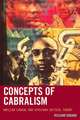
Concepts of Cabralism: Critical Africana Studies
Autor Reiland Rabakaen Limba Engleză Hardback – 15 iul 2014
| Toate formatele și edițiile | Preț | Express |
|---|---|---|
| Paperback (1) | 431.49 lei 6-8 săpt. | |
| Rowman & Littlefield – 24 aug 2015 | 431.49 lei 6-8 săpt. | |
| Hardback (1) | 796.35 lei 6-8 săpt. | |
| Rowman & Littlefield – 15 iul 2014 | 796.35 lei 6-8 săpt. |
Din seria Critical Africana Studies
- 16%
 Preț: 672.86 lei
 - 15%
 Preț: 668.87 lei
 - 18%
 Preț: 714.78 lei
 -
 Preț: 431.49 lei
 - 18%
 Preț: 688.02 lei
 - 15%
 Preț: 641.05 lei
 - 18%
 Preț: 652.78 lei
 - 18%
 Preț: 667.01 lei
 -
 Preț: 425.95 lei
 - 15%
 Preț: 466.76 lei
 - 15%
 Preț: 663.59 lei
 - 15%
 Preț: 655.73 lei
 -
 Preț: 347.87 lei
 - 18%
 Preț: 866.80 lei
 -
 Preț: 326.53 lei
 - 15%
 Preț: 621.77 lei
 -
 Preț: 360.95 lei
 - 15%
 Preț: 654.26 lei
 -
 Preț: 387.92 lei
 - 15%
 Preț: 593.01 lei
 - 15%
 Preț: 588.47 lei
 - 15%
 Preț: 586.50 lei
 - 15%
 Preț: 623.99 lei
 -
 Preț: 287.15 lei
 -
 Preț: 264.57 lei
Preț: 796.35 lei
Preț vechi: 971.16 lei
-18% Nou
Puncte Express: 1195
Preț estimativ în valută:
140.89€ • 165.64$ • 123.40£
140.89€ • 165.64$ • 123.40£
Carte tipărită la comandă
Livrare economică 29 ianuarie-12 februarie 26
Preluare comenzi: 021 569.72.76
Specificații
ISBN-13: 9780739192108
ISBN-10: 0739192108
Pagini: 371
Dimensiuni: 157 x 229 x 30 mm
Greutate: 0.68 kg
Editura: Rowman & Littlefield
Seria Critical Africana Studies
ISBN-10: 0739192108
Pagini: 371
Dimensiuni: 157 x 229 x 30 mm
Greutate: 0.68 kg
Editura: Rowman & Littlefield
Seria Critical Africana Studies
V-ar putea interesa
-
 Our Kind of People: Inside America's Black Upper ClassLawrence Otis GrahamPreț: 106.34 lei
 -
 Trouble in Mind: Black Southerners in the Age of Jim CrowLeon F. LitwackPreț: 142.44 lei
 -
 -15%Preț: 506.88 lei596.34 lei
 -
 Preț: 198.80 lei
 -
 Preț: 140.24 lei
 -
 Preț: 137.75 lei
 -
 Ella Baker and the Black Freedom MovementBarbara RansbyPreț: 283.75 lei
 -
 Death of Innocence: The Story of the Hate Crime That Changed AmericaChristopher BensonPreț: 102.02 lei
 -
 Black Gay ManRobert F Reid-PharrPreț: 238.59 lei
 -
 Herndons: An Atlanta FamilyCarole MerrittPreț: 278.18 lei
 -
 The Civil Rights Movement in American MemoryRenee Christine RomanoPreț: 270.67 lei
 -
 Conversations with Richard WrightRichard Nathaniel WrightPreț: 230.26 lei
 -
 Conversations with Amiri BarakaImamu Amiri BarakaPreț: 232.09 lei
Notă biografică
Reiland Rabaka is professor of African, African American, and Caribbean studies in the Department of Ethnic Studies at the University of Colorado at Boulder, where he also has affiliations with the Women & Gender Studies Program, Humanities Program, Center for Studies of Ethnicity & Race in America (CSERA), and School of Education. He is the author of twelve books, including Africana Critical Theory, Against Epistemic Apartheid, Forms of Fanonism, and The Negritude Movement.
Cuprins
Introduction: Contours of Cabralism
Part I: Return to the Source: The Philosophical Foundations of Cabral¿s Critical Theory
Chapter 1: The Negritude Movement: Cesaire, Senghor, and Critical Social Theory
Chapter 2: Fanonism: Fanon¿s Dialectic of Radical Disalienation and Revolutionary Decolonization
Part II: The Weapon of Theory: Cabral¿s Critical Theory and Revolutionary Praxis
Chapter 3: Cabral¿s Critical Theory of Colonialism, Neocolonialism, and Imperialism
Chapter 4: Cabral¿s Critical Theory of Marxism, Nationalism, and Humanism
Chapter 5: Cabral¿s Critical Theory of History, Culture, and National Liberation
Part III: The Africana Tradition of Critical Theory: Cabral and the Decolonization and Re-Africanization of Radical Politics, Critical Social Theory, and Revolutionary Praxis
Chapter 6: Africana Critical Theory in the Aftermath of Amilcar Cabral and Cabralism¿s Contributions
Descriere
By examining Amilcar Cabral's theories and praxes, Reiland Rabaka reintroduces and analyzes several of the core characteristics of the Africana critical theory. Ultimately, this book promotes the ways in which classical black radicalism should inform contemporary black radicalism, and contemporary Africana critical theory.