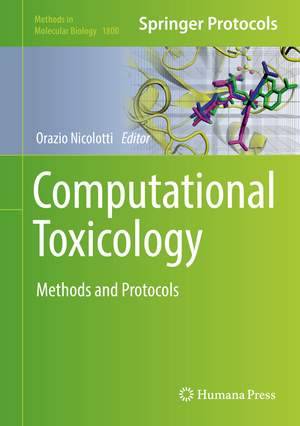
Computational Toxicology: Methods and Protocols: Methods in Molecular Biology, cartea 1800
Editat de Orazio Nicolottien Limba Engleză Hardback – 23 iun 2018
This volume explores techniques that are currently used to understand solid target-specific models in computational toxicology. The chapters are divided into four sections and discuss topics such as molecular descriptors, QSAR and read-across; molecular and data modeling techniques to comply with both scientific and regulatory sides; computational toxicology in drug discovery; and strategies on how to predict various human-health toxicology endpoints. Written in the highly successful Methods in Molecular Biology series format, chapters include introductions to their respective topics, lists of the methods and software tools used, step-by-step, readily reproducible computational protocols, and tips on troubleshooting and avoiding known pitfalls.
Din seria Methods in Molecular Biology
- 5%
 Preț: 744.34 lei
 - 18%
 Preț: 1024.14 lei
 - 5%
 Preț: 734.45 lei
 - 15%
 Preț: 629.45 lei
 - 18%
 Preț: 961.87 lei
 - 15%
 Preț: 627.45 lei
 - 5%
 Preț: 1014.54 lei
 - 18%
 Preț: 972.05 lei
 - 18%
 Preț: 2039.44 lei
 - 5%
 Preț: 1304.89 lei
 - 18%
 Preț: 1336.11 lei
 - 18%
 Preț: 1341.26 lei
 - 18%
 Preț: 1085.72 lei
 - 18%
 Preț: 1353.39 lei
 - 18%
 Preț: 1081.17 lei
 - 18%
 Preț: 1186.33 lei
 - 5%
 Preț: 1305.47 lei
 - 5%
 Preț: 1065.47 lei
 - 5%
 Preț: 1576.70 lei
 - 5%
 Preț: 1073.37 lei
 - 5%
 Preț: 1361.54 lei
 - 18%
 Preț: 771.93 lei
 - 18%
 Preț: 749.09 lei
 - 18%
 Preț: 786.39 lei
 - 18%
 Preț: 1083.07 lei
 - 5%
 Preț: 1257.85 lei
 - 18%
 Preț: 1118.74 lei
 - 15%
 Preț: 669.59 lei
 - 18%
 Preț: 1076.62 lei
 - 18%
 Preț: 678.44 lei
 - 18%
 Preț: 678.44 lei
 - 18%
 Preț: 1398.24 lei
 - 5%
 Preț: 1618.97 lei
 - 5%
 Preț: 1554.98 lei
 - 5%
 Preț: 1087.81 lei
 - 5%
 Preț: 1440.49 lei
 - 5%
 Preț: 1426.67 lei
 - 18%
 Preț: 1232.69 lei
 - 18%
 Preț: 1130.09 lei
 - 18%
 Preț: 1118.60 lei
 - 5%
 Preț: 1181.33 lei
 - 18%
 Preț: 1124.01 lei
 - 18%
 Preț: 1235.49 lei
 - 18%
 Preț: 1021.59 lei
 - 5%
 Preț: 1424.04 lei
 - 18%
 Preț: 921.17 lei
 - 15%
 Preț: 633.43 lei
 - 5%
 Preț: 707.95 lei
Preț: 1266.11 lei
Preț vechi: 1332.74 lei
-5%
Puncte Express: 1899
Carte tipărită la comandă
Livrare economică 06-20 noiembrie
Livrare prin curier în România Termenul estimat este afișat lângă disponibilitate.
Transport gratuit pentru acest produs Plată online sau ramburs, în funcție de opțiunile comenzii.
Retur gratuit în 14 zile Comandă securizată și suport în română.
Specificații
ISBN-13: 9781493978984
ISBN-10: 1493978985
Pagini: 650
Ilustrații: XVI, 587 p. 177 illus., 115 illus. in color.
Dimensiuni: 178 x 254 x 41 mm
Greutate: 1.26 kg
Ediția:1st ed. 2018
Editura: Springer
Colecția Humana
Seria Methods in Molecular Biology
Locul publicării:New York, NY, United States
ISBN-10: 1493978985
Pagini: 650
Ilustrații: XVI, 587 p. 177 illus., 115 illus. in color.
Dimensiuni: 178 x 254 x 41 mm
Greutate: 1.26 kg
Ediția:1st ed. 2018
Editura: Springer
Colecția Humana
Seria Methods in Molecular Biology
Locul publicării:New York, NY, United States
V-ar putea interesa
-
 -28%Preț: 638.18 lei881.40 lei
 -
 Topical Nail Products and Ungual Drug DeliveryS Narasimha Murthy-18%Preț: 1422.11 lei1734.29 lei
 -
 Chemical DependenceH. Thomas Jr. Milhorn-5%Preț: 362.70 lei381.80 lei
 -
 Molecular and Cellular Aspects of the Drug AddictionsAvram Goldstein-5%Preț: 686.17 lei722.28 lei
 -
 Advances in Medicinal Chemistry ResearchEdeildo Ferreira da Silva-Júnior-24%Preț: 1117.81 lei1472.71 lei
 -
 The Pharmacological Guide to MontelukastSÃ,ren C. Dam-24%Preț: 473.12 lei623.61 lei
 -
 The Pharmacological Guide to MetforminNatalie Lajoie-23%Preț: 929.97 lei1208.68 lei
 -
 Corticosteroids & Steroid Therapy: New ResearchCarmen Adkins-23%Preț: 1042.40 lei1359.18 lei
 -
 Recent Developments in Beta-Blockers ResearchYousef Shahin-23%Preț: 1043.34 lei1359.79 lei
 -
 Approaching Complex DiseasesMariano Bizzarri-5%Preț: 1121.16 lei1180.16 lei
 -
 Nanoformulations in Human HealthSushama Talegaonkar-5%Preț: 1088.32 lei1145.60 lei
 -
 Pentazocin: Im Spiegel der ErfahrungenS. Kubicki-5%Preț: 436.71 lei459.70 lei
 -
 Biochemische Persönlichkeitsforschung: Glaubenssätze — Tricks — FallenKarlheinz Schneider-Janessen-5%Preț: 440.04 lei463.19 lei
 -
 -5%Preț: 679.49 lei715.25 lei
 -
 VaccinesPeter Perlman-5%Preț: 735.22 lei773.91 lei
 -
 -5%Preț: 1118.82 lei1177.71 lei
 -
 Toxicology of Inhaled MaterialsH. P. Witschi-5%Preț: 740.99 lei779.99 lei
 -
 -5%Preț: 1123.74 lei1182.88 lei
 -
 Inhibition of Folate Metabolism in ChemotherapyG. H. Hitchings-5%Preț: 734.56 lei773.23 lei
 -
 Pharmacogenomics in Precision MedicineWeimin Cai-5%Preț: 765.60 lei805.89 lei
 -
 Basics in Medical EducationZubair Amin-5%Preț: 582.78 lei613.45 lei
Cuprins
Molecular Descriptors For Structure-Activity Applications: A Hands-On Approach.- The OECD QSAR Toolbox Starts Its Second Decade.- QSAR: What Else? .- (Q)SARs as Adaptations to REACH Information Requirements.- Machine Learning Methods In Computational Toxicology.- Applicability Domain: A Step Toward Confident Predictions And Decidability for QSAR Modeling.- Molecular Similarity In Computational Toxicology.- Molecular Docking for Predictive Toxicology.- Criteria and Application on the use of Non-Testing Methods within a Weight of Evidence Strategy.- Characterization and Management of Uncertainties in Toxicological Risk Assessment: Examples from the Opinions of the European Food Safety Authority.- Computational Toxicology and Drug Discovery.- Approaching Pharmacological Space: Events and Components.- Computational Toxicology Methods in Chemical Library Design and High-Throughput Screening Hit Validation.- Enalos Suite:New Cheminformatics Platform for Drug Discovery and Computational Toxicology.- Ion Channels In Drug Discovery and Safety Pharmacology.- Computational Approaches in Multi-Target Drug Discovery.- Nano-Formulations for Drug Delivery: Safety, Toxicity, and Efficacy.- Toxicity Potential Of Nutraceuticals.- Impact of Pharmaceuticals on the Environment: Risk Assessment using QSAR Modeling Approach.- (Q)SAR Methods for Predicting Genotoxicity and Carcinogenicity: Scientific Rationale and Regulatory Frameworks.- Stem Cell-Based Methods to Predict Developmental Chemical Toxicity.- Predicting Chemically-Induced Skin Sensitisation by using In Chemico/In Vitro Methods.- Hepatotoxicity Prediction by Systems Biology Modeling of Disturbed Metabolic Pathways using Gene Expression Data.- Non-Test Methods to Predict Acute Toxicity: State of Art for Applications of In Silico Methods.- Predictive Systems Toxicology.- Chemoinformatic Approach to Assess Toxicity of Ionic Liquids.- Prediction of Biochemical Endpoints by the CORAL Software: Prejudices, Paradoxes, and Results.
Textul de pe ultima copertă
This volume explores techniques that are currently used to understand solid target-specific models in computational toxicology. The chapters are divided into four sections and discuss topics such as molecular descriptors, QSAR and read-across; molecular and data modeling techniques to comply both with scientific and regulatory sides; computational toxicology in drug discovery; and strategies on how to predict various human-health toxicology endpoints. Written in the highly successful Methods in Molecular Biology series format, chapters include introductions to their respective topics, lists of the methods and software tools used, step-by-step, readily reproducible computational protocols, and tips on troubleshooting and avoiding known pitfalls.
Caracteristici
Includes cutting-edge methods and protocols Provides step-by-step detail essential for reproducible results Contains key notes and implementation advice from the experts