
Civilization and its Discontents: Penguin Great Ideas
Autor Sigmund Freuden Limba Engleză Paperback – 2 sep 2004
Din seria Penguin Great Ideas
-
 Preț: 53.86 lei
 - 22%
 Preț: 42.17 lei
 - 22%
 Preț: 42.30 lei
 - 31%
 Preț: 36.87 lei
 -
 Preț: 53.79 lei
 - 22%
 Preț: 42.24 lei
 - 22%
 Preț: 42.19 lei
 - 22%
 Preț: 42.24 lei
 - 22%
 Preț: 41.99 lei
 - 22%
 Preț: 42.02 lei
 -
 Preț: 53.75 lei
 -
 Preț: 53.99 lei
 - 22%
 Preț: 42.34 lei
 - 31%
 Preț: 36.85 lei
 - 22%
 Preț: 42.00 lei
 - 21%
 Preț: 42.40 lei
 - 21%
 Preț: 42.72 lei
 - 22%
 Preț: 42.24 lei
 - 22%
 Preț: 42.24 lei
 - 22%
 Preț: 42.02 lei
 - 21%
 Preț: 42.47 lei
 - 21%
 Preț: 42.47 lei
 -
 Preț: 53.77 lei
 - 31%
 Preț: 37.31 lei
 -
 Preț: 53.87 lei
 -
 Preț: 53.66 lei
 - 22%
 Preț: 42.16 lei
 - 31%
 Preț: 37.40 lei
 - 22%
 Preț: 42.00 lei
 - 22%
 Preț: 42.20 lei
 - 21%
 Preț: 42.34 lei
 - 21%
 Preț: 42.57 lei
 - 22%
 Preț: 41.99 lei
 - 21%
 Preț: 42.46 lei
 - 22%
 Preț: 41.94 lei
 -
 Preț: 53.89 lei
 - 22%
 Preț: 42.17 lei
 - 22%
 Preț: 42.20 lei
 -
 Preț: 53.99 lei
 - 21%
 Preț: 42.39 lei
 - 21%
 Preț: 42.36 lei
 - 22%
 Preț: 41.99 lei
 - 21%
 Preț: 42.52 lei
 - 22%
 Preț: 41.60 lei
 - 31%
 Preț: 37.37 lei
 - 22%
 Preț: 42.20 lei
 - 22%
 Preț: 42.24 lei
 - 22%
 Preț: 42.00 lei
 - 22%
 Preț: 42.16 lei
Preț: 42.07 lei
Preț vechi: 53.78 lei
-22%
Puncte Express: 63
Carte disponibilă
Livrare economică 15-27 mai
Livrare express 30 aprilie-06 mai pentru 25.13 lei
Specificații
ISBN-13: 9780141018997
ISBN-10: 0141018992
Pagini: 112
Dimensiuni: 111 x 182 x 9 mm
Greutate: 0.08 kg
Editura: Penguin Books
Colecția Penguin Great Ideas
Seria Penguin Great Ideas
Locul publicării:London, United Kingdom
ISBN-10: 0141018992
Pagini: 112
Dimensiuni: 111 x 182 x 9 mm
Greutate: 0.08 kg
Editura: Penguin Books
Colecția Penguin Great Ideas
Seria Penguin Great Ideas
Locul publicării:London, United Kingdom
V-ar putea interesa
-
 Preț: 98.65 lei
 -
 Genius FoodsMax LugaverePreț: 184.23 lei
 -
 The Examined LifeStephen Grosz-38%Preț: 54.21 lei88.07 lei
 -
 The PrinceNiccolo Machiavelli-22%Preț: 42.24 lei53.89 lei
 -
 A Vindication of the Rights of WomanMary Wollstonecraft-21%Preț: 42.36 lei53.96 lei
 -
 On the Pleasure of HatingWilliam Hazlitt-22%Preț: 42.24 lei53.88 lei
 -
 A Room of One's OwnVirginia Woolf-22%Preț: 42.37 lei53.99 lei
 -
 On SuicideDavid Hume-22%Preț: 42.24 lei53.89 lei
 -
 The Myth of SisyphusAlbert Camus-21%Preț: 42.46 lei54.03 lei
 -
 The Work of Art in the Age of Mechanical ReproductionWalter BenjaminPreț: 53.92 lei
 -
 The Fastidious AssassinsAlbert CamusPreț: 53.92 lei
 -
 A ConfessionLeo TolstoyPreț: 53.75 lei
 -
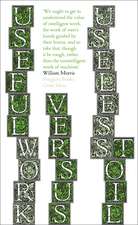 Useful Work v. Useless ToilWilliam MorrisPreț: 53.77 lei
 -
 Days of ReadingMarcel ProustPreț: 53.82 lei
 -
 NatureRalph Waldo EmersonPreț: 53.87 lei
 -
 Tao Te ChingLao-Tzu-31%Preț: 36.85 lei53.70 lei
 -
 UtopiaThomas More-21%Preț: 42.57 lei54.10 lei
 -
 On SolitudeMichel De Montaigne-21%Preț: 42.47 lei54.03 lei
 -
 An Answer to the Question: 'What is Enlightenment?'Immanuel Kant-21%Preț: 42.47 lei54.03 lei
 -
 On LibertyJohn Stuart MillPreț: 54.31 lei
 -
 Night WalksCharles DickensPreț: 53.86 lei
 -
 Some Thoughts on the Common ToadGeorge OrwellPreț: 53.89 lei
 -
 The Tao of NatureChuang Tzu-31%Preț: 37.40 lei54.10 lei
 -
 MeditationsRene Descartes-21%Preț: 42.40 lei54.00 lei
 -
 NationalismRabindranath Tagore-31%Preț: 36.87 lei53.72 lei
 -
 Modern Man in Search of a SoulC. G. JungPreț: 158.36 lei
 -
 Art of Business Communication, TheGraham ShawPreț: 116.33 lei
 -
 ContagiousJonah Berger-24%Preț: 52.09 lei68.41 lei
Notă biografică
Sigmund Freud (1856-1939) was the Austrian founder of psychoanalysis, a method for psychological therapy and a theory of human nature. His conception of the unconscious, of the relevance of dreams, and of the role played by our drives for pleasure and aggression as well as his trenchant critique of culture shape our self-understanding to this day.
Recenzii
In Civilization and Its Discontents Freud extends and clarifies his analysis of religion; analyzes human unhappiness in contemporary civilization; ratifies the critical importance of the death drive theory; and contemplates the significance of guilt and conscience in everyday life. The result is Freud’s most expansive work, one wherein he discusses mysticism, love, interpretation, narcissism, religion, happiness, technology, beauty, justice, work, the origin of civilization, phylogenetic development, Christianity, the Devil, communism, the sense of guilt, remorse, and ethics. A classic, important, accessible work, Freud reminds us again why we still read and debate his ideas today.
Todd Dufresne’s introduction expands on why, according to the late Freud, psychoanalysis is the key to understanding individual and collective realities or, better yet, collective truths. The Appendices include related writings by Freud, contemporary reviews, and scholarly responses from Marcuse, Rieff, and Ricoeur.
“Following on the heels of Beyond the Pleasure Principle and The Future of an Illusion, this new Broadview Edition of Civilization and Its Discontents concludes Todd Dufresne’s editorial trilogy on the late ‘philosophical’ Freud. Gregory Richter’s lucid and exact translation rejuvenates the text. Dufresne’s superb introduction renews our understanding of Freud’s final ‘romantic science’; it excerpts from other works by Freud and from critical responses to Freud in order to provide context and perspective. At last a truly critical edition of Freud!” — Mikkel Borch-Jacobsen, University of Washington
“Civilization and Its Discontents is one of Sigmund Freud’s darkest texts, offering an analysis of culture by reflecting on the place of death in a person’s life. Todd Dufresne’s thoughtful edition showcases the full relevance of this text for a historical, philosophical, and psychoanalytical reading by adding an informative introduction, references to other works by Freud, as well as excerpts from the work by scholars such as Herbert Marcuse and Paul Ricœur who have written about Freud’s text. The new translation by Gregory C. Richter is excellent. This edition of Civilization and Its Discontents will be very useful for the classroom, but also of interest for any general reader who wants to learn more about Freud’s late work.” — Liliane Weissberg, University of Pennsylvania
“Gregory Richter’s new translation of Civilization and Its Discontents is complemented by Todd Dufresne’s careful contextualization and lively interrogation of Freud’s most widely read text. Dufresne’s pithy introduction stages the confrontation between Freud’s ‘late Romantic pessimism’ and Romain Rolland’s optimistic embrace of the ‘oceanic’ as the font of religion, morality, and, by extension, civilization. Dufresne’s larger argument is that Freud’s psychology is inseparable from his ‘metabiology’—inseparable, that is, from Freud’s belief in the transmission of acquired characteristics. Whether or not Lamarckism is to be understood as Freud’s signature failing, Dufresne’s critical reading challenges his audience to take up the task of interpretation—in this case, to locate Freud’s logic of the drives.” — Vanessa Parks Rumble, Boston College
“This is an excellent edition of Civilization and its Discontents and will be particularly helpful in teaching contexts for both undergraduate and graduate classes. The translation by Gregory C. Richter is quite accessible and includes helpful footnotes which add to the readability of the text. … The three appendices included in the volume speak to the strength of this edition as one which can be utilized at multiple teaching levels. The culling of texts from Freud’s own work in the first appendix (A) which address similar themes to those found in Civilization and its Discontents, is particularly helpful and well chosen. The third appendix (C) which addresses the central scholarly responses to this text make this edition ideal for advanced undergraduate or graduate courses.” — Athena V. Colman, Brock University
Todd Dufresne’s introduction expands on why, according to the late Freud, psychoanalysis is the key to understanding individual and collective realities or, better yet, collective truths. The Appendices include related writings by Freud, contemporary reviews, and scholarly responses from Marcuse, Rieff, and Ricoeur.
“Following on the heels of Beyond the Pleasure Principle and The Future of an Illusion, this new Broadview Edition of Civilization and Its Discontents concludes Todd Dufresne’s editorial trilogy on the late ‘philosophical’ Freud. Gregory Richter’s lucid and exact translation rejuvenates the text. Dufresne’s superb introduction renews our understanding of Freud’s final ‘romantic science’; it excerpts from other works by Freud and from critical responses to Freud in order to provide context and perspective. At last a truly critical edition of Freud!” — Mikkel Borch-Jacobsen, University of Washington
“Civilization and Its Discontents is one of Sigmund Freud’s darkest texts, offering an analysis of culture by reflecting on the place of death in a person’s life. Todd Dufresne’s thoughtful edition showcases the full relevance of this text for a historical, philosophical, and psychoanalytical reading by adding an informative introduction, references to other works by Freud, as well as excerpts from the work by scholars such as Herbert Marcuse and Paul Ricœur who have written about Freud’s text. The new translation by Gregory C. Richter is excellent. This edition of Civilization and Its Discontents will be very useful for the classroom, but also of interest for any general reader who wants to learn more about Freud’s late work.” — Liliane Weissberg, University of Pennsylvania
“Gregory Richter’s new translation of Civilization and Its Discontents is complemented by Todd Dufresne’s careful contextualization and lively interrogation of Freud’s most widely read text. Dufresne’s pithy introduction stages the confrontation between Freud’s ‘late Romantic pessimism’ and Romain Rolland’s optimistic embrace of the ‘oceanic’ as the font of religion, morality, and, by extension, civilization. Dufresne’s larger argument is that Freud’s psychology is inseparable from his ‘metabiology’—inseparable, that is, from Freud’s belief in the transmission of acquired characteristics. Whether or not Lamarckism is to be understood as Freud’s signature failing, Dufresne’s critical reading challenges his audience to take up the task of interpretation—in this case, to locate Freud’s logic of the drives.” — Vanessa Parks Rumble, Boston College
“This is an excellent edition of Civilization and its Discontents and will be particularly helpful in teaching contexts for both undergraduate and graduate classes. The translation by Gregory C. Richter is quite accessible and includes helpful footnotes which add to the readability of the text. … The three appendices included in the volume speak to the strength of this edition as one which can be utilized at multiple teaching levels. The culling of texts from Freud’s own work in the first appendix (A) which address similar themes to those found in Civilization and its Discontents, is particularly helpful and well chosen. The third appendix (C) which addresses the central scholarly responses to this text make this edition ideal for advanced undergraduate or graduate courses.” — Athena V. Colman, Brock University
Cuprins
Acknowledgements
Introduction
Sigmund Freud: A Brief Chronology
Translator’s Note
Civilization and its Discontents (1930)
Appendix A: Other Works of Freud
Index
Introduction
Sigmund Freud: A Brief Chronology
Translator’s Note
Civilization and its Discontents (1930)
Appendix A: Other Works of Freud
- From “‘Civilized’ Sexual Morality and Modern Nervous Disease” (March 1908)
- From “Thought for the Times on War and Death” (1915)
- From Beyond the Pleasure Principle (1920)
- From The Future of an Illusion (1927)
- From Albert Einstein and Sigmund Freud, Why War? (1932)
- From Moses and Monotheism (1939)
- E. G. Catlin, “Freud No Freudian” Saturday Review (27 September 1930)
- Joseph Jastrow, “Unhappiness Psycho-Analyzed” Saturday Review of Literature (6 December 1930)
- Harold D. Lasswell, “Review: Civilization and Its Discontents by Sigmund Freud,” American Journal of Sociology (September 1931)
- Herbert Marcuse, “The Dialectic of Civilization” (1955)
- Philip Rieff, “Freud & the Value of Religion” (1959)
- Paul Ricoeur, “On Metaculture & ‘Death Against Death’” (1970)
Index