
Christmas Carol
Autor Charles Dickens Ilustrat de Karen Donnellyen Limba Engleză Paperback – 16 noi 2007
Găsim în paginile acestei ediții A Christmas Carol o atmosferă ce pendulează între frigul tăios al Londrei victoriene și căldura unei speranțe redobândite. Încă de la primele rânduri, suntem avertizați că moartea lui Marley este un fapt cert, o ancoră necesară pentru ca elementul miraculos care urmează să aibă greutate. Ne-a atras atenția modul în care Charles Dickens reușește să transforme un personaj dezolant precum Ebenezer Scrooge într-un vehicul pentru o critică socială profundă, fără a sacrifica însă farmecul unei povești despre spirite și regrete. Structura cărții, organizată în cinci „Stave-uri” (capitole muzicale), ghidează cititorul printr-o călătorie temporală precisă: de la fantoma lui Marley, la spiritele Crăciunului Trecut, Prezent și Viitor, până la rezoluția finală a transformării. Pe același raft cu A Christmas Carol - Kid Classics de Charles Dickens, această ediție Collins Classics se distinge prin păstrarea textului original, neadaptat, oferind acea bogăție a limbajului care l-a consacrat pe autor ca un maestru al prozei britanice. Față de abordările pedagogice sau simplificate, volumul de față păstrează realismul dur al epocii, reflectând preocupările constante ale lui Dickens pentru drepturile copiilor și educație, teme explorate și în Great Expectations sau David Copperfield. Este o lectură în care umorul fin se împletește cu estetica gotică, oferind o experiență mult mai complexă decât o simplă parabolă morală.
Preț: 46.94 lei
Carte disponibilă
Livrare economică 14-28 septembrie
Livrare express 29 august-04 septembrie pentru 16.57 lei
Specificații
ISBN-10: 1906230021
Pagini: 64
Ilustrații: 30 colour illustrations
Dimensiuni: 172 x 200 x 12 mm
Greutate: 0.14 kg
Editura: Real Reads
Locul publicării:United Kingdom
V-ar putea interesa
-
 XGULLIVERS TRAVELS_CLASSICS PBJonathan SwiftPreț: 24.60 lei
 -
 XCLASSICS-WHITE FANG PBJack LondonPreț: 24.60 lei
 -
 Quentin Blake's a Christmas CarolCharles DickensPreț: 95.92 lei
 -
 A Christmas Carol and Other Christmas WritingsCharles Dickens-26%Preț: 47.53 lei64.45 lei
 -
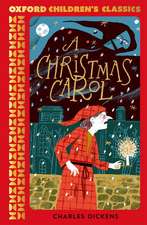 Oxford Children's Classics: A Christmas Carol and Other StoriesCharles DickensPreț: 48.26 lei
 -
 Call Me by Your NameAndré Aciman-30%Preț: 67.18 lei95.96 lei
 -
 The Play Of A Christmas CarolCharles DickensPreț: 158.86 lei
 -
 A Christmas CarolAdam MckeownPreț: 123.27 lei
 -
 William Shakespeare's Hamlet: With sound!Anita Sipala-26%Preț: 45.63 lei61.69 lei
 -
 The Screaming GoatRunning PressPreț: 50.98 lei
 -
 Ladybird Classics: Oliver TwistCharles Dickens-18%Preț: 47.31 lei57.95 lei
 -
 Preț: 90.31 lei
 -
 Great Shakespearean Deaths Card GameChris RiddellPreț: 88.84 lei
 -
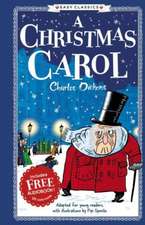 Preț: 71.13 lei
 -
 A Christmas Carol: Accessible Symbolised EditionPipi SpositoPreț: 49.71 lei
 -
 The National Gallery Masterpiece Classics: A Christmas CarolCharles Dickens-26%Preț: 69.89 lei94.08 lei
 -
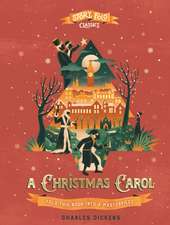 Story Fold Classics: A Christmas CarolCharles DickensPreț: 94.47 lei
 -
 A Christmas Carol (Heritage Collection)Charles DickensPreț: 132.29 lei
 -
 Oliver TwistCharles DickensPreț: 37.41 lei
 -
 Christmas BooksCharles DickensPreț: 37.35 lei
 -
 Huckleberry FinnMark TwainPreț: 44.10 lei
 -
 A Christmas Carol, ComicsCharles DickensPreț: 56.49 lei
De ce să citești această carte
Recomandăm această carte oricărui cititor care dorește să descopere forța narativă originală a lui Charles Dickens dincolo de adaptările cinematografice. Este o oportunitate de a experimenta ritmul autentic al limbii engleze victoriene și de a înțelege de ce această poveste a definit spiritul Crăciunului modern. Cititorul câștigă nu doar o lectură clasică, ci și o perspectivă empatică asupra condiției umane și a posibilității de schimbare.
Despre autor
Charles Dickens (1812–1870) este recunoscut drept cel mai important romancier al epocii victoriene, un observator acut al inechităților sociale din Anglia secolului al XIX-lea. Experiența sa timpurie, lucrând într-o fabrică de cremă de ghete la vârsta de 12 ani în timp ce tatăl său era închis pentru datorii, i-a marcat profund opera, transformându-l într-un apărător neobosit al celor defavorizați. Autor prolific, a scris 15 romane majore, printre care A Tale of Two Cities și Great Expectations, și a pionierat publicarea în foileton. Lucrările sale îmbină realismul social cu umorul satiric și personaje memorabile, rămânând fundamentale pentru literatura universală.