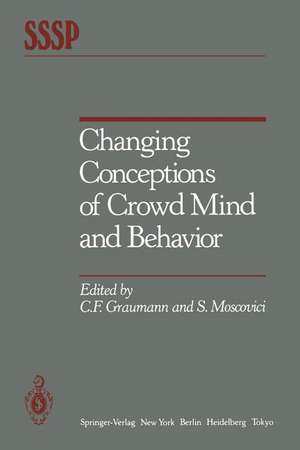
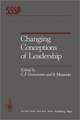
Changing Conceptions of Crowd Mind and Behavior: Springer Series in Social Psychology
Editat de C. F. Graumann, S. Moscovicien Limba Engleză Paperback – oct 2011
Din seria Springer Series in Social Psychology
- 15%
 Preț: 662.73 lei
 -
 Preț: 390.72 lei
 -
 Preț: 372.46 lei
 -
 Preț: 374.14 lei
 - 15%
 Preț: 667.84 lei
 -
 Preț: 398.21 lei
 -
 Preț: 376.01 lei
 - 15%
 Preț: 645.78 lei
 - 15%
 Preț: 643.25 lei
 - 15%
 Preț: 669.13 lei
 - 18%
 Preț: 903.74 lei
 -
 Preț: 380.82 lei
 - 18%
 Preț: 893.36 lei
 -
 Preț: 370.05 lei
 -
 Preț: 375.81 lei
 -
 Preț: 377.01 lei
 -
 Preț: 372.46 lei
 - 18%
 Preț: 698.27 lei
 -
 Preț: 387.53 lei
 - 18%
 Preț: 753.42 lei
 -
 Preț: 367.92 lei
 -
 Preț: 390.30 lei
 -
 Preț: 380.82 lei
 - 18%
 Preț: 697.37 lei
 -
 Preț: 375.34 lei
 - 15%
 Preț: 663.30 lei
 - 18%
 Preț: 780.29 lei
 -
 Preț: 374.14 lei
 - 15%
 Preț: 618.67 lei
 -
 Preț: 370.05 lei
 -
 Preț: 393.24 lei
 - 18%
 Preț: 751.19 lei
 -
 Preț: 370.65 lei
 -
 Preț: 375.08 lei
 -
 Preț: 370.78 lei
 -
 Preț: 415.71 lei
 - 15%
 Preț: 516.89 lei
 -
 Preț: 376.77 lei
 -
 Preț: 396.47 lei
 -
 Preț: 377.24 lei
 -
 Preț: 375.81 lei
 -
 Preț: 38.49 lei
Preț: 374.14 lei
Puncte Express: 561
Carte tipărită la comandă
Livrare economică 30 noiembrie-14 decembrie
Livrare prin curier în România Termenul estimat este afișat lângă disponibilitate.
Transport gratuit de la 400.00 lei Plată online sau ramburs, în funcție de opțiunile comenzii.
Retur gratuit în 14 zile Comandă securizată și suport în română.
Specificații
ISBN-13: 9781461293330
ISBN-10: 1461293332
Pagini: 260
Ilustrații: XI, 241 p.
Dimensiuni: 155 x 235 x 15 mm
Greutate: 0.4 kg
Ediția:Softcover reprint of the original 1st ed. 1986
Editura: Springer
Colecția Springer Series in Social Psychology
Seria Springer Series in Social Psychology
Locul publicării:New York, NY, United States
ISBN-10: 1461293332
Pagini: 260
Ilustrații: XI, 241 p.
Dimensiuni: 155 x 235 x 15 mm
Greutate: 0.4 kg
Ediția:Softcover reprint of the original 1st ed. 1986
Editura: Springer
Colecția Springer Series in Social Psychology
Seria Springer Series in Social Psychology
Locul publicării:New York, NY, United States
V-ar putea interesa
-
 Rainy Brain, Sunny BrainElaine Fox-47%Preț: 63.88 lei120.50 lei
 -
 -30%Preț: 459.83 lei655.68 lei
 -
 Preț: 77.38 lei
 -
 Preț: 386.15 lei
 -
 The Perfectionist's HandbookJeff SzymanskiPreț: 159.45 lei
 -
 Preț: 258.45 lei
 -
 How To Improve Your MindJames R. FlynnPreț: 161.68 lei
 -
 The Power of Divine ErosA. H. Almaas-37%Preț: 129.45 lei204.94 lei
 -
 -27%Preț: 67.65 lei92.88 lei
Public țintă
ResearchCuprins
1. Introduction.- 2. The Discovery of the Masses.- A New Human Dimension: The Crowd.- How a Science Discovers Its Facts.- The Riddle of Crowd Formation.- A Science of the Irrational.- Crowds are the Unconscious.- Natural Crowds and Artificial Crowds.- 3. Models of Suggestive Influence and the Disqualification of the Social Crowd.- The Political and Intellectual Climate of Fin-de-Siècle Paris.- Disqualification and Revolution: The Perspective of the Crowd Psychologies.- From Medical to Psychiatric Praxis—From Animal Magnetism to Suggestive Influence.- Hypnosis Versus Suggestion—The Nancy/Salpêtrière Debate.- Binet at the Salpêtrière—Dogmatic Experimentation.- The Pervasiveness of the Hypnosis/Suggestion Model at the End of the 19th Century.- From Theories of Magnetism to Political Ideology.- From Suggestive Influence to Crowd Psychology.- Binet at the Crossroads of the Social Psychology of Interpersonal Influence.- Conclusion.- 4. Freud and Massenpsychologie.- 5. Mass Psychology, Social Psychology, and the Politics of Mussolini.- Brief Presentations.- Mussolini and the Three Authors.- Le Bon, Orano, and Sorel and the Sociopsychological Study of Mussolini’s Rise and Fall.- 6. The Social Psychology of William McDougall.- McDougall’s Two Volume Social Psychology.- Reaction to McDougall’s Social Psychology.- Postscript.- 7. The Individualization of the Social and the Desocialization of the Individual: Floyd H. Allport’s Contribution to Social Psychology.- Social Psychology as Individual Psychology.- The Individual Psychology of Crowds and Groups.- The Individualization of Social Psychology: An Evaluation in Retrospect.- 8. Conceptions of Crowds and Crowding.- Everyday Experiences of Crowds and Crowding.- The Unrelatedness of Crowds and Crowding inScientific Research and Discourse.- Crowd Psychology.- Crowding Phenomena and Research on Crowding.- The Janus-Faced Problem of Crowd and Crowding.- 9. Collective Behavior from the 17th to the 20th Century: Change of Phenomena, Change of Perception or No Change at All? Some Preliminary Reflections.- A Paradigm Change in Perception.- From “Revolts” to “Revolution”: The Continental World.- The Natural Law of Mass Action: The Anglo-Saxon World.- The Rebellious Subjects: Germany.- A Paradigm Change in Interpretation of Motivation: From Passions to Interests (17th-18th Centuries).- A Paradigm Change in Perceiving the “Laboring Poor” in England: From Low to High Wages as Incentive for Work.- The Laborer as “Working Animal” and the “Unpredictable Natural Forces” of Working Class Action: The German Kaiserreich.- Class Interests and Perception.- 10. Masses—From an Idealistic to a Materialistic Point of View? Aspects of Marxian Theory of the Class.- Social Movement as a Dialectical Process.- The Conflict Between Bauer and Marx.- Mass and Class.- 11. Mass, Mobilization, and the State.- Individual Action and Collective Movement.- 12. The Social Organization of Early Human Groups.- 13. Crowd Mind and Behavior: Afterthoughts.- The Historical Versus Scientific Approach to Mass Phenomena.- Top-Down Versus Bottom-Up Conceptions of Mass Phenomena.- The Rationalist Versus Irrationalist Explanations of Crowd Phenomena.- Author Index.