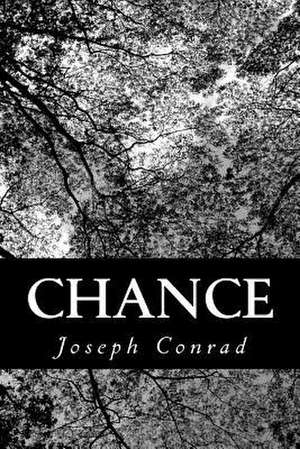
Chance
Autor Joseph Conraden Limba Engleză Paperback
Preț: 116.16 lei
Puncte Express: 174
Carte disponibilă
Livrare economică 05-19 noiembrie
Livrare prin curier în România Termenul estimat este afișat lângă disponibilitate.
Transport gratuit de la 400.00 lei Plată online sau ramburs, în funcție de opțiunile comenzii.
Retur gratuit în 14 zile Comandă securizată și suport în română.
Specificații
ISBN-13: 9781480202993
ISBN-10: 1480202991
Pagini: 304
Dimensiuni: 152 x 229 x 17 mm
Greutate: 0.45 kg
Editura: CREATESPACE
ISBN-10: 1480202991
Pagini: 304
Dimensiuni: 152 x 229 x 17 mm
Greutate: 0.45 kg
Editura: CREATESPACE
V-ar putea interesa
-
 Madame BovaryGustave FlaubertPreț: 28.01 lei
 -
 Jacob's RoomVirginia WoolfPreț: 28.01 lei
 -
 WorkhorseCaroline Palmer-18%Preț: 86.95 lei105.95 lei
 -
 A Simple HeartGustave Flaubert-39%Preț: 17.49 lei28.50 lei
 -
 Lord JimJoseph ConradPreț: 47.25 lei
 -
 VictoryJoseph Conrad-17%Preț: 54.63 lei65.92 lei
 -
 Woman in the PilloryBrigitte ReimannPreț: 77.90 lei
 -
 Heart of DarknessJoseph Conrad-19%Preț: 23.12 lei28.58 lei
 -
 -20%Preț: 22.79 lei28.45 lei
 -
 The Names: 'The best debut novel in years' Sunday TimesFlorence Knapp-24%Preț: 95.85 lei125.59 leiRecomandat
 -
 Some ReminiscencesJoseph ConradPreț: 43.80 lei
 -
 Tales of UnrestJoseph ConradPreț: 44.99 lei
 -
 -26%Preț: 67.83 lei92.14 lei
 -
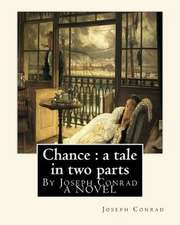 ChanceJoseph ConradPreț: 79.27 lei
 -
 Finding FloraElinor FlorencePreț: 78.70 leiRecomandat
 -
 A Woman of FortuneVal WoodPreț: 64.41 lei
 -
 Oliver TwistCharles DickensPreț: 37.41 lei
 -
 The Great Gatsby: 100th Anniversary Edition (The Original 1925 Classic)F. Scott Fitzgerald-14%Preț: 19.19 lei22.44 lei
Descriere
Descriere de la o altă ediție sau format:
'no consideration, no delicacy, no tenderness, no scruples should stand in the way of a woman ... from taking the shortest cut towards securing for herself the easiest possible existence'Chance(1914) was the first of Conrad's novels to bring him popular success and it holds a unique place among his works. It tells the story of Flora de Barral, a vulnerable and abandoned young girl who is 'like a beggar,without a right to anything but compassion'. After her bankrupt father is imprisoned, she learns the harsh fact that a woman in her position 'has no resources but in herself. Her only means of action is to be what she is.' Flora's long struggle to achieve some dignity and happiness makes her Conrad's most moving female character.Reflecting the contemporary interest in the New Woman and the Suffragette question, Chance also marks the final appearance of Marlow, Conrad's most effective and wise narrator. This revised edition uses the English first edition text and has a new chronology and bibliography. ABOUT THE SERIES: For over 100 years Oxford World's Classics has made available the widest range of literature from around the globe. Each affordable volume reflects Oxford's commitment to scholarship, providing the most accurate text plus a wealth of other valuable features, including expert introductions by leading authorities, helpful notes to clarify the text, up-to-date bibliographies for further study, and much more.
'no consideration, no delicacy, no tenderness, no scruples should stand in the way of a woman ... from taking the shortest cut towards securing for herself the easiest possible existence'Chance(1914) was the first of Conrad's novels to bring him popular success and it holds a unique place among his works. It tells the story of Flora de Barral, a vulnerable and abandoned young girl who is 'like a beggar,without a right to anything but compassion'. After her bankrupt father is imprisoned, she learns the harsh fact that a woman in her position 'has no resources but in herself. Her only means of action is to be what she is.' Flora's long struggle to achieve some dignity and happiness makes her Conrad's most moving female character.Reflecting the contemporary interest in the New Woman and the Suffragette question, Chance also marks the final appearance of Marlow, Conrad's most effective and wise narrator. This revised edition uses the English first edition text and has a new chronology and bibliography. ABOUT THE SERIES: For over 100 years Oxford World's Classics has made available the widest range of literature from around the globe. Each affordable volume reflects Oxford's commitment to scholarship, providing the most accurate text plus a wealth of other valuable features, including expert introductions by leading authorities, helpful notes to clarify the text, up-to-date bibliographies for further study, and much more.
Notă biografică
Joseph Conrad was a Polish-British novelist and short story writer. He is considered as one of the best authors in the English language, despite the fact that he did not speak English effectively until his twenties. He became known as a master prose stylist who introduced a non-English sensibility into English literature. He authored novels and novellas, many of which take place at sea, about crises of human identity in what he perceived as an indifferent, incomprehensible, and amoral world. Conrad is regarded as a literary impressionist by some and an early modernist by others, while his works also incorporate elements of nineteenth-century realism. His storytelling style and anti-heroic characters, such as Lord Jim, impacted a number of authors. Writing near the peak of the British Empire, Conrad drew on his native Poland's national experiences-during nearly all of his life, parcelled out among three occupying empires-as well as his own experiences in the French and British merchant navies, to create short stories and novels that reflect aspects of a European-dominated world, including imperialism and colonialism, and that profoundly explore the human psyche. Apollo took his kid to the Austrian-controlled region of Poland in December 1867, which had enjoyed significant internal freedom and self-government for the previous two years. After seeing Lwow and numerous smaller towns, they relocated to Krakow (Poland's capital until 1596), which is also in Austrian Poland, on February 20, 1869.