
Cell Viability Assays: Methods in Molecular Biology, cartea 1601
Editat de Daniel F. Gilbert, Oliver Friedrichen Limba Engleză Paperback – 9 iun 2018
Authoritative and practical, Cell Viability Assays: Methods and Protocols aims to ensure successful results in the further study of this vital field.
Din seria Methods in Molecular Biology
- 5%
 Preț: 744.34 lei
 - 18%
 Preț: 1024.14 lei
 - 5%
 Preț: 734.45 lei
 - 15%
 Preț: 629.45 lei
 - 18%
 Preț: 961.87 lei
 - 15%
 Preț: 627.45 lei
 - 5%
 Preț: 1014.54 lei
 - 18%
 Preț: 972.05 lei
 - 18%
 Preț: 2039.44 lei
 - 5%
 Preț: 1304.89 lei
 - 18%
 Preț: 1336.11 lei
 - 18%
 Preț: 1341.26 lei
 - 18%
 Preț: 1085.72 lei
 - 18%
 Preț: 1353.39 lei
 - 18%
 Preț: 1081.17 lei
 - 18%
 Preț: 1186.33 lei
 - 5%
 Preț: 1305.47 lei
 - 5%
 Preț: 1065.47 lei
 - 5%
 Preț: 1576.70 lei
 - 5%
 Preț: 1073.37 lei
 - 5%
 Preț: 1361.54 lei
 - 18%
 Preț: 771.93 lei
 - 18%
 Preț: 749.09 lei
 - 18%
 Preț: 786.39 lei
 - 18%
 Preț: 1083.07 lei
 - 5%
 Preț: 1257.85 lei
 - 18%
 Preț: 1118.74 lei
 - 15%
 Preț: 669.59 lei
 - 18%
 Preț: 1076.62 lei
 - 18%
 Preț: 678.44 lei
 - 18%
 Preț: 678.44 lei
 - 18%
 Preț: 1398.24 lei
 - 5%
 Preț: 1618.97 lei
 - 5%
 Preț: 1554.98 lei
 - 5%
 Preț: 1087.81 lei
 - 5%
 Preț: 1440.49 lei
 - 5%
 Preț: 1426.67 lei
 - 18%
 Preț: 1232.69 lei
 - 18%
 Preț: 1130.09 lei
 - 18%
 Preț: 1118.60 lei
 - 5%
 Preț: 1181.33 lei
 - 18%
 Preț: 1124.01 lei
 - 18%
 Preț: 1235.49 lei
 - 18%
 Preț: 1021.59 lei
 - 5%
 Preț: 1424.04 lei
 - 18%
 Preț: 921.17 lei
 - 15%
 Preț: 633.43 lei
 - 5%
 Preț: 707.95 lei
Preț: 826.65 lei
Preț vechi: 1073.57 lei
-23%
Puncte Express: 1240
Carte tipărită la comandă
Livrare economică 03-09 noiembrie
Livrare prin curier în România Termenul estimat este afișat lângă disponibilitate.
Transport gratuit pentru acest produs Plată online sau ramburs, în funcție de opțiunile comenzii.
Retur gratuit în 14 zile Comandă securizată și suport în română.
Specificații
ISBN-13: 9781493983520
ISBN-10: 1493983520
Pagini: 316
Ilustrații: XII, 299 p. 70 illus., 50 illus. in color.
Dimensiuni: 178 x 254 x 17 mm
Greutate: 0.67 kg
Ediția:Softcover reprint of the original 1st edition 2017
Editura: Springer
Colecția Methods in Molecular Biology
Seria Methods in Molecular Biology
Locul publicării:New York, NY, United States
ISBN-10: 1493983520
Pagini: 316
Ilustrații: XII, 299 p. 70 illus., 50 illus. in color.
Dimensiuni: 178 x 254 x 17 mm
Greutate: 0.67 kg
Ediția:Softcover reprint of the original 1st edition 2017
Editura: Springer
Colecția Methods in Molecular Biology
Seria Methods in Molecular Biology
Locul publicării:New York, NY, United States
V-ar putea interesa
-
 Stumbling on HappinessDaniel GilbertPreț: 78.08 lei
 -
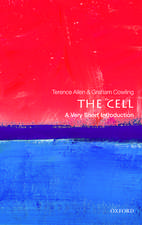 The Cell: A Very Short IntroductionTerence Allen-21%Preț: 55.29 lei69.84 lei
 -
 Physical Biology of the CellRob Phillips-9%Preț: 803.41 lei882.86 lei
 -
 Stem Cells in Craniofacial Development and RegenerationGeorge T J Huang-9%Preț: 1055.20 lei1159.56 lei
 -
 AtherosclerosisWang-9%Preț: 1196.04 lei1314.33 lei
 -
 Cytogenetic AbnormalitiesZneimer-9%Preț: 828.57 lei910.52 lei
 -
 Secrets of Your CellsSondra BarrettPreț: 109.19 lei
 -
 Recombinant Gene ExpressionPaulina Balbas-18%Preț: 959.38 lei1169.98 lei
 -
 mTORThomas Weichhart-18%Preț: 970.91 lei1184.03 lei
Cuprins
Basic Colorimetric Proliferation Assays: MTT, WST and Resazurin.- Assaying Cellular Viability using the Neutral Red Uptake Assay.- Assessment of Cell Viability with Single, Dual, and Multi-Staining Methods using Image Cytometry.- High-throughput Spheroid Screens using Volume, Resazurin Reduction, and Acid Phosphatase Activity.- A Protocol for in vitro High-throughput Chemical Susceptibility Screening in Differentiating NT2 Stem Cells.- Ferroptosis and Cell Death Analysis by Flow Cytometry.- Assaying Mitochondrial Respiration as an Indicator of Cellular Metabolism and Fitness.- An ATP-based Luciferase Viability Assay for Animal African Trypanosomes using a 96-well Plate.- SYBRâ Green I Based Fluorescence Assay to Assess Cell Viability of Malaria Parasites for Routine Use in Compound Screening.- Screening Applications to Test Cellular Fitness in Transwell® Models after Nanoparticle Treatment.- Assays for Analyzingthe Role of Transport Proteins in the Uptake and the Vectorial Transport of Substances Affecting Cell Viability.- Metabolite Profiling Of Mammalian Cell Culture Processes to Evaluate Cellular Viability.- Assaying Spontaneous Network Activity and Cellular Viability using Multi-well Microelectrode Arrays.- Quantitative Ratiometric Ca2+ Imaging to Assess Cell Viability.- Functional Viability: Measurement of Synaptic Vesicle Pool Sizes.- Phenotyping Cellular Viability by Functional Analysis of Ion Channels: GlyR-targeted Screening in NT2-N Cells.- Systematic Cell-Based Phenotyping of Missense Alleles.- Second Harmonic Generation Microscopy of Muscle Cell Morphology and Dynamics.- Assessment of Population and ECM Production Using Multiphoton Microscopy as an Indicator of Cell Viability.- Average Rheological Quantities of Cells in Monolayers.- Measurement of Cellular Behavior by Electrochemical Impedance Sensing.- Nano-QSAR Model for Predicting Cell Viability of Human Embryonic Kidney Cells.
Textul de pe ultima copertă
This volume provides an overview of commonly used methods and protocols for cell fitness indicators. Chapters detail biochemical, fluorescence and luminescence-based strategies, computational, and label-free methodologies for assaying cellular viability by means of e.g. viscoelastic properties, impedance and multiphoton microscopy. Written in the highly successful Methods in Molecular Biology series format, chapters include introductions to their respective topics, lists of the necessary materials and reagents, step-by-step, readily reproducible laboratory protocols, and tips on troubleshooting and avoiding known pitfalls.
Authoritative and practical, Cell Viability Assays: Methods and Protocols aims to ensure successful results in the further study of this vital field.
Authoritative and practical, Cell Viability Assays: Methods and Protocols aims to ensure successful results in the further study of this vital field.
Caracteristici
Includes cutting-edge methods and protocols Provides step-by-step detail essential for reproducible results Contains key notes and implementation advice from the experts Includes supplementary material: sn.pub/extras