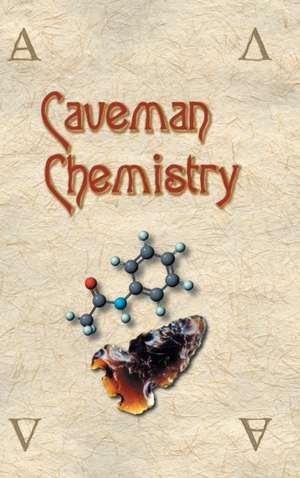
Caveman Chemistry
Autor Kevin M. Dunnen Limba Engleză Hardback – aug 2003
În volumul Caveman Chemistry, aplicabilitatea practică a conceptelor teoretice transformă studiul istoriei științei într-un atelier de arheologie experimentală. Suntem de părere că valoarea acestui text rezidă în capacitatea sa de a demistifica evoluția tehnologică, oferind instrucțiuni precise pentru recrearea substanțelor care au modelat civilizația. Cititorul nu doar parcurge o cronologie, ci învață să producă bronz din minereuri, sticlă din nisip și cenușă sau hârtie din fibre vegetale, totul în cadrul unui curs de nivel universitar validat prin recenzii în publicații de prestigiu precum Journal of Chemical Education.
Structura este una neconvențională pentru un manual tehnic: Kevin M. Dunn utilizează personificările celor patru elemente alchimice — Focul, Pământul, Aerul și Apa — pentru a naratiza nașterea tehnologiilor specifice. Această perspectivă antropomorfă oferă un context cultural necesar, explicând cum cererea pentru bunuri de consum, de la săpun la explozibili și medicamente analgezice, a stimulat prima etapă a industrializării chimice. Lucrarea extinde cadrul propus de The History of Chemistry de William H. Brock cu date noi din sfera tehnologiilor preistorice și antice, adăugând o dimensiune tactilă pe care sintezele istorice clasice o omit. Dacă lucrările similare se concentrează pe evoluția ideilor, Caveman Chemistry pune accentul pe evoluția uneltelor și a proceselor de transformare a materiei.
Credem că această abordare experiențială este esențială pentru înțelegerea chimiei nu ca pe o disciplină abstractă, ci ca pe o succesiune de soluții practice la problemele cotidiene ale umanității. De la pigmenții folosiți de regi până la sinteza plasticului modern, textul oferă o perspectivă riguroasă asupra modului în care chimia a devenit fundamentul tehnologiei contemporane.
Preț: 376.97 lei
Carte tipărită la comandă
Livrare economică 11-25 august
Specificații
ISBN-10: 1627341536
Pagini: 428
Dimensiuni: 161 x 240 x 27 mm
Greutate: 0.77 kg
Editura: Universal Publishers
V-ar putea interesa
-
 Laser Experiments for Chemistry and PhysicsRobert N. Compton-6%Preț: 389.92 lei416.31 lei
 -
 -32%Preț: 1426.52 lei2097.78 lei
 -
 Preț: 402.06 lei
 -
 Measurement and Safety: Volume IBéla G. Lipták-23%Preț: 3685.68 lei4786.60 lei
 -
 Analysis and Analyzers: Volume IIBéla G. Lipták-23%Preț: 2344.75 lei3045.13 lei
 -
 An Introduction to High-Pressure Science and TechnologyJose Manuel Recio-18%Preț: 726.57 lei886.07 lei
 -
 Mixed Methods Research for Improved Scientific StudyMette Lise Baran-23%Preț: 1056.46 lei1372.03 lei
 -
 Using R at the BenchMartina BremerPreț: 365.73 lei
 -
 The Electric Dipole Moment ChallengeRichard TalmanPreț: 433.75 lei
 -
 The Recovery of Gold from Secondary SourcesSyed Sabir-15%Preț: 608.50 lei715.88 lei
 -
 Scientific SoapmakingKevin M DunnPreț: 200.02 lei
 -
 Emission DetectorsAlexander I. Bolozdynya-15%Preț: 538.77 lei633.85 lei
 -
 -15%Preț: 585.62 lei688.97 lei
 -
 -18%Preț: 804.26 lei980.81 lei
 -
 MODERN TRENDS IN PHYSICS RESEARCHNadi Lotfia Mohamed El-18%Preț: 765.31 lei933.31 lei
 -
 Active Plasmonic NanomaterialsLuciano De Sio-18%Preț: 870.65 lei1061.77 lei
 -
 JOURNEYS THROUGH THE PRECISION FRONTIERDixon Lance-18%Preț: 1578.06 lei1924.46 lei
De ce să citești această carte
Recomandăm această carte educatorilor și pasionaților de științe care doresc să înțeleagă chimia prin experiment direct. Cititorul câștigă o perspectivă istorică profundă și abilități practice de a reproduce tehnologii fundamentale. Este un instrument didactic rar care reușește să combine rigoarea academică de nivel universitar cu plăcerea descoperirii prin proiecte de tip „do-it-yourself”, fiind ideal pentru cei care vor să vadă cum teoria prinde formă în creuzet.
Descriere scurtă
Half a million years ago our ancestors learned to make fire from scratch. They crafted intricate tools from stone and brewed mind-altering elixirs from honey. Their descendants transformed clay into pottery, wool into clothing, and ashes into cleansers. In ceramic crucibles they won metal from rock, the metals lead to colored glazes and glass. Buildings of brick and mortar enshrined books of parchment and paper. Kings and queens demanded ever more colorful clothing and accessories in order to out-class clod-hoppers and call-girls. Kingdoms rose and fell by the power of saltpeter, sulfur, and charcoal. And the demands of everyday folk for glass and paper and soap stimulated the first round of chemical industrialization. From sulfuric acid to sodium carbonate. From aniline dyes to analgesic drugs. From blasting powder to fertilizers and plastics. In a phrase, From Caveman to Chemist.
Caveman Chemistry is an experiential exploration of chemical technology from the campfires of the stone age to the PETE plastic soda pop bottle. An experiential exploration? Not only will you learn about these technologies, you will learn to recreate them. Instructions are given for making bronze from metal ores; glass from sand, ashes, and limestone; paper from grass or straw; soap from fat; alcohol from honey; photographs from egg whites; chlorine from salt water and celluloid from cotton.
Your guides on this journey are the four alchemical elements; Fire, Earth, Air and Water. These archetypical characters deliver first-hand accounts of the births of their respective technologies. The spirit of Fire, for example, was born in the first creature to cultivate the flame. This spirit passed from one person to another, from one generation to another, from one millennium to another, arriving at last in the pages of this book. The spirit of Earth taught folks to make tools of stone, the spirit of Air imparted knowledge of units and the spirit of Water began with the invention of spirits. Having traveled the world from age to age, who can say where they will find their next home? Perhaps they will find one in you.
See review in Journal of Chemical Education (April 2004)