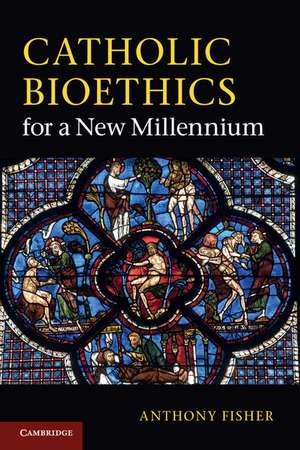
Catholic Bioethics for a New Millennium
Autor Anthony Fisheren Limba Engleză Paperback – 24 iul 2018
Suntem de părere că lucrarea Catholic Bioethics for a New Millennium reprezintă un reper de interdisciplinaritate, reușind să creeze o punte solidă între teologia morală, filozofia analitică și provocările concrete ale medicinei moderne. Anthony Fisher nu se limitează la o expunere dogmatică, ci propune o sinteză între tradiția hipocratică, valorile iudeo-creștine și conceptele actuale de rațiune practică și comunitate. Volumul extinde cadrul propus de Contemporary Controversies in Catholic Bioethics de Jason T. Eberl cu date noi din realitatea socială și legislativă a noului mileniu, punând un accent sporit pe rolul conștiinței în fața autorității magisteriale. Structura cărții este riguros organizată în două părți fundamentale: prima secțiune analizează contextul post-modern și criza de autoritate a conștiinței, în timp ce a doua parte explorează dilemele începutului vieții, cu un interes particular pentru cercetarea celulelor stem și statutul ontologic al embrionului. Apreciem modul în care autorul utilizează studii de caz pentru a discuta teme sensibile precum avortul, transplanturile sau eutanasia, oferind o perspectivă bazată pe rațiune care rămâne relevantă atât pentru credincioși, cât și pentru cei din afara sferei religioase. În contextul operei sale, această lucrare completează viziunea despre comuniune din Unity in Christ, aplicând principiile fraternității și demnității umane în câmpul bioeticii. Progresia narativă, de la fundamentele filosofice la politici sociale și reglementări, indică o dorință clară de a oferi soluții aplicabile în politicile de sănătate publică din secolul XXI.
Preț: 308.32 lei
Carte tipărită la comandă
Livrare economică 18 noiembrie-02 decembrie
Specificații
ISBN-10: 0521253241
Pagini: 346
Dimensiuni: 152 x 229 x 19 mm
Greutate: 0.61 kg
Editura: Cambridge University Press
Locul publicării:Cambridge, United Kingdom
V-ar putea interesa
-
 -31%Preț: 694.17 lei1011.17 lei
 -
 -20%Preț: 292.78 lei364.56 lei
 -
 -10%Preț: 394.18 lei436.26 lei
 -
 The Spirit's Tether: Family, Work, and Religion among American CatholicsMary Ellen Konieczny-13%Preț: 273.48 lei313.33 lei
 -
 Women in Pastoral Office: The Story of Santa Prassede, RomeMary M. Schaefer-34%Preț: 670.18 lei1012.01 lei
 -
 Preț: 105.18 lei
 -
 The Spanish Inquisition: A Historical RevisionHenry KamenPreț: 196.83 lei
 -
 The Crisis of Confidence in the Catholic ChurchFather Raymond G. Helmick SJ-25%Preț: 211.70 lei280.54 lei
 -
 Pope John Paul II: In ColourHugh CostelloPreț: 48.84 lei
 -
 Francis: Man of PrayerMario EscobarPreț: 109.02 lei
 -
 C.S. Lewis and the Catholic ChurchJoseph PearcePreț: 116.47 lei
De ce să citești această carte
Recomandăm această carte profesioniștilor din domeniul medical, bioeticienilor și studenților la teologie sau filozofie care caută o analiză profundă a eticii catolice aplicate. Cititorul câștigă o înțelegere clară a modului în care înțelepciunea antică poate informa deciziile clinice complexe de astăzi. Este un instrument esențial pentru oricine dorește să navigheze dilemele morale moderne, de la celule stem la îngrijirea paliativă, folosind un echilibru între credință și rațiune.
Despre autor
Anthony Fisher, membru al Ordinului Dominican (OP) și Arhiepiscop de Sydney, este o figură proeminentă în peisajul teologic contemporan. Cu o expertiză vastă recunoscută prin calitatea de membru al Academiei Pontificale pentru Viață, acesta ocupă funcția de profesor de teologie morală și bioetică la Institutul Ioan Paul al II-lea pentru Căsătorie și Familie. Activitatea sa academică este dublată de o prezență activă în mediul universitar ca profesor asociat la University of Notre Dame, Sydney, experiența sa pastorală și academică fiind reflectată în rigoarea cu care abordează intersecția dintre lege, etică și dogmă.
Descriere scurtă
Cuprins
Recenzii
'These chapters show how the resources of the Catholic moral tradition can be brought to bear on novel and difficult bioethical problems. They will be of great use not least for those who wish to engage with a range of perspectives before coming to their own conclusions. I could think of no better or more thoughtful introduction to the discipline of Catholic bioethics.' Professor David Albert Jones, Director of the Anscombe Bioethics Centre
'Bishop Anthony Fisher's Catholic Bioethics for a New Millennium provides coherent and comprehensive coverage of many of the most disputed topics in bioethics. With both clarity and charity, Bishop Fisher dispels the myths and misunderstandings that obscure inherent dignity of the human person. He shows the compatibility of faith and reason and ably defends Catholic teaching against critiques from both dissenting theologians and secular philosophers.' Christopher Kaczor, Loyola Marymount University
'… serves as a wonderful example of the very best of theological and philosophical reflection on contemporary issues of interest.' The Tablet
'… this is a fine work on a variety of questions in Catholic bioethics … Fisher is clearly an articulate evangelical witness for the 'gospel of life', and an intellectually formidable exponent of the Catholic tradition. This is an extraordinarily fine treatment of a John Paul ll approach to bioethics.' The Thomist