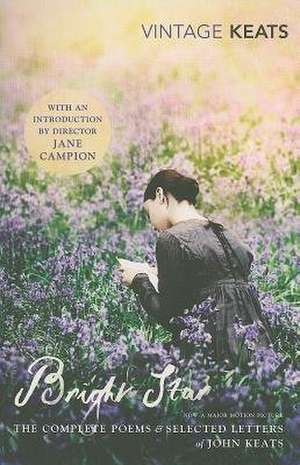
Bright Star
Autor John Keatsen Limba Engleză Paperback – 29 oct 2009
Considerăm ediția de față a volumului Bright Star drept un instrument fundamental pentru studenții și cercetătorii literaturii britanice, fiind calibrată special pentru a răspunde cerințelor academice de analiză a mișcării Romantice. Remarcăm efortul editorial de a reuni nu doar piesele de rezistență, precum „Ode to a Nightingale” sau „Ode on a Grecian Urn”, ci și fragmente din epopeile Endymion și Hyperion, oferind o imagine de ansamblu asupra evoluției tehnice a lui John Keats. Această ediție revizuită și extinsă din British Poets Series se distinge prin aparatul critic semnat de Miriam Chalk și prin includerea unor ilustrații care ancorează vizual imaginarul senzorial keatsian. Observăm că Bright Star acoperă aceeași arie tematică precum volumul Poems of 1820, însă aduce o abordare mult mai cuprinzătoare. În timp ce Poems of 1820 se concentrează pe apogeul carierei sale, selecția curentă oferă o perspectivă interdisciplinară, integrând bibliografia și notele necesare pentru a înțelege contextul șamanic și mitologic al autorului. Față de Selected Poems din Macmillan Collector's Library, care mizează pe formatul de buzunar și estetică, ediția de la Vintage Publishing este un suport de studiu robust. În contextul operei sale, această antologie servește drept o sinteză superioară față de Lamia, Isabella, The Eve of St Agnes and Other Poems, deoarece nu se limitează la volumele publicate în timpul vieții, ci urmărește firul roșu al „magiei naturale” pe care critici precum Matthew Arnold o comparau cu geniul lui Shakespeare. Este o resursă care facilitează înțelegerea modului în care John Keats a transformat suferința personală în estetică universală.
Preț: 61.87 lei
Preț vechi: 94.91 lei
-35%
Carte disponibilă
Livrare economică 19-25 noiembrie
Livrare express 03-07 noiembrie pentru 60.64 lei
Specificații
ISBN-10: 0099529653
Pagini: 544
Dimensiuni: 130 x 197 x 38 mm
Greutate: 0.38 kg
Editura: Vintage Publishing
Locul publicării:United Kingdom
V-ar putea interesa
-
 Bright Star, Green LightJonathan BatePreț: 81.16 lei
 -
 The Eve of St AgnesJohn Keats-21%Preț: 16.18 lei20.47 lei
 -
 -34%Preț: 51.59 lei77.99 lei
 -
 John Keats and the Perils of PosterityNicholas Roe-9%Preț: 243.19 lei266.11 lei
 -
 Selected PoetryJohn Keats-19%Preț: 52.70 lei64.76 lei
 -
 Selected LettersJohn KeatsPreț: 73.79 lei
 -
 Selected Poems and ProsePercy Bysshe Shelley-33%Preț: 84.85 lei126.18 lei
 -
 -19%Preț: 74.87 lei92.81 lei
 -
 John Keats: A New LifeNicholas RoePreț: 123.65 lei
 -
 Keats's Poetry and ProseJohn KeatsPreț: 157.02 lei
 -
 100 Best-Loved PoemsPhilip Smith-18%Preț: 23.75 lei28.88 lei
 -
 John KeatsJohn KeatsPreț: 70.55 lei
 -
 The Poems of John KeatsJohn KeatsPreț: 190.83 lei
 -
 Selected PoemsJohn Keats-34%Preț: 51.71 lei78.52 lei
 -
 -13%Preț: 86.32 lei99.29 lei
 -
 Preț: 78.71 lei
 -
 Complete Poems of John KeatsJohn KeatsPreț: 33.00 lei
 -
 Keats Selected PoemsJohn Keats-18%Preț: 70.83 lei86.32 lei
 -
 Keats: Selected PoemsJohn Keats-13%Preț: 62.19 lei71.14 lei
De ce să citești această carte
Recomandăm această ediție oricărui cititor care dorește să aprofundeze canonul poetic englez. Dincolo de frumusețea versurilor, volumul oferă rigoarea necesară pentru pregătirea examenelor de literatură universală, datorită notelor explicative și bibliografiei incluse. Câștigați acces la o selecție actualizată ce îmbină analiza textului cu ilustrații de epocă, facilitând o înțelegere profundă a curentului Romantic prin ochii celui mai senzorial reprezentant al său.
Despre autor
John Keats (1795-1821), figură centrală a Romantismului englez, a avut o carieră fulminantă de doar câțiva ani. Orfan de la paisprezece ani și inițial ucenic chirurg, a abandonat medicina pentru a se dedica poeziei. Deși primele sale lucrări au fost primite cu asprime de critici, Keats și-a păstrat convingerea că va ocupa un loc de cinste printre poeții englezi. Opera sa este marcată de o senzorialitate debordantă și de explorarea temelor mortalității și frumuseții, teme accentuate de tragica sa moarte din cauza tuberculozei la vârsta de 26 de ani, în Roma.
Descriere scurtă
Shutting, with careful fingers and benign,
Our gloom-pleas’d eyes, embower’d from the light,
Enshaded in forgetfulness divine”
John Keats, ‘Ode to Sleep’
John Keats died in penury and relative obscurity in 1821, aged only 26. He is now seen as one of the greatest English poets and a genius of the Romantic age. This collection, which contains all his most memorable works, is a feast for the senses, displaying Keats’ gift for gorgeous imagery and sensuous language, his passionate devotion to beauty, as well as some of the most beautiful and moving love poetry ever written.
Recenzii
Notă biografică
His first volume of poetry was published in 1817, soon after he had begun an influential friendship with the Romantic poet Percy Bysshe Shelley. His first collection and the subsequent long poem Endymion recieved mixed reviews, and sales were poor.
In late 1818 he moved to Hampstead where he met and fell deeply in love with his neighbour Fanny Brawne. During the following year Keats wrote some of his most famous works, including 'The Eve of St. Agnes', 'Ode to a Nightingale' and 'La Belle Dame sans Merci'.
He was however increasingly plagued by ill-health and financial troubles, which led him to break off his engagement to Fanny. Soon after the publication of Lamia, Isabella, The Eve of St Agnes and Other Poems in 1820, Keats left England for Italy in the hope that the climate would improve his health. But Keats was by this time suffering from advanced tuberculosis, and he died on February 23rd 1821.
On his request, Keats' tombstone reads only 'Here lies one whose name was writ in water'.
Extras
Not in lone splendour hung aloft the night
And watching, with eternal lids apart,
Like nature's patient, sleepless Eremite,
The moving waters at their priestlike task
Of pure ablution round earth's human shores,
Or gazing on the new soft-fallen mask
Of snow upon the mountains and the moors--
No--yet still stedfast, still unchangeable,
Pillow'd upon my fair love's ripening breast,
To feel for ever its soft fall and swell,
Awake for ever in a sweet unrest,
Still, still to hear her tender-taken breath,
And so live ever--or else swoon to death.
La Belle Dame Sans Merci
Ah, what can ail thee, wretched wight,
Alone and palely loitering;
The sedge is wither'd from the lake,
And no birds sing.
Ah, what can ail thee, wretched wight,
So haggard and so woe-begone?
The squirrel's granary is full,
And the harvest's done.
I see a lily on thy brow,
With anguish moist and fever dew;
And on thy cheek a fading rose
Fast withereth too.
I met a lady in the meads
Full beautiful, a faery's child;
Her hair was long, her foot was light,
And her eyes were wild.
I set her on my pacing steed,
And nothing else saw all day long;
For sideways would she lean, and sing
A faery's song.
I made a garland for her head,
And bracelets too, and fragrant zone;
She look'd at me as she did love,
And made sweet moan.
She found me roots of relish sweet,
And honey wild, and manna dew;
And sure in language strange she said,
I love thee true.
She took me to her elfin grot,
And there she gaz'd and sighed deep,
And there I shut her wild sad eyes--
So kiss'd to sleep.
And there we slumber'd on the moss,
And there I dream'd, ah woe betide,
The latest dream I ever dream'd
On the cold hill side.
I saw pale kings, and princes too,
Pale warriors, death-pale were they all;
Who cry'd--"La belle Dame sans merci
Hath thee in thrall!"
I saw their starv'd lips in the gloam
With horrid warning gaped wide,
And I awoke, and found me here
On the cold hill side.
And this is why I sojourn here
Alone and palely loitering,
Though the sedge is wither'd from the lake,
And no birds sing.