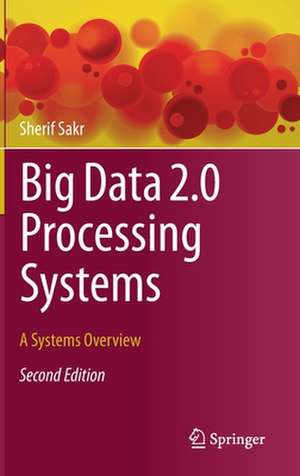
Big Data 2.0 Processing Systems
Autor Sherif Sakren Limba Engleză Hardback – 10 iul 2020
After Chapter 1 presents the general background of the big data phenomena, Chapter 2 provides an overview of various general-purpose big data processing systems that allow their users to develop various big data processing jobs for different application domains. In turn, Chapter 3 examines various systems that have been introduced to support the SQL flavor on top of the Hadoop infrastructure and provide competing and scalable performance in the processing of large-scale structured data. Chapter 4 discusses several systems that have been designed to tackle the problem of large-scale graph processing, while the main focus of Chapter 5 is on several systems that have been designed to provide scalable solutions for processing big data streams, and on other sets of systems that have been introduced to support the development of data pipelines between various types of big data processing jobs and systems. Next, Chapter 6 focuses on covering the emerging frameworks and systems in the domain of scalable machine learning and deep learning processing. Lastly, Chapter 7 shares conclusions and an outlook on future research challenges. This new and considerably enlarged second edition not only contains the completely new chapter 6, but also offers a refreshed content for the state-of-the-art in all domains of big data processing over the last years.
Overall, the book offers a valuable reference guide for professional, students, and researchers in the domain of big data processing systems. Further, its comprehensive content will hopefully encourage readers to pursue further research on the subject.
Preț: 490.50 lei
Preț vechi: 613.12 lei
-20%
Puncte Express: 736
Carte tipărită la comandă
Livrare economică 26 noiembrie-10 decembrie
Livrare prin curier în România Termenul estimat este afișat lângă disponibilitate.
Transport gratuit pentru acest produs Plată online sau ramburs, în funcție de opțiunile comenzii.
Retur gratuit în 14 zile Comandă securizată și suport în română.
Specificații
ISBN-13: 9783030441869
ISBN-10: 3030441865
Pagini: 164
Ilustrații: XVI, 145 p. 70 illus., 19 illus. in color.
Dimensiuni: 160 x 241 x 15 mm
Greutate: 0.37 kg
Ediția:Second Edition 2020
Editura: Springer
Locul publicării:Cham, Switzerland
ISBN-10: 3030441865
Pagini: 164
Ilustrații: XVI, 145 p. 70 illus., 19 illus. in color.
Dimensiuni: 160 x 241 x 15 mm
Greutate: 0.37 kg
Ediția:Second Edition 2020
Editura: Springer
Locul publicării:Cham, Switzerland
V-ar putea interesa
-
 High Performance Computing: Modern Systems and PracticesThomas Sterling-40%Preț: 437.18 lei729.97 lei
 -
 -39%Preț: 394.79 lei646.62 lei
 -
 -20%Preț: 339.99 lei424.99 lei
 -
 Data Science and Big Data AnalyticsEmc Education Services-20%Preț: 405.57 lei506.97 lei
 -
 -20%Preț: 323.70 lei404.62 lei
 -
 Foundations of Data Intensive ApplicationsSupun Kamburugamuve-20%Preț: 272.49 lei340.61 lei
 -
 Database SystemsRamez Elmasri-20%Preț: 552.09 lei690.12 lei
 -
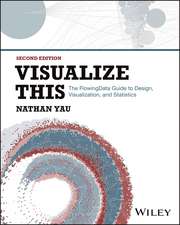 Visualize ThisNathan Yau-20%Preț: 233.34 lei291.67 lei
 -
 The Data Hero PlaybookMalcolm HawkerPreț: 202.67 lei
 -
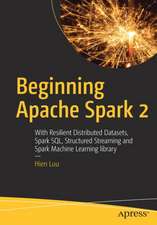 -20%Preț: 192.51 lei240.64 lei
 -
 Spark in Action, Second EditionJean-Georges Perrin-20%Preț: 367.17 lei458.96 lei
 -
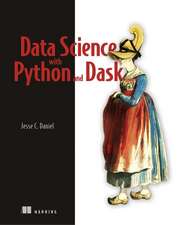 Data Science with Python and DaskJesse Daniel-20%Preț: 364.24 lei455.29 lei
 -
 Grokking Streaming SystemsJosh Fischer-20%Preț: 338.72 lei423.40 lei
 -
 Kafka Streams in Action, Second EditionBill Bejeck-20%Preț: 344.92 lei431.16 lei
 -
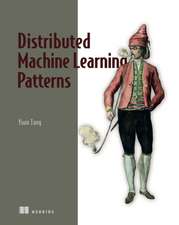 Distributed Machine Learning PatternsYuan Tang-20%Preț: 326.97 lei408.71 lei
 -
 MongoDB in Action, Third EditionArek Borucki-20%Preț: 355.71 lei444.63 lei
 -
 The Digital Journey of Banking and Insurance, Volume IIIClaus StegmannPreț: 420.02 lei
 -
 Resource Management for Big Data PlatformsFlorin Pop-20%Preț: 1045.82 lei1307.28 lei
 -
 Encyclopedia of Big Data TechnologiesSherif Sakr-20%Preț: 5647.49 lei7059.37 lei
Cuprins
Introduction.- General-Purpose Big Data Processing Systems.- Large-Scale Processing Systems of Structured Data.- Large-Scale Graph Processing Systems.- Large-Scale Stream Processing Systems.- Large-Scale Machine/Deep Learning Frameworks.- Conclusions and Outlook.
Recenzii
“This short book is well written and informative. … As a survey book, the author succeeds in raising awareness for the topic and reinforcing the view of its depth. As a research tool, the book works as a stepping stone for the curious manager or researcher wanting a short introduction to a wide range of big data areas. An easy read on the topic … . Its many references provide a solid foundation for further study.” (Jean-Pierre Kuilboer, Computing Reviews, August 12, 2022)
Notă biografică
Sherif Sakr is currently a professor of computer and information science in the Health Informatics department at King Saud bin Abdulaziz University for Health Sciences. He is also affiliated with the University of New South Wales and DATA61/CSIRO (formerly NICTA). He had held visiting appointments in several academic and research institutes including Microsoft Research (2011), Alcatel-Lucent Bell Labs (2012), Humboldt University of Berlin (2015), University of Zurich (2016) and TU Dresden (2016). In 2013, Sherif has been awarded the Stanford Innovation and Entrepreneurship Certificate.
Faisal Moeen Orakzai is a joint PhD candidate at Université Libre de Bruxelles (ULB) Belgium and Aalborg University (AAU) Denmark. In addition to doing research, he works as a consultant and helps companies setting up their distributed data processing architectures and pipelines. He is a Big Data management and analytics enthusiast and currently working on a Giraph based framework for spatio-temporal pattern mining.
Ibrahim Abdelaziz is a Computer Science PhD candidate at King Abdullah University of Science and Technology (KAUST). Prior to joining KAUST, he used to work on pattern recognition and information retrieval in several research organizations in Egypt. His current research interests are Data Mining over large scale graphs, Distributed Systems and Machine Learning.
Zuhair Khayyat is a PhD candidate in the InfoCloud group at King Abdullah University of Science and Technology (KAUST) focusing on Big Data, Analytics and Graphs.
Textul de pe ultima copertă
This book provides readers the “big picture” and a comprehensive survey of the domain of big data processing systems. For the past decade, the Hadoop framework has dominated the world of big data processing, yet recently academia and industry have started to recognize its limitations in several application domains and thus, it is now gradually being replaced by a collection of engines that are dedicated to specific verticals (e.g. structured data, graph data, and streaming data). The book explores this new wave of systems, which it refers to as Big Data 2.0 processing systems.
After Chapter 1 presents the general background of the big data phenomena, Chapter 2 provides an overview of various general-purpose big data processing systems that allow their users to develop various big data processing jobs for different application domains. In turn, Chapter 3 examines various systems that have been introduced to support the SQL flavor on top of the Hadoop infrastructure and provide competing and scalable performance in the processing of large-scale structured data. Chapter 4 discusses several systems that have been designed to tackle the problem of large-scale graph processing, while the main focus of Chapter 5 is on several systems that have been designed to provide scalable solutions for processing big data streams, and on other sets of systems that have been introduced to support the development of data pipelines between various types of big data processing jobs and systems. Next, Chapter 6 focuses on covering the emerging frameworks and systems in the domain of scalable machine learning and deep learning processing. Lastly, Chapter 7 shares conclusions and an outlook on future research challenges. This new and considerably enlarged second edition not only contains the completely new chapter 6, but also offers a refreshed content for the state-of-the-art in all domains of big data processing over the last years.
Overall, the book offers a valuable reference guide for professional, students, and researchers in the domain of big data processing systems. Further, its comprehensive content will hopefully encourage readers to pursue further research on the subject.
After Chapter 1 presents the general background of the big data phenomena, Chapter 2 provides an overview of various general-purpose big data processing systems that allow their users to develop various big data processing jobs for different application domains. In turn, Chapter 3 examines various systems that have been introduced to support the SQL flavor on top of the Hadoop infrastructure and provide competing and scalable performance in the processing of large-scale structured data. Chapter 4 discusses several systems that have been designed to tackle the problem of large-scale graph processing, while the main focus of Chapter 5 is on several systems that have been designed to provide scalable solutions for processing big data streams, and on other sets of systems that have been introduced to support the development of data pipelines between various types of big data processing jobs and systems. Next, Chapter 6 focuses on covering the emerging frameworks and systems in the domain of scalable machine learning and deep learning processing. Lastly, Chapter 7 shares conclusions and an outlook on future research challenges. This new and considerably enlarged second edition not only contains the completely new chapter 6, but also offers a refreshed content for the state-of-the-art in all domains of big data processing over the last years.
Overall, the book offers a valuable reference guide for professional, students, and researchers in the domain of big data processing systems. Further, its comprehensive content will hopefully encourage readers to pursue further research on the subject.