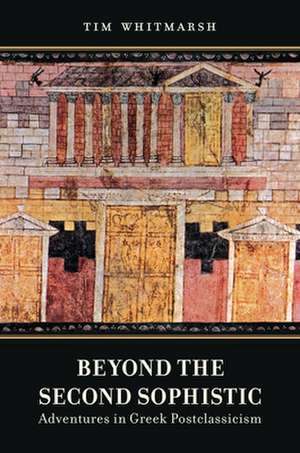
Beyond the Second Sophistic: University of California Press
Autor Tim Whitmarshen Limba Engleză Paperback – 5 mai 2020
Din seria University of California Press
- 15%
 Preț: 489.42 lei
 - 16%
 Preț: 603.40 lei
 - 27%
 Preț: 718.91 lei
 -
 Preț: 308.50 lei
 - 23%
 Preț: 559.15 lei
 -
 Preț: 271.45 lei
 -
 Preț: 242.07 lei
 - 23%
 Preț: 508.97 lei
 - 23%
 Preț: 563.01 lei
 -
 Preț: 278.09 lei
 -
 Preț: 344.88 lei
 -
 Preț: 275.79 lei
 - 23%
 Preț: 453.32 lei
 -
 Preț: 314.96 lei
 - 23%
 Preț: 562.36 lei
 - 23%
 Preț: 507.53 lei
 - 23%
 Preț: 564.30 lei
 -
 Preț: 284.85 lei
 -
 Preț: 278.80 lei
 -
 Preț: 325.72 lei
 -
 Preț: 277.62 lei
 - 23%
 Preț: 561.82 lei
 - 23%
 Preț: 560.56 lei
 - 23%
 Preț: 561.87 lei
 - 23%
 Preț: 560.85 lei
 - 23%
 Preț: 566.17 lei
 -
 Preț: 166.31 lei
 -
 Preț: 526.65 lei
 -
 Preț: 277.16 lei
 - 23%
 Preț: 568.62 lei
 -
 Preț: 316.93 lei
 - 23%
 Preț: 563.97 lei
 -
 Preț: 165.19 lei
 -
 Preț: 515.97 lei
 -
 Preț: 196.27 lei
 -
 Preț: 255.56 lei
 - 23%
 Preț: 565.31 lei
 -
 Preț: 254.23 lei
 - 23%
 Preț: 565.58 lei
 -
 Preț: 301.23 lei
 - 23%
 Preț: 565.70 lei
 - 23%
 Preț: 562.07 lei
 -
 Preț: 285.86 lei
 - 23%
 Preț: 564.09 lei
Preț: 277.11 lei
Puncte Express: 416
Carte tipărită la comandă
Livrare economică 07-21 noiembrie
Livrare prin curier în România Termenul estimat este afișat lângă disponibilitate.
Transport gratuit de la 400.00 lei Plată online sau ramburs, în funcție de opțiunile comenzii.
Retur gratuit în 14 zile Comandă securizată și suport în română.
Specificații
ISBN-13: 9780520344587
ISBN-10: 0520344588
Pagini: 294
Dimensiuni: 152 x 229 x 17 mm
Greutate: 0.44 kg
Editura: UCAL POD
Colecția University of California Press
Seria University of California Press
ISBN-10: 0520344588
Pagini: 294
Dimensiuni: 152 x 229 x 17 mm
Greutate: 0.44 kg
Editura: UCAL POD
Colecția University of California Press
Seria University of California Press
V-ar putea interesa
-
 The IliadHomer-16%Preț: 106.37 lei126.14 lei
 -
 Ancient Greek LiteratureK. J. Dover-18%Preț: 329.35 lei402.34 lei
 -
 Song of the Distant Dove: Judah Halevi's PilgrimageRaymond P. Scheindlin-28%Preț: 422.38 lei586.86 lei
 -
 -28%Preț: 520.78 lei725.92 lei
 -
 On the MysteriesAndokides-29%Preț: 503.36 lei704.89 lei
 -
 Virgil: Aeneid 10Virgil-29%Preț: 503.71 lei705.09 lei
 -
 -26%Preț: 812.63 lei1091.43 lei
 -
 Oxford Readings in Greek TragedyErich Segal-34%Preț: 638.31 lei960.57 lei
 -
 -28%Preț: 385.37 lei538.02 lei
 -
 Greek Oratory: Tradition and OriginalityStephen Usher-33%Preț: 607.53 lei901.31 lei
 -
 Plutarch's Lives: Exploring Virtue and ViceTimothy E. Duff-28%Preț: 507.63 lei707.38 lei
 -
 Apuleius: A Latin SophistS. J. Harrison-28%Preț: 372.78 lei519.77 lei
 -
 Aristophanes AcharniansS. Douglas Olson-33%Preț: 679.62 lei1007.07 lei
 -
 The School of RomeW. Martin Bloomer-23%Preț: 506.30 lei657.54 lei
 -
 Homer the PreclassicGregory Nagy-23%Preț: 514.01 lei667.54 lei
 -
 Preț: 60.69 lei
 -
 -18%Preț: 161.65 lei196.16 lei
Notă biografică
Tim Whitmarsh is Professor of Ancient Literatures, Corpus Christi College, Oxford University.
Descriere
Descriere de la o altă ediție sau format:
The "Second Sophistic" traditionally refers to a period at the height of the Roman Empire's power that witnessed a flourishing of Greek rhetoric and oratory, and since the 19th century it has often been viewed as a defense of Hellenic civilization against the domination of Rome. This book proposes a very different model.
The "Second Sophistic" traditionally refers to a period at the height of the Roman Empire's power that witnessed a flourishing of Greek rhetoric and oratory, and since the 19th century it has often been viewed as a defense of Hellenic civilization against the domination of Rome. This book proposes a very different model.