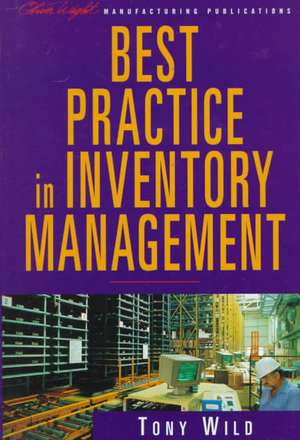
Best Practice in Inventory Management
Autor Tony Wilden Limba Engleză Hardback – 30 mar 1998
| Toate formatele și edițiile | Preț | Express |
|---|---|---|
| Paperback (1) | 320.11 lei 3-5 săpt. | +22.52 lei 10-14 zile |
| Taylor & Francis – 30 oct 2017 | 320.11 lei 3-5 săpt. | +22.52 lei 10-14 zile |
| Hardback (2) | 650.07 lei 6-8 săpt. | |
| Wiley – 30 mar 1998 | 650.07 lei 6-8 săpt. | |
| Taylor & Francis – 31 oct 2017 | 1018.33 lei 6-8 săpt. |
Preț: 650.07 lei
Preț vechi: 706.60 lei
-8% Nou
Puncte Express: 975
Preț estimativ în valută:
115.05€ • 134.92$ • 100.87£
115.05€ • 134.92$ • 100.87£
Carte tipărită la comandă
Livrare economică 24 ianuarie-07 februarie 26
Preluare comenzi: 021 569.72.76
Specificații
ISBN-13: 9780471253419
ISBN-10: 0471253413
Pagini: 240
Dimensiuni: 161 x 236 x 22 mm
Greutate: 0.5 kg
Editura: Wiley
ISBN-10: 0471253413
Pagini: 240
Dimensiuni: 161 x 236 x 22 mm
Greutate: 0.5 kg
Editura: Wiley
V-ar putea interesa
-
 The Product Manager's Handbook 4/ELinda Gorchels-9%Preț: 400.53 lei440.15 lei
 -
 Preț: 346.86 lei
 -
 Preț: 267.64 lei
 -
 Preț: 455.00 lei
 -
 Global Logistics Management 2eKent GourdinPreț: 349.25 lei
 -
 Preț: 228.89 lei
 -
 -23%Preț: 248.25 lei320.65 lei
 -
 Preț: 464.22 lei
Notă biografică
TONY WILD, BSc, MSc, PhD, MIOM, is a specialist in logistics and materials management. He has been closely associated with the development of logistics supply chains for many high-technology companies. Dr. Wild is Managing Director of Midas Consultants and has had a long association with the Institute of Operations Management (formerly BPICS) acting as council member, treasurer, and branch president.
Textul de pe ultima copertă
A groundbreaking, up-to-date look at the Best Practice in Inventory Management
"This book is aimed to show how good inventory control can be used in practice. It is a result of working continuously on inventory control with a large number of companies over many years. It contains the distilled techniques which have been tried out and proved to work. . . . [It] is a driver's manual of inventory controllers. It will cover the working of the engine (how inventory control techniques work), how to use the controls (what the techniques do and how to manage them), and how to get the best out of the vehicle (how to optimize inventory). Understand the text and it will show the way to guaranteed improved inventory control, reduced stock levels, and higher availability."--from the Preface
"The development of inventory management is a dynamic activity, with new approaches being made, techniques being refined, and new challenges being met. . . .
It is imperative that [these] challenges are met, since continuing competitiveness is based on ever-improving customer service and ever-reducing inventory costs."--from the text
As a vital function of an organization's operational structure, effective inventory management is key to improving a company's customer service, cash flow, and ultimately, its profitability margin. While it may sound simple, it is, in fact, far more complex than most managers perceive, requiring very specific knowledge and understanding. It is based upon a framework of unique tools and techniques essential to achieving complete success. Best Practice in Inventory Management gives you these essentials, with in-depth coverage of the latest practices in the field. The book delivers a wealth of solid solutions for lowering inventory overhead, bettering customer relations, and increasing productivity and performance.
An ideal reference for APICS certification candidates, as well as participants in training programs, this authoritative resource outlines basic techniques, describes how and where to apply them, and explains how to ensure their effective implementation. The techniques are placed within the context of stores operations, which can be applied in a variety of situations, from manufacturing and distribution to warehousing, consumable stores, and spares and service.
Best Practice in Inventory Management follows a logical progression, beginning with targets and moving forward through inventory structuring, individual item control, and coordination. In the process, it probes cutting-edge strategies, including Pareto analysis, Just in Time (JIT), and Material Requirements Planning (MRP), and offers a rational approach to the risks of stockouts. Aided by a host of new applications, practical methods, and real-world examples, you'll learn to implement a variety of processes vital to inventory structure and control. From effective stock monitoring to forecasting, setting, and assessing stock level guidelines, this book outlines the crucial steps in having suitable product available at an acceptable price and within a reasonable timescale.
"The development of inventory management is a dynamic activity, with new approaches being made, techniques being refined, and new challenges being met. . . .
It is imperative that [these] challenges are met, since continuing competitiveness is based on ever-improving customer service and ever-reducing inventory costs."--from the text
As a vital function of an organization's operational structure, effective inventory management is key to improving a company's customer service, cash flow, and ultimately, its profitability margin. While it may sound simple, it is, in fact, far more complex than most managers perceive, requiring very specific knowledge and understanding. It is based upon a framework of unique tools and techniques essential to achieving complete success. Best Practice in Inventory Management gives you these essentials, with in-depth coverage of the latest practices in the field. The book delivers a wealth of solid solutions for lowering inventory overhead, bettering customer relations, and increasing productivity and performance.
An ideal reference for APICS certification candidates, as well as participants in training programs, this authoritative resource outlines basic techniques, describes how and where to apply them, and explains how to ensure their effective implementation. The techniques are placed within the context of stores operations, which can be applied in a variety of situations, from manufacturing and distribution to warehousing, consumable stores, and spares and service.
Best Practice in Inventory Management follows a logical progression, beginning with targets and moving forward through inventory structuring, individual item control, and coordination. In the process, it probes cutting-edge strategies, including Pareto analysis, Just in Time (JIT), and Material Requirements Planning (MRP), and offers a rational approach to the risks of stockouts. Aided by a host of new applications, practical methods, and real-world examples, you'll learn to implement a variety of processes vital to inventory structure and control. From effective stock monitoring to forecasting, setting, and assessing stock level guidelines, this book outlines the crucial steps in having suitable product available at an acceptable price and within a reasonable timescale.
Descriere
This groundbreaking, up-to-date book offers a "driver's manual" for inventory controllers, covering the working engine (how inventory control techniques work), how to use the controls (what the techniques do and how to manage them), and how to get the best out of the vehicle (how to optimize inventory).
Cuprins
Table of Contents
PREFACE
INTRODUCTION
1 THE BASIS OF INVENTORY CONTROL
1.A The role of inventory management
1.B Objectives for inventory control
1.C Profit through inventory management
1.D Reasons for the current stock
2 CUSTOMER SERVICE
2.A Customer Relations
2.B Measuring availability
2.C Demand management
2.D Consuming forecast demand and supply lead time
3 SHAPING INVENTORY
3.A Using Pareto Analysis for control
3.B ABC Analysis
3.C Stock cover
3.D Pareto stock balance
4 PRACTICAL METHODS FOR REDUCING STOCKHOLDING
4.A Approach to Inventory Reduction
4.B The Reduction Project
4 C Obsolete and Excess Stock
5 MANAGEMENT AND CONTROL
5.A Where stock control fits into the organisation
5.B Responsibilities and targets
5.C Skills and Systems
5.D Inventory valuation
6 LEAN SUPPLY
6.A Lean Supply Philosophy
6.B Lean Principles
6.C Implementing lean
6.D Operational benefits of Lean Supply
6.E Developing Lean Operations
7 SAFETY STOCKS
7.A Learning from History
7.B Normal demand patterns
7.C Evaluating safety stocks
8 SETTING THE RIGHT STOCK LEVELS
8.A Simple Assessment of Review Levels
8.B Managing Lead Times
8.C Supplier Delivery frequency effects
8.D Target stock levels
9 PROCUREMENT
9.A The Role of Supply Chain Procurement
9.B Supply partnerships
9.C Single Sourcing
9.D Supply Partnerships
9.E Vendor Appraisal
9.F Pricing Methods
10 DELIVERY QUANTITIES
10.A Supply and Suppliers
10.B Organising Repetitive Supply
10.C Order types
10.D Order quantities
10.E Delivery Quantities
10.F Scheduling supply
10.G Supply Co-ordination
10.H Purchasing Processes
11 FORECASTING DEMAND
11.A Options for assessing demand
11.B Causes of forecasting inaccuracy
11.C Methods of improving forecasting
12 HISTORICAL FORECASTING TECHNIQUES
12.A Basic Forecasting Techniques
12.B Moving Average
12.C Exponentially Weighted Averages
12.D Improved Values for Mean Absolute Deviation
12.E Choosing the Best Forecast - Focus Forecasting
13 IMPROVED FORECASTING METHODS
13.A More Forecasting Tools
13.B Forecasting for seasonal sales
14 DEPENDENT DEMAND
14.A Avoiding uncertainty
14.B Material requirements planning
14.C Master planning
15 SUPPLY CHAIN INVENTORY MANAGEMENT
15.A The basis of the lean supply chain
15.B Coordination
15.C Supply Chain Operations
15.D Replenishment Techniques
16 MEETING THE CHALLENGES
16.A Review
16.B Recipe for success
QUESTIONS & ANSWERS
PREFACE
INTRODUCTION
1 THE BASIS OF INVENTORY CONTROL
1.A The role of inventory management
1.B Objectives for inventory control
1.C Profit through inventory management
1.D Reasons for the current stock
2 CUSTOMER SERVICE
2.A Customer Relations
2.B Measuring availability
2.C Demand management
2.D Consuming forecast demand and supply lead time
3 SHAPING INVENTORY
3.A Using Pareto Analysis for control
3.B ABC Analysis
3.C Stock cover
3.D Pareto stock balance
4 PRACTICAL METHODS FOR REDUCING STOCKHOLDING
4.A Approach to Inventory Reduction
4.B The Reduction Project
4 C Obsolete and Excess Stock
5 MANAGEMENT AND CONTROL
5.A Where stock control fits into the organisation
5.B Responsibilities and targets
5.C Skills and Systems
5.D Inventory valuation
6 LEAN SUPPLY
6.A Lean Supply Philosophy
6.B Lean Principles
6.C Implementing lean
6.D Operational benefits of Lean Supply
6.E Developing Lean Operations
7 SAFETY STOCKS
7.A Learning from History
7.B Normal demand patterns
7.C Evaluating safety stocks
8 SETTING THE RIGHT STOCK LEVELS
8.A Simple Assessment of Review Levels
8.B Managing Lead Times
8.C Supplier Delivery frequency effects
8.D Target stock levels
9 PROCUREMENT
9.A The Role of Supply Chain Procurement
9.B Supply partnerships
9.C Single Sourcing
9.D Supply Partnerships
9.E Vendor Appraisal
9.F Pricing Methods
10 DELIVERY QUANTITIES
10.A Supply and Suppliers
10.B Organising Repetitive Supply
10.C Order types
10.D Order quantities
10.E Delivery Quantities
10.F Scheduling supply
10.G Supply Co-ordination
10.H Purchasing Processes
11 FORECASTING DEMAND
11.A Options for assessing demand
11.B Causes of forecasting inaccuracy
11.C Methods of improving forecasting
12 HISTORICAL FORECASTING TECHNIQUES
12.A Basic Forecasting Techniques
12.B Moving Average
12.C Exponentially Weighted Averages
12.D Improved Values for Mean Absolute Deviation
12.E Choosing the Best Forecast - Focus Forecasting
13 IMPROVED FORECASTING METHODS
13.A More Forecasting Tools
13.B Forecasting for seasonal sales
14 DEPENDENT DEMAND
14.A Avoiding uncertainty
14.B Material requirements planning
14.C Master planning
15 SUPPLY CHAIN INVENTORY MANAGEMENT
15.A The basis of the lean supply chain
15.B Coordination
15.C Supply Chain Operations
15.D Replenishment Techniques
16 MEETING THE CHALLENGES
16.A Review
16.B Recipe for success
QUESTIONS & ANSWERS